Kansas PIP insurance and non-economic damage limits can affect your car accident settlement
“The People of the South Wind”… that’s how the Kansa Sioux Indian tribe was known in English. And, that’s how the state of Kansas got its name. A French explorer put “Kansas” on a map as part of the Louisiana Purchase, and a state was (soon to be) born.
Kansas eventually became known as the Sunflower State; the native wild sunflower is abundant across the state and was named the official state flower in 1903.
Today, Kansas is home to nearly 3 million people. Kansas produces about 20% of all wheat grown in the nation. Its other leading industries are the manufacture of transportation equipment and industrial and computer machinery. Only Texas and Montana have more agricultural acreage than Kansas.
Whether you’re in Kansas to visit Botanica, The Wichita Gardens; The Eisenhower Presidential Library; the Kansas Speedway; or something else… or if you live or work in the state, it’s important to know Kansas traffic laws and car accident insurance requirements if you’re going to be traveling Kansas highways and local roads.
Kansas is a no-fault car insurance state
Each state is either a fault state or a no-fault state. In a fault state, the person who caused the accident is responsible for paying for an injured person’s related costs.
In a no-fault state (like Kansas), you’d turn first to your own insurance policy coverage if you’re injured in an accident, regardless of whose fault it was.
Kansas Personal Injury Protection (PIP) insurance requirement
A Kansas driver is required to have Personal Injury Protection (PIP) insurance. This policy provides payment of medical bills and similar related losses up to your policy limit. However, if your injuries are severe and the costs exceed your policy limit, you might need to turn to the other driver’s insurance for the excess expenses.
If the total value of your accident claim exceeds your policy coverage, the at-fault driver’s insurance company is responsible for compensating you for the additional costs.
Kansas car insurance requirements
A Kansas driver is required to carry the following minimum insurance coverage:
| Required coverage | |
|---|---|
| $25,000 | Bodily injury liability per person |
| $50,000 | Bodily injury liability per accident |
| $25,000 | Property damage liability per accident |
| $25,000 | Uninsured/underinsured motorist coverage per person |
| $50,000 | Uninsured/underinsured motorist coverage per accident |
| Optional coverage | |
| Additional liability | Pays for accidents where you are at fault |
| Collision | Pays for vehicle damage in a crash |
| Comprehensive | Pays for vehicle damage because of weather, vandalism, or other non-collision incidents |
What doesn’t PIP cover?
PIP does not cover non-economic damages. These include pain and suffering, emotional distress, loss of consortium, and other conditions that don’t have a specific financial value.
Property damage is also treated differently from personal physical injury. You may seek compensation from the at-fault driver’s insurance for damage to or loss of your vehicle.
What if you’re the driver but not the vehicle owner? Or you’re a pedestrian?
Car insurance follows the vehicle, not the driver.
If you’re driving a car (with the owner’s permission) and you’re in an accident, the vehicle owner’s PIP insurance should cover your medical treatment and wage loss.
You also have PIP benefits under the policy issued to any household member.
If you’re injured as a pedestrian or bicyclist, the PIP insurance of the vehicle owner would cover your losses.
Kansas comparative negligence
Kansas follows the modified comparative fault rule, otherwise known as the 50% rule. This means that in a personal injury lawsuit, you cannot recover damages from another party unless you’re less than 50% liable for the accident.
Caps on Kansas non-economic damages
There are two types of damages in a personal injury lawsuit: economic and non-economic. Both of these are considered “compensatory damages”.
Economic damages are costs that have a specific financial value, including:
- Medical treatment, including doctor or hospital visits, surgery, prescription medication, diagnostics like X-ray or MRI, etc.;
- Assistive devices if the accident requires you to use a wheelchair or other external assistance;
- Ongoing therapies, like physical and occupational; and
- Lost wages, present and future, if the injuries prevent you from returning to work.
Each of these damages can be quantified and measured based on your medical bills and employment records.
Non-economic damages are costs associated with injuries that are not simple to quantify. Pain and suffering, mental anguish or PTSD, loss of consortium, loss of enjoyment of activities, and other issues matter deeply to the person they affect, but it’s harder to assign them a financial value.
The courts have methods for calculating non-economic damages. Kansas limits the amount you can receive for non-economic damages. If your accident happened after July 1, 2022, the current limit on Kansas non-economic damages is $350,000.
What to do after a Kansas car accident
1. Call 911. Your first call should be to emergency responders. Whether the accident is minor or serious, call the police. Tell dispatch whether or not an ambulance is needed, but request that the police respond to the scene either way.
2. Move your car out of traffic if possible. Sometimes the position of cars relative to each other helps determine how a crash happened. Before moving your car (or before the other driver moves theirs), take several photos of various angles of the scene in order to preserve evidence. If the cars aren’t blocking traffic, leave them where they are after a crash. Only move the car if it’s preventing the flow of traffic.
3. Obtain information from other drivers. Make sure to get the necessary information from each involved driver. A police report should include most of it, but also you want to have a copy to provide to your lawyer.
Try to write down or photograph the following information:
- Driver’s name and driver’s license number
- Driver’s full contact information, including address, phone, and email
- Vehicle registration and insurance information
- License plate number
- Make, model, and color of each car involved in the accident
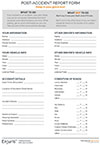 Accident Report Form
Sample post-accident report form to keep in your glove box - fill out at the scene or as soon as you can after a car accident
Download in PDF format
4. Gather evidence. As mentioned above, photos of the scene and obtaining contact information from witnesses can make or break your case. You can never get too much. Not every photo or every witness account will be relevant, but there might be things that your lawyer sees that do matter that you don’t realize. Let your lawyer determine what’s important and what’s not.
5. Notify your insurance company. A “report” is not the same as a “claim.” Your insurance company likely requires you to report an accident within a certain period of time. But even with your own insurance company, don’t say anything that would indicate fault. Stick to basics — when and were the accident took place, and who was involved. Don’t give permission for them to record a statement.
When to call a Kansas personal injury lawyer
If you’ve been involved in a Kansas car accident, it could be worthwhile to seek the guidance of an experienced, qualified, compassionate personal injury lawyer.
Whether you were the at-fault driver or not, lawyers aren’t just for lawsuits. They negotiate insurance settlements, too.
Why is this important?
Your insurance adjuster is not on your side—even though it might seem like they are. Remember this: Yes, you are their customer if it’s your own insurance policy. But the customer isn’t always right. The insurance company makes a profit when it pays out less in settlements than it earns from premiums. The insurance adjuster’s job is to get you to accept the smallest payout possible to close your file. They’re not trying to help you, they’re trying to save their employer money.
Your lawyer only earns money if you do. Most personal injury lawyers work on a contingency basis, which means they earn a percentage of your insurance payout or damage award. The more you receive, the more they earn. Their incentive is to get you the most money possible.
Your lawyer can help you minimize your amount of fault in a crash, ensure you’re getting enough of a settlement to cover your costs, and analyze your future needs to cover those, as well.
Did you know that car accident law varies by state?











Hurt in a car crash? You may find these resources helpful


Need a lawyer?

What does an injury lawyer do?
A personal injury lawyer helps individuals who have sustained injuries in accidents to recover financial compensation. These funds are often needed to pay for medical treatment, make up for lost wages and provide compensation for injuries suffered. Sometimes a case that seems simple at first may become more complicated. In these cases, consider hiring an experienced personal injury lawyer. Read more
Common car accidents