
When you’ve been wronged, whether someone hit your car or cut you in the grocery store line, it’s human nature to want acknowledgment and recourse. Filing a lawsuit might seem like the best course of action, but lawsuits can be stressful, time-consuming, and expensive.
Before pursuing legal action, it’s important to take a deep breath and assess whether your case is worth the effort.
In this guide, we’ll walk you through some key considerations, possible alternatives, and, if it becomes clear that a lawsuit is your best option, the steps to filing one.
Do you have a strong legal case?
Just because your neighbor’s snot-nosed teenager tore through your yard on a four-wheeler and obliterated your azaleas doesn’t mean you should file a lawsuit or even that a lawyer will take your case.
Before considering legal action, ask yourself the following three questions:
1. Do I have a valid legal claim?
To win a lawsuit, you must prove the specific legal elements of your cause of action. In most personal injury cases, this means establishing the four elements of negligence:
- The defendant owed you a duty of care.
- The defendant breached that duty.
- Their breach directly caused your injuries.
- You suffered damages (medical bills, lost wages, pain, etc.).
Determining whether you have a valid legal claim isn’t always straightforward—especially if you don’t have a law degree.
Use the search feature here on Enjuris (the magnifying glass in the top right corner) to see if we’ve covered your type of claim (veterinary malpractice, playground-related injury, etc.). Our guides break down exactly what you need to prove. You can also check out our state section for state-specific guides.
A lawyer can assess the strength of your case during an initial consultation, but in the meantime, take an honest look at your situation. Did you suffer a real, compensable harm? Do you have solid evidence linking the other party’s actions to your damages?
2. Are my damages significant enough?
Many people who have been wronged want to make sure everyone—including the wrongdoer—knows it. This is understandable and even noble. But attorneys have bills to pay, which means they evaluate cases based on financial viability, not just whether an injustice occurred.
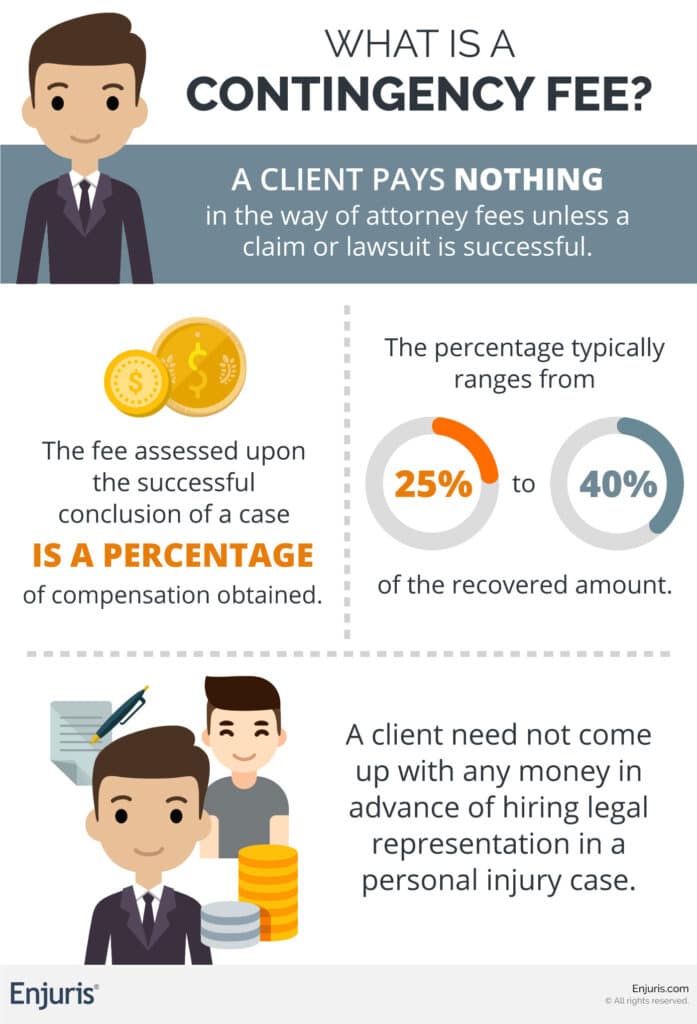
Most personal injury lawyers work on a contingency basis, meaning they get paid a relatively small percentage of your award (usually around 33 percent) if you win. If your damages are too small, you’ll have a hard time finding a lawyer to take your case.
If you’re representing yourself, you’ll need to weigh the potential award against court costs and legal fees, which may include:
- Filing fees
- Process service fees
- Research and investigation costs
- Expert witness fees
- Deposition expenses
- Parking, gas, and other incidental costs
- The value of your time
Read up on some smart strategies for pursuing a budget-friendly personal injury case.
3. Can the defendant actually pay?
Winning a lawsuit and getting paid aren’t the same thing. Just because a court awards you money doesn’t mean you’ll ever see a dime. If the defendant has no assets or has declared bankruptcy, enforcing a judgment can be difficult.
Wage garnishment and other collection methods exist but they often require additional legal action—meaning more time and money.
Is there an alternative to suing someone in court?
Lawsuits are long, difficult slogs, especially for someone who doesn’t make a living handling them.
How will you know of any pre-filing requirements? What are pre-filing requirements? Will you know how to prepare for hearings and depositions? How should you act in court? Do you need to wear a wig or bow to anyone?
If the dispute can be solved by any other means, that’s usually the best option. Here are a few smart alternatives to litigation:
1. Send a final demand letter
A well-crafted demand letter—sent by certified mail with a return receipt, so you have proof it was received by the opposing party—can often lead to a resolution without litigation. Your letter should include:
- A clear statement of what happened.
- Previous attempts to resolve the issue.
- The specific amount you’re demanding.
- A deadline for response.
Be sure to keep the demand letter civil. If you end up filing a lawsuit, this communication could become evidence, so you don’t want to say anything you’ll regret.
Here are some helpful tips to consider when writing a demand letter.
2. Consider mediation or arbitration
If negotiations stall, you may want to explore alternative dispute resolution (ADR) methods such as mediation or arbitration. These options are typically faster and less expensive than a lawsuit.
Mediation involves an impartial third party (the mediator) who helps both sides reach a fair agreement. The mediator does not make a binding decision but facilitates discussions to guide the parties toward a settlement.
Here are some things to keep in mind when considering mediation:
- Mediation can be voluntary or court-mandated.
- The process is confidential and typically less adversarial than litigation.
- Medication is often used when parties are willing to negotiate but need help reaching an agreement.
- Many nonprofit organizations offer free mediation services or services for a very low cost.
Arbitration is a more structured process where an arbitrator (or panel of arbitrators) hears evidence from both sides and renders a decision.
- Arbitration can be binding (where parties must accept the decision) or non-binding (where parties can reject the outcome and proceed to court).
- Arbitration is generally quicker and cheaper than a trial but may offer less opportunity for appeal.
- Some contracts include mandatory arbitration clauses, so be sure to review agreements carefully.
3. Look for free or low-cost legal help
If cost is a barrier, you might be eligible for free or reduced-cost legal help. Consider exploring the following:
- Legal aid organizations: Nonprofits, like the Legal Services Corporation, provide free legal assistance for low-income individuals.
- Local law school clinics: Many law schools run legal aid clinics where supervised students provide free or low-cost legal assistance.
- State and local bar associations: Many bar associations have referral services that connect individuals with affordable legal help.
The income cap for free legal services provided by nonprofits varies by organization, location, and funding source. However, many legal aid organizations use a percentage of the federal poverty level (FPL) as a guideline. Common thresholds include:
125 percent of the FPL This is a common cap for many federally funded legal aid organizations, such as those receiving funding from the Legal Services Corporation (LSC).
200 percent of the FPL Some organizations, particularly those funded by state or local sources, may extend eligibility to individuals or families earning up to twice the federal poverty level.
No strict cap Certain nonprofits focus on specific groups, like victims of domestic violence, veterans, or seniors, and may offer services without strict income limits.
How to file a lawsuit
If you’ve determined that filing a lawsuit is the right path after weighing your options, follow these steps to get started.
1. Identify the correct defendant
Make sure you are suing the correct person or entity. This can be more complicated than it sounds, especially in cases involving businesses or multiple parties. For example, if you slipped and fell at a franchise restaurant, you may need to sue the corporate owner rather than the local franchise. Misidentifying the defendant can result in delays, dismissal of your case, or an inability to collect damages.
2. Choose the appropriate court
Where you file your lawsuit depends on your case type, the amount of damages you’re seeking, and where the defendant is located. Common options include:
- Small claims court: For lower-value disputes (limits vary by state but are often $5,000 or less). Small claims court is faster, less formal, and parties typically don’t hire attorneys.
- State court: Handles most civil and personal injury cases.
- Federal court: Used for cases involving federal law or parties from different states, typically when damages exceed $75,000.
In most cases, you must sue in either:
- The county where the defendant lives or
- The county where the injury occurred.
Filing in the wrong court can result in your case being dismissed or transferred, which may delay the process and add to your expenses.
3. File the complaint
A lawsuit officially begins when you file a complaint, a formal legal document that outlines your case. The complaint typically includes:
- The names of the plaintiff(s) and defendant(s)
- The court’s jurisdiction over the case and the legal basis for it
- A detailed account of the events leading to the lawsuit
- The legal claims being asserted
- The damages sought and the legal reasoning behind them
The complaint must be filed with the appropriate court and must comply with your state’s specific formatting and procedural requirements. These rules are usually available on the court’s website. Filing fees vary by jurisdiction and court type, typically ranging from $30 to $500.
4. Serve the defendant
After filing, the defendant must be formally notified of the lawsuit through a process called service of process. This involves delivering the complaint and a document called a summons, which informs the defendant that they’re being sued and how they should respond.
Service of process can be done through:
- A sheriff’s deputy
- A professional process server
- Certified mail (only in certain cases)
Failure to properly serve the defendant can result in your case being dismissed.
5. The defendant’s response
The defendant is required to respond to the complaint within a specific timeframe (usually 21-30 days). Their response, known as the answer, will address the claims made in the complaint by admitting, denying, or partially admitting/denying each allegation. The answer may also include:
- Defenses: Legal reasons why the defendant believes they should not be held liable.
- Counterclaims: Claims the defendant makes against you in response to your lawsuit.
6. Discovery
Discovery is the process of gathering evidence and information from both sides. This can include:
- Interrogatories: Written questions that must be answered under oath.
- Requests for production: Requests for documents, medical records, or other evidence.
- Depositions: Oral testimony given under oath and recorded by a court reporter.
- Requests for admission: Requests for the opposing party to admit or deny specific facts.
Discovery is often the most time-consuming and expensive part of a lawsuit. Make sure you respond to requests accurately and thoroughly. Failure to comply can hurt your case.
7. Pretrial motions
During the discovery process, either party may file motions to ask the court to make rulings. Common pretrial motions include:
- Motion to dismiss: Asks the court to dismiss the case due to a lack of legal grounds.
- Motion for summary judgment: Asks the court to decide the case without a trial because there is no dispute of the facts.
- Motion to compel: Asks the court to force the opposing party to provide evidence they are withholding.
Take a deep dive into some of the most common pretrial motions in personal injury cases.
8. Pretrial negotiations
Many cases settle before trial. Settlement discussions often occur after discovery, when both sides have reviewed the available evidence. Common forms of dispute resolution include:
- Negotiated settlements: Direct discussions between the parties’ attorneys.
- Mediation: A neutral third party helps facilitate settlement discussions.
- Arbitration: A binding process where a neutral arbitrator hears both sides and issues a decision.
9. Trial
If no settlement is reached, the case will proceed to trial. The trial process typically includes:
- Jury selection (if applicable)
- Opening statements
- Presentation of evidence and witness testimony
- Cross-examination
- Closing arguments
- Jury instructions and deliberation (in jury trials)
- Verdict
10. Collecting a judgment
Winning at trial does not guarantee that the defendant will voluntarily pay the judgment. You may need to take additional steps, such as:
- Garnishing wages
- Seizing assets
- Placing liens on property
In some cases, a defendant may try to avoid payment by transferring assets to someone else or hiding property. This is called fraudulent conveyance, and courts take it seriously. If you suspect this kind of behavior, you may be able to challenge the transfer and still recover what you’re owed.
11. Appeals
If either party believes the trial court made a legal error, they can appeal the decision. Appeals do not re-litigate the case but instead review whether the trial court correctly applied the law.
What happens after you win: Types of judgments and payment challenges
Winning a personal injury case doesn’t always mean you’ll get paid right away. Once a case is resolved, the court may issue one of several types of judgments, depending on how the case was decided:
- Summary judgment – Granted when there’s no dispute over the facts, and the judge rules without a trial.
- Default judgment – Issued when the defendant doesn’t respond to the lawsuit at all.
- Civil judgment – A general term for the final decision in a lawsuit, often requiring the defendant to pay compensation.
The bottom line
Even if you think it’s a small case that wouldn’t warrant a lawyer’s involvement, talk to an attorney anyway. The first meeting is usually free, and the attorney can explain:
- What type of case you have,
- Whether you should pursue it alone, and
- How long it might take.
We have even written a list of materials that you should tailor to your situation and bring with you to that first meeting.
 Documents & Evidence Checklist
Checklist of 30 items to help you prepare for making a personal injury or accident claim
Download in PDF format
Finally, here are some additional resources that should help answer the question of how to sue somebody in court: