
Don’t go through a trial if you don’t have to
As a plaintiff in a personal injury case, it can be in your best interest to settle out of court. Legal battles often take years to resolve, and the longer the case lasts, the more fees accrue. While alternative dispute resolutions like mediation or arbitration are options, resolving your claim might be as simple as sending a payment demand letter to the defendant.
How can you resolve your claim just by writing one letter?
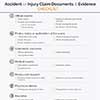 Documents & Evidence Checklist
Checklist of 30 items to help you prepare for making a personal injury or accident claim
Download in PDF format
In most cases, defendants may not take you seriously until you provide documentation of your intent. This actually means a demand letter, which might not sound serious to some, but in legalese, it’s very serious.
Submitting, in writing, your plans to pursue a claim emphasizes your willingness to invest time and resources in pursuing restitution for your financial loss, and offers the defendant an opportunity to settle out of court. It says, “Hey, let’s put aside our differences for a few moments and settle this like adults. Let’s do this with as few casualties as possible.”
Additionally, if you submit a payment demand letter and are still ignored, your personal injury attorney may find that information useful if your case does end up in mediation or the court system. It serves as evidence that you tried to play nice in the sandbox.
Tweet this
Writing a payment demand letter for your personal injury claim
- Language matters: Of course you’re angry about your pain and the lack of resolution up until this point. We totally understand that, and it’s absolutely valid. However, insults and heated language will only hurt your case, not help it. Be polite and businesslike, and stick to the facts.
Your language should also be specific regarding what you consider an acceptable resolution. List the amount you are seeking in monetary damages and the date you expect to receive payments, as well as any other action you expect the defendant to take, such as repairs to keep similar incidents from happening in the future. It is better to aim a bit high here, because the defendant will (hopefully) start negotiating.
Make it clear that your hope in sending this letter is to settle out of court and save both parties the inconvenience and frustration of a long legal battle.
- Leave no doubt of your intent: You can make the seriousness of your position clear in a number of ways. The first is by ensuring that your letter is professional in appearance. Take the time to type your letter in a word processing program. These days most software includes templates for professional letters that adhere to accepted business standards. Use certified mail, return receipt requested so you can make sure that the defendant has received it.
The second and more pointed way to make your intentions clear is to state them outright. Let the defendant know that if your letter is not met with a satisfactory resolution, your next step will be to file a court case. A personal injury attorney can help with appropriate phrases.
- Include all relevant facts: Review the facts of your case in the body of the letter. Make them as clear and concise as possible; bullet them if you must. Although the defendant should know the history of the incident, write your payment demand letter as though you are addressing someone with no previous knowledge of the case. This keeps you covered in the event an out-of-court settlement can’t be reached, at which point your letter will become a piece of evidence. Make sure to keep at least one copy of the letter for this reason as well.
In addition to your written restatement of facts, enclose any other documents that support your version of events. This can include medical records, photographs, police reports and witness statements, or any other items you feel support your claim.
When a payment demand letter doesn’t work
A payment demand letter will only have the desired effect in about a third of all cases that use them. If your attempt to settle out of court is unsuccessful, however, you may need to hire a personal injury attorney. If you need help finding someone to help you, try starting here in the Enjuris directory.
Resources to help you hire the best lawyer
- Choosing a personal injury attorney – interview questions
- When do you NOT need an attorney after an accident?
- Preparing to meet with a personal injury attorney
- How damages are calculated
- How to talk to a lawyer
- Negotiating lawyers’ fees – how do accident lawyers charge? Are there any hidden costs?
See our guide Choosing a personal injury attorney.