Help! I was injured at work
If you’ve been hurt on the job, you may be wondering: Do I need a workers’ compensation lawyer?
The answer depends on your situation. In many cases, injured workers can navigate the claims process on their own, but in others, a lawyer can help secure the benefits you rightfully deserve.
This guide explains when to hire a workers’ comp lawyer, how to find the right one, and what questions to ask—so you can make the best decision for your case.
What is workers’ compensation insurance?
Workers’ compensation is a state-mandated insurance program that provides financial support to employees who suffer job-related injuries or illnesses. This system covers medical expenses, lost wages, and rehabilitation costs.
Before workers’ compensation laws existed, employees had to sue their employers to recover lost wages and medical expenses— a long and difficult process with no guarantee of success. Today, most employers are required to carry workers’ comp insurance, which functions as a no-fault system: employees are generally entitled to benefits regardless of who caused the injury. In return, workers usually cannot sue their employer for additional damages, such as pain and suffering, except in rare cases involving intentional harm or gross negligence.
Workers’ compensation applies to a wide range of jobs, from construction workers and truck drivers to office employees and retail staff. Some states even extend benefits to undocumented workers. Covered injuries can range from sudden accidents, like falls or machinery mishaps, to long-term occupational illnesses, such as carpal tunnel syndrome or respiratory diseases caused by workplace exposure.
However, the system isn’t always straightforward. Claims can be denied for a variety of reasons, including:
- Missed deadlines: Workers’ comp claims have strict filing deadlines, and missing them can result in automatic denial.
- Disputes over whether the injury is work-related: Employers or insurers may argue that the injury happened outside of work or was caused by a pre-existing condition.
- Employment classification issues: Some employers misclassify workers as independent contractors, who are typically not covered by workers’ compensation, even if they function like employees.
- Allegations of intoxication or misconduct: Employers may deny claims by arguing that the worker was under the influence of drugs or alcohol or engaged in serious misconduct at the time of the injury.
- Failure to seek proper medical treatment: If an injured worker fails to follow the required medical protocols, such as seeing an approved doctor in a state with a managed care program, the claim may be denied.

How the workers’ compensation process works
Navigating a workers’ compensation claim can feel overwhelming, especially if you’ve never been through the process before. While laws vary by state, most claims follow these general steps:
- Report your injury: Notify your employer as soon as possible. Many states have strict deadlines, sometimes as short as a few days.
- Seek medical treatment: Your employer may require you to see a specific doctor, or you may be able to choose your own, depending on state laws. Always follow your doctor’s recommendations.
- File a workers’ compensation claim: Your employer should provide you with the necessary forms to officially file your claim. If your employer refuses to provide the paperwork or doesn’t report your injury, you can contact your state’s workers’ compensation board or an ombudsman for assistance.
- Claim review and decision: The insurance company will investigate and either approve or deny your claim based on medical records, workplace reports, and other evidence.
- Receive benefits (if approved): If your claim is approved, you’ll receive compensation for medical expenses and lost wages.
- Appeal a denial (if necessary): If your claim is denied, you can challenge the decision through hearings or legal action.
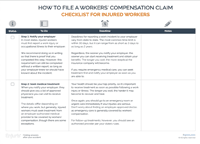 Workers’ Compensation Checklist
Download this checklist for injured workers to learn how to file a workers’ comp claim and track your progress.
Download in PDF format
When to hire a workers’ compensation lawyer
Now that you have a basic understanding of workers’ compensation, you may be wondering:
Should I hire a workers’ comp lawyer, or can I handle the claim on my own?
Although the workers’ comp system functions pretty well for the most part, it can still be complicated. For starters, laws vary from state-to-state, and some employers and insurance companies regretfully attempt to use obscure rules to unjustly reduce employee compensation. Hiring an experienced workers’ compensation attorney helps ensure that you receive the medical treatment and financial benefits you’re entitled to.
Here are some common situations where hiring a lawyer can make a significant difference:
- Your claim is denied or delayed: Insurers often reject claims, arguing the injury isn’t work-related or that paperwork wasn’t filed correctly.
- You’re not receiving benefits promptly: If medical bills are piling up and wage replacement checks are slow or missing, an attorney can help enforce your rights.
- Your benefits are suddenly reduced or terminated: Employers and insurers may attempt to cut off your benefits prematurely, especially if they believe you’re ready to return to work.
- Your settlement offer is too low: If the insurer’s offer doesn’t cover all your medical expenses and lost wages, a lawyer can negotiate for a fair amount.
- You have a pre-existing condition: Insurers may claim your injury is due to a prior health issue rather than a workplace accident.
- You missed significant time from work: If your injury prevents you from working for an extended period, you may be entitled to additional compensation beyond basic wage replacement.
- Your employer fails to report the injury or lacks insurance: Some employers neglect to file claims or illegally operate without workers’ comp coverage.
- You face retaliation for filing a claim: If your employer fires, demotes, or otherwise punishes you for seeking benefits, an attorney can help protect your rights.
- You’re required to see a specific doctor: Employers sometimes pressure injured workers into using a company-approved doctor who may downplay the severity of injuries.
- A third party contributed to your injury: If someone other than your employer (such as a subcontractor, equipment manufacturer, or negligent driver) was involved, you may have additional legal options.
- You receive other benefits (like Social Security disability): A workers’ comp settlement can impact your eligibility for other benefits, and a lawyer can help you structure your case properly.
Make no mistake—insurance companies and employers have teams of lawyers looking out for their interests. Having an experienced workers’ compensation attorney levels the playing field and ensures that you get the benefits you deserve.

Ben GerberAtlanta work injury attorneyGerber & Elkins Workers' Compensation Attorneys
Workers' comp: A slow fight for rightful benefits and treatment
Workers’ compensation is a process. It requires a lot of work to develop evidence, get medical treatment, and depose witnesses. Even though [a client] might be completely right, and they should be receiving weekly benefits and medical treatment, it requires a fight. The wheels of justice grind slowly sometimes, but with patience, we can get the proper result

R. Mack BabcockDenver workers' compensation & personal injury attorneyBabcock Tucker
We fight for accident victims, not corporations
I started with a mid-size insurance defense firm but quickly became very familiar with how insurance companies treat accident victims – how faceless corporations play with people’s lives when they’re at their very worst. This is part of the reason I decided to found my own practice. At Babcock Tucker, we will never represent an insurance company or other member of corporate America.

It’s incredibly important to hire a qualified workers’ compensation law firm after any work accident. Strict deadlines must be met, and certain technicalities require an experienced lawyer to navigate. Workers’ compensation cases are actively defended, and insurance companies will question whether you need medical care or whether you’re truly disabled.
Each of these disputes must be litigated—one lawyer representing you, the injured worker, and another representing the insurance company. These disputes go before the Workers’ Compensation Board, which ultimately decides what benefits you receive. Often, this leads to hearings where attorneys question doctors or other witnesses under oath to prove or disprove claims.
That process can be intimidating, and the consequences of losing can be devastating. You could be denied medical care, lose wage benefits, or be forced back to work before you’re physically ready. The best advice is to get a lawyer as soon as possible to set up your claim correctly and ensure you receive the benefits you need and deserve under the law.
When you do NOT need a workers’ compensation attorney
Not every workplace injury requires hiring an attorney. You may be able to handle your claim on your own if all of the following are true:
- Your injury was minor (e.g., a small cut or strain) and fully healed with minimal treatment.
- You missed little or no work due to your injury.
- Your employer acknowledges that the injury was work-related.
- The insurance company accepts your claim and provides full benefits without dispute.
That said, it’s always wise to at least consult with a workers’ compensation attorney before accepting a settlement. Insurance companies may offer less than you’re entitled to, and they often pressure injured workers into signing agreements that close the door on future claims. Most workers’ comp lawyers offer free consultations, so you can get a professional review of your claim at no cost.
Finding the best workers’ compensation lawyer near you
The best workers’ compensation lawyers have experience handling cases like yours and a deep understanding of your state’s specific laws.
Not all attorneys focus on workers’ comp, so it’s important to look for one with a strong track record in this area.
Reading client reviews, asking for recommendations from coworkers or union representatives, and checking an attorney’s credentials with your state bar association are good ways to start. You should also pay attention to how an attorney communicates—workers’ comp cases can be stressful, and you want someone who keeps you informed and explains legal issues in a way that makes sense.
Most workers’ compensation lawyers work on a contingency fee basis, meaning they don’t get paid unless you win your case. Be wary of anyone asking for upfront fees, and make sure you understand their payment structure before signing an agreement.
If you’re unsure where to start, several resources can help. Many state bar associations provide directories of licensed workers’ comp attorneys, and legal aid organizations sometimes offer free consultations. You can also find vetted attorney listings through Enjuris, making it easier to connect with a trusted lawyer in your area.
Hiring an attorney is one of the most important steps in securing fair compensation for a workplace injury, but what you do immediately after an accident matters just as much. Learn how to report a workplace injury to protect your claim from the start.
Taking the time to find the right lawyer can make all the difference in your case. The sooner you reach out, the better positioned you’ll be to receive the benefits you’re entitled to.
Featuring Enjuris Partners representing workers injured on the job





Questions to ask a workers’ compensation lawyer
How do you know when you’ve found the best attorney to take on your workers’ compensation case?
By asking the right questions.
Review the following list of questions when preparing to meet with a workers’ comp lawyer:
- Is your practice exclusively devoted to workers’ compensation, or do you specialize in other areas as well?
- Who will be handling the majority of my case? An attorney or an assistant?
- Do you have certifications and qualifications? How long have you been practicing workers’ comp law?
- How much do you charge? Do you work on a contingency fee basis?
- What are the strengths and weaknesses of my claim?
- Do your cases often settle or go to trial?
Free downloadable resources
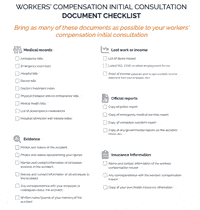 Workers’ Compensation Initial Consultation
A worksheet to prepare for your first meeting with a workers’ compensation attorney--what to bring and what they’ll ask
Download in PDF format
 Personal Injury Attorney Interview Sheet
Worksheet with questions to ask a personal injury attorney to help determine if he or she will be a good fit for your case
Download in PDF format
 Damages/Expenses Worksheet
Damages worksheet to track expenses for your injury claim (medical treatment, property damage, lost wages, prescriptions)
Download in PDF format
Common workers’ compensation myths
Many workers hesitate to file a claim due to misunderstandings about workers’ compensation. Let’s clear up some common myths:
- “I’ll get fired if I file a claim.” – It’s illegal for an employer to retaliate against an employee for filing a legitimate workers’ comp claim.
- “My injury isn’t serious enough to report.” – Even minor injuries can worsen over time. If you don’t report it, you may lose your right to compensation.
- “Workers’ comp covers all my lost wages.” – Most states only pay a percentage of your pre-injury earnings, usually around two-thirds.
- “I can sue my employer if I get injured at work.” – Workers’ comp laws generally prevent lawsuits against employers, except in cases of extreme negligence or intentional harm.
- “I can only get benefits if my employer was at fault.” – Workers’ comp is a no-fault system, meaning you can receive benefits regardless of who caused the injury.

Tips for finding the best workers’ compensation lawyer
What is the best way to hire a workers’ compensation attorney? Is it different from hiring a lawyer who specializes in other areas? Read on to find out and learn some helpful tips for your own search.