
A T-bone car crash can raise issues about liability that other kinds of accidents don’t.
A side-impact collision (also called a “T-bone” or broadside crash) is when one vehicle hits another from the side. Unfortunately, side-impact crashes often result in serious injuries or fatalities. When another vehicle strikes your car in the front or rear, there are several feet of space between your body and the outside of the car. The trunk, bumpers, and hood area all provide some buffer between the point of impact and the driver or passenger.
But when another car hits from the side, there’s only the door and window between that force and a person in the seat.
What to do after a side-impact crash
The first priority in any collision is to get medical help for anyone involved. In addition to getting emergency medical responders on the scene as quickly as possible, a police officer will be dispatched to file a report and record evidence, following the car accident reporting requirement by the state. It’s crucial to get a police report for any collision, no matter how small.
When you’re in a car crash, the first thing the insurance company will ask is which driver was at fault. The most common side-impact crashes are when another car hits yours (for example, you’re traveling through an intersection and the other car hits from the side) or when another driver cuts in front of you. Either way, the other driver could claim that they had the right of way.
The responding police officers will note in their report any conditions that will offer evidence about who was at fault. They might ask witnesses whether traffic lights were red or green, if a driver failed to stop at a stop sign, or other questions to determine how the crash occurred. If there are no witnesses, police can evaluate skid marks, the points of damage on the vehicles, and other information that can be used to piece the facts together.
If you’re not injured and can take photos of the scene, those are helpful. Only do this if you’re safe from oncoming traffic. The insurance company will likely ask for photos of your vehicle to process a claim, but you can’t produce photos of the conditions of the accident once time has passed, so if you can safely take some immediately, they’ll be useful. To make the most of this evidence, consider hiring a car accident attorney who can use these photos to strengthen your case for fair compensation.
If the car accident wasn’t your fault, there are specific steps and rights you need to understand to protect yourself and secure what you’re owed.
Common causes of side-impact collisions
There are plenty of reasons why side-impact crashes (or any crashes) happen.
Here are some common examples:
- Speeding (or driving too fast under specific conditions like rain or fog)
- Failure to stop at red light or stop sign
- Distracted driving (driving while texting or otherwise not paying full attention to the road)
- Illegal passing
- Failure to yield
- Reckless or aggressive driving
- Poor weather conditions
- Failure to take proper precautions when making a turn
Common injuries from side-impact collisions
Any car crash has the potential to result in serious injury, especially a T-bone crash because there’s less space between a person’s body and the point of impact. That means less opportunity for “crumpling,” where the front or rear of the car absorbs some of the impact. The driver or passenger seated on the side where the other car hit is likely to suffer the most severe injuries.
Every vehicle must meet federal safety standards for a side-impact crash. However, if an 80,000-pound commercial truck or 18-wheeler crashes into a passenger car, there’s no way to make a car that can withstand the impact.
Common injuries from side-impact crashes include:
- Head injuries (concussion) or traumatic brain injury
- Cuts from shattered glass
- Neck or back injuries: herniated discs, whiplash, nerve damage, spinal cord damage, paralysis
- Injuries to chest, abdomen, and pelvis: crushing injuries from buckled car frame
- Soft tissue injuries that include muscle, tendon and ligament sprains or tears
A traveler in a car with side-curtain, torso airbags and a good side-impact rating might fare better in a T-bone crash. Heavier vehicles are also better able to withstand a strong impact.
Negligence in a side-impact crash
There are circumstances when both drivers could be found negligent in a side-impact crash.
For example, if you’re the driver traveling through a green light, you still have a responsibility to make sure it’s safe to do so by glancing to the right and left as you proceed through an intersection. Clearly, the other driver would be at fault for going through a red light, but if you should have seen him coming and stopped sooner, you might bear some amount of responsibility.
These scenarios are where the insurance company and, in many cases the courts, need to look at factors like speed, visibility, other traffic, and additional surrounding circumstances to make a determination.
Whether (or how much) you recover in a lawsuit for a side-impact crash could depend on whether your case is in a fault or no-fault state.
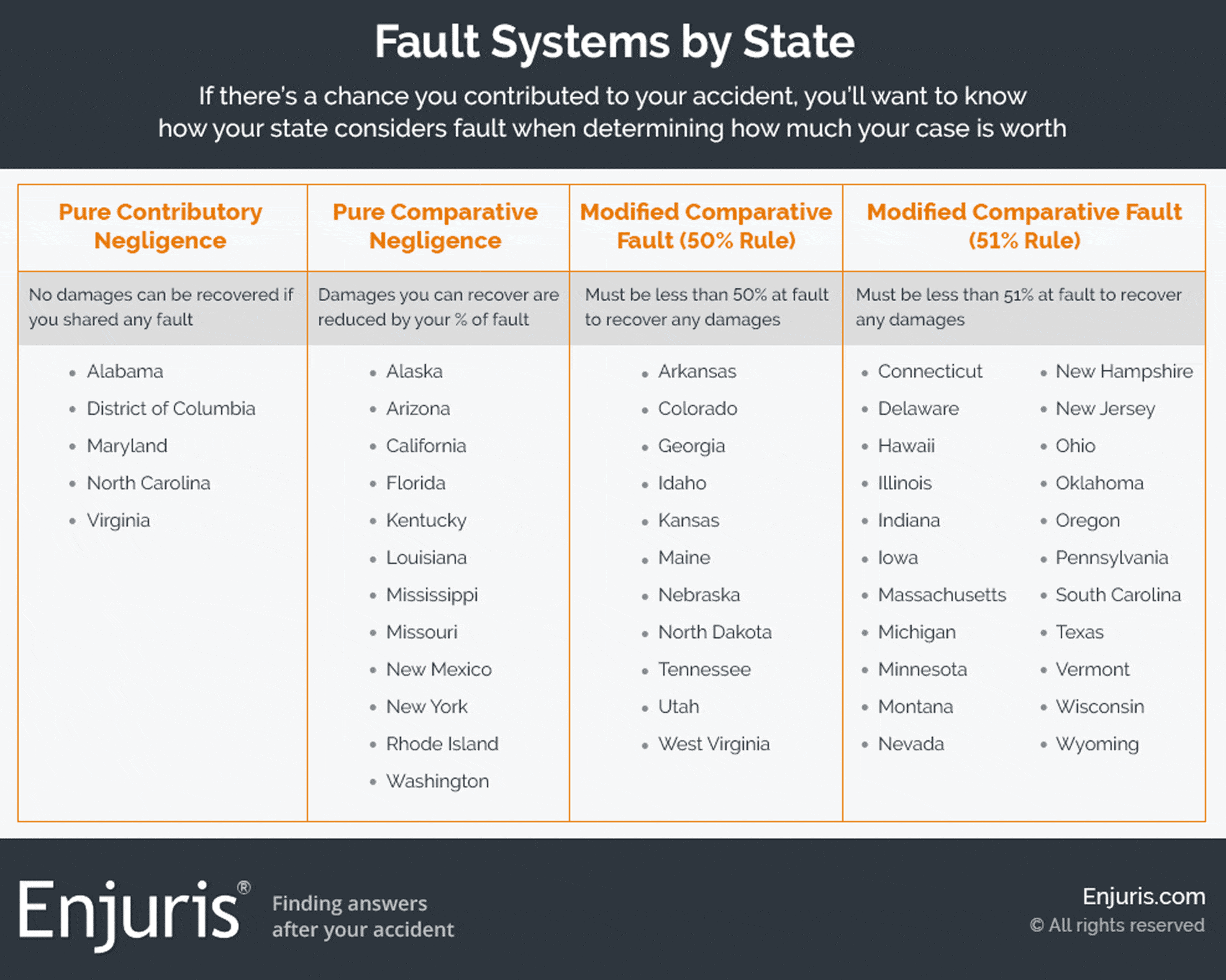
Fault Systems by State
View Full Size Get the Code Use this graphic on your site
Use this infographic on your site
We encourage people to use our infographics, with proper attribution. Just copy and paste the code below to use this infographic on your site. If you need help, let us know!
<a href="https://www.enjuris.com/personal-injury-law/shared-fault-rules/" target="blank"><img src="https://www.enjuris.com/wp-content/uploads/2022/10/fault-systems-by-state-2022.gif" alt="Fault Systems by State" title="Fault Systems by State" style="width: 100%; max-width: 987px; display: block; margin: 15px auto;" /></a>
Maybe you suspect that you have some liability for a side-impact crash, or perhaps you’re sure you don’t. Either way, an attorney who’s familiar with your state’s laws will advise on how to proceed. Enjuris offers a Personal Injury Law Firm Directory to guide you through finding the lawyer who’s right for your case.
See our guide Choosing a personal injury attorney.