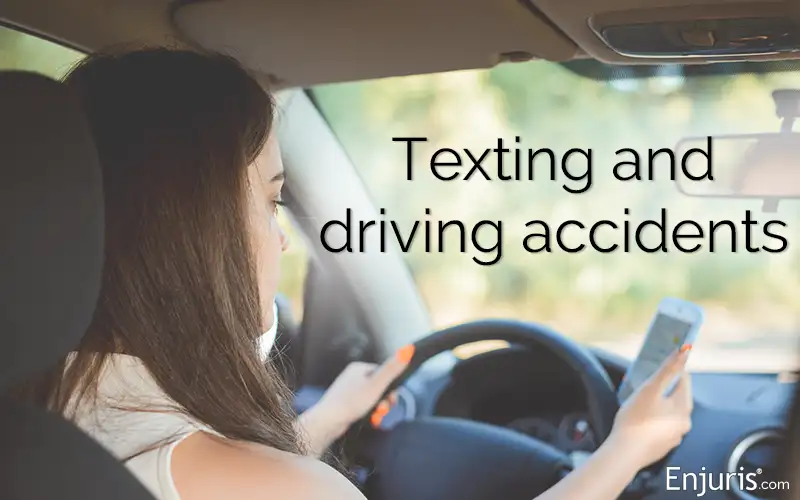
In today’s digital age, our smartphones have become indispensable companions, keeping us connected every second of the day. But this constant connectivity has birthed a perilous trend on our roads: texting and driving. This seemingly innocuous act has rapidly evolved into a crisis, with fatal consequences.
According to the Centers for Disease Control and Prevention (CDC), distracted driving, of which texting is a significant contributor, claimed a staggering 3,522 lives in 2021 alone. The National Safety Council (NSC) paints an equally grim picture, revealing an alarming increase in the behavior. The percentage of drivers manipulating hand-held electronic devices has skyrocketed 127 from 2012 to 2021.
As we progress through this article, we’ll explore the shocking statistics surrounding texting and driving and review how each state is combatting this menace through legislation.
Tweet this
Cell phone distractions behind the wheel: Modes and trends
Every year, the National Highway Traffic Safety Administration (NHTSA) releases a comprehensive report on cell phone use among drivers. The most recent report identifies three primary modes of cell phone use while driving:
- Holding a phone to your ear: The percentage of drivers holding cell phones to their ears while driving decreased from 2.6 percent in 2020 to 2.5 percent in 2021. Although the numbers are decreasing, they are still alarming. An estimated 373,066 drivers are holding cell phones to their ears at any given moment.
- Using a headset: The percentage of drivers using headsets in 2021 was 0.4 percent, which is essentially the same percentage as in 2020.
- Manipulating a handheld device: The percentage of drivers visibly manipulating handheld devices while driving increased from 2.8 percent in 2020 to 3.4 percent in 2021. The percentage of driver manipulation of handheld devices was highest among 16-to-24-year-olds.
Methodology: How does the NHTSA know how many drivers are using cell phones?
Trained data collection experts sampled intersections controlled by stop signs and traffic lights. They observed the behavior of passenger vehicle occupants. Occupants were not interviewed or surveyed because doing so might taint their behavior and could cause false results.
The observers collected data on the driver, front-seat passenger, and up to two passengers in the rear seats. The observations were then analyzed through a complex system of “statistical data editing, imputation of unknown values, and complex estimation procedures.”
A statistical overview of distracted driving in the United States
Distracted driving remains a significant concern on American roads, with thousands of lives lost each year due to drivers taking their focus off the road. Here’s a snapshot of the most compelling statistics that underscore the magnitude of this issue:
- Fatalities and injuries: In 2020 alone, 3,142 people lost their lives due to distracted driving, accounting for between 8 and 9 percent of all fatal motor vehicle collisions in the United States. This number is alarming, especially when considering that not all these accidents were fatal. A staggering 324,652 individuals were injured in distracted driving incidents in the same year.
- Cell phone usage: Despite the risks, drivers spend an average of 1:38 minutes on their phones for every hour they drive. This number has seen a 30.3 percent increase since February 2020, possibly due to increased reliance on phones during the COVID-19 pandemic.
- Time of day matters: Distracted driving isn’t consistent throughout the day. Between 6 and 11 p.m., drivers are most distracted, averaging 1:56 minutes of inattention per driving hour. In contrast, the morning hours between 6 and 9 a.m. see drivers most focused, with only 1:04 minutes of distraction per hour.
- The bigger picture: Since 2012, over 29,000 people have tragically lost their lives to distracted driving. However, there’s a silver lining: fatal distracted driving crashes have decreased by one percent since 2016. This suggests that awareness campaigns and distracted driving laws might be making an impact.
- Age matters: Younger drivers, particularly those aged 25 to 34, are most involved in fatal distracted driving accidents. In 2020, this age group saw 729 drivers involved in such incidents. Alarmingly, six percent of distracted driving fatalities involved a teenager aged 15-19, with 44 percent of these accidents resulting in a teenage fatality.
- Distracted driving across states: The risks vary across the U.S. New Mexico had the highest rate of fatal car accidents due to distracted driving in 2020, with distracted driving accounting for 38 percent of all fatal accidents in the state. On the other hand, Mississippi emerged as the safest state in this regard, with distracted driving accounting for only 1.46 percent of fatal crashes.
While strides have been made in reducing the number of accidents due to distracted driving, these statistics highlight that there’s still much work to be done.
State laws on cell phone use while driving
U.S. distracted driving laws vary by state. While some strictly ban hand-held cell phone use, others focus on groups like novice drivers or school bus operators. Specifically:
- Hand-held cellphone ban: Enforced in 28 states, D.C., Guam, Northern Mariana Islands, Puerto Rico, and the U.S. Virgin Islands.
- All cellphone ban: While no state bans all cellphone use for every driver, 36 states and D.C. restrict novice or teen drivers, and 18 states and D.C. limit school bus drivers.
- Text messaging ban: 48 states, D.C., Puerto Rico, Guam, and the U.S. Virgin Islands have this ban, with Missouri targeting drivers 21 and under. Some states also have zone-specific restrictions.
Stay informed with this section’s comprehensive guide on current laws, and remember to check for updates, as distracted driving laws are changing all the time.
Even though a headset is hands-free, not every state allows drivers to use them. Is your state one of them?
|
Texting and driving laws in your state
Primary law: Officers can pull over and ticket without seeing another violation. |
|||
|---|---|---|---|
| State | Hand-held ban | Texting ban | All cell phone ban |
| Alabama | All drivers (secondary, but primary for teens) | All drivers (primary) | |
| Alaska | All drivers (primary) | ||
| Arizona | All drivers (primary) | All drivers (primary) | Novice drivers (secondary), bus drivers (primary), teen drivers (secondary) |
| Arkansas | School and work zones (primary), teen drivers (primary) | All drivers (primary) | Novice drivers (primary), bus drivers (primary), teen drivers (primary) |
| California | All drivers (primary) | All drivers (primary) | Bus drivers (primary), teen drivers (secondary) |
| Colorado | All drivers (primary) | Teen drivers (primary) | |
| Connecticut | All drivers (primary) | All drivers (primary) | School bus drivers (primary), teen drivers (primary) |
| Delaware | All drivers (primary) | All drivers (primary) | Learner’s permit holders (primary), school bus drivers (primary) |
| DC | All drivers (primary) | All drivers (primary) | Learner’s permit holders (primary), school bus drivers (primary) |
| Florida | Drivers in school and work zones (primary) | All drivers (primary) | |
| Georgia | All drivers (primary) | All drivers (primary) | School bus drivers (primary) |
| Hawaii | All drivers (primary) | All drivers (primary) | Teen drivers (primary) |
| Idaho | All drivers (primary) | All drivers (primary) | |
| Illinois | All drivers (primary) | All drivers (primary) | School bus drivers (primary), teen drivers (primary) |
| Indiana | All drivers (primary) | All drivers (primary) | Teen drivers (primary) |
| Iowa | All drivers (primary) | Novice drivers (primary), teen drivers (primary) | |
| Kansas | All drivers (primary) | Novice drivers (primary), teen drivers (primary) | |
| Kentucky | All drivers (primary) | School bus drivers (primary), teen drivers (primary) | |
| Louisiana | Novice drivers (secondary), school zones (primary) | All drivers (primary) | Novice drivers (secondary), school bus drivers (primary), teen drivers (primary) |
| Maine | All drivers (primary) | All drivers (primary) | Novice drivers (primary), teen drivers (primary) |
| Maryland | All drivers (primary) | All drivers (primary) | Teen drivers (primary) |
| Massachusetts | All drivers (primary) | All drivers (primary) | School bus drivers (primary), teen drivers (primary), bus drivers (primary) |
| Michigan | All drivers (primary) | All drivers (primary) | Novice drivers (primary) |
| Minnesota | All drivers (primary) | All drivers (primary) | Novice drivers (primary), school bus drivers (primary) |
| Mississippi | All drivers (primary) | School bus drivers (primary) | |
| Missouri | All drivers (primary) | Teen drivers (primary) | |
| Montana | |||
| Nebraska | School bus drivers (primary) | All drivers (secondary) | Novice drivers (secondary) |
| Nevada | All drivers (primary) | All drivers (primary) | |
| New Hampshire | All drivers (primary) | All drivers (primary) | Teen drivers (primary) |
| New Jersey | All drivers (primary) | All drivers (primary) | Novice drivers (primary), school bus drivers (primary) |
| New Mexico | All drivers (primary) | Novice drivers (primary) | |
| New York | All drivers (primary) | All drivers (primary) | |
| North Carolina | All drivers (primary) | Novice (primary), school bus drivers (primary), teen drivers (primary) | |
| North Dakota | All drivers (primary) | Novice drivers (primary), teen drivers (primary) | |
| Ohio | All drivers (primary) | All drivers (primary) | Teen drivers (primary) |
| Oklahoma | Novice drivers (primary), school bus drivers (primary), bus drivers (primary) | All drivers (primary) | |
| Oregon | All drivers (primary) | All drivers (primary) | Teen drivers (primary) |
| Pennsylvania | All drivers (primary) | ||
| Rhode Island | All drivers (primary) | All drivers (primary) | School bus drivers (primary), teen drivers (primary) |
| South Carolina | All drivers (primary) | ||
| South Dakota | All drivers (primary) | Novice drivers (primary) | |
| Tennessee | All drivers (primary) | All drivers (primary) | Novice drivers (primary), school bus drivers (primary) |
| Texas | School zones (primary) | All drivers (primary) | School bus drivers (primary), teen drivers (primary) |
| Utah | All drivers (primary) | Teen drivers (primary) | |
| Vermont | All drivers (primary) | All drivers (primary) | Teen drivers (primary) |
| Virginia | All drivers (primary) | All drivers (primary) | Novice drivers (primary), school bus drivers (primary) |
| Washington | All drivers (primary) | All drivers (primary) | Novice drivers (primary) |
| West Virginia | All drivers (primary) | All drivers (primary) | Teen drivers (primary) |
| Wisconsin | Work zones (primary) | All drivers (primary) | Novice drivers (primary) |
| Wyoming | All drivers (primary) | ||
Other types of distracted driving
The term “distracted driving” refers to any non-driving activity that takes your attention away from driving. The most common example is using a cell phone while driving, but there are many other types of distracted driving behaviors, including:
- Eating or drinking
- Talking to passengers
- Grooming
- Adjusting the radio
- Watching videos
Distracting activities tend to fall into one of three categories:
- Cognitive distractions take your mind off the road (for example, talking on the phone or to a passenger),
- Visual distractions take your eyes off the road (for example, watching videos or adjusting the radio), and
- Manual distractions take your hands off the wheel (for example, grooming or eating).
Texting and driving falls into 3 categories of distractions, which is why it is particularly dangerous.
Distracted driving and liability
Motor vehicle accident lawsuits are generally based on the legal concept of negligence.
Negligence is defined as “the failure to exercise reasonable care to prevent harm to someone else on the road.” If the plaintiff can prove that the defendant was using a cell phone (or engaging in some other distracting activity) when the accident occurred, they can generally establish negligence.
What’s more, if the defendant received a citation for violating a state’s distracted driving law, the defendant will typically be presumed negligent and the defendant will have the burden of proving that they didn’t cause the accident. This is referred to as “negligence per se.”
Your phone records could be subpoenaed to determine if you were texting or talking while a car accident occurred.
Consider this distracted driving fact: If you drive at 55 miles per hour and send a text that takes 4.6 seconds, the distance your car traveled is the length of a football field. That is the equivalent of driving blind across a football field.
You know what else takes 4.6 seconds? Getting into a car crash.
How to avoid texting and driving accidents
The simplest way to solve the texting and driving problem? Don’t text and drive. Apple’s new updates for iPhones include a new driver safety feature that senses when the car is in motion and blocks text messages. There is also an option to say “I’m not driving” (i.e., I’m a passenger).
If you believe that a life-or-death text message must be sent or received while you are en route to another destination, pull over and stop the car. Answer the text and then get back on the road.
Here are some other tips to help you avoid a distracted driving crash:
1. Never hold your phone in your hand
If you need to use it for GPS, mount it to the dashboard so you can see the map without taking your eyes off the road. Turn off other notifications so that you’re not seeing other banners or pop-up notifications on the map while driving.
2. Silence your phone before you get in the car
Those rings and pings can be distracting, even if you’re not looking at the phone. Especially if you’re the type of person who would be in suspense over who texted you and what they said, the distraction could be in just knowing that there’s a message waiting for you. If you can’t resist looking at your phone when it buzzes, then keep it somewhere you can’t get to it like in the back seat or trunk — that way you’re not tempted to sneak a peek.
3. Don’t use any apps or social media
There are apps that notify you of all kinds of things… not just texts. But don’t use them while you drive… and that includes recording video.
4. Keep your music at a low volume
It’s important to hear sounds from outside the car to alert you of danger, so keep your music, podcasts or other listening material at a reasonable volume.
5. Don’t text or call someone if you think they’re driving
This is how you can protect your friends and others. Don’t put someone else in a potentially dangerous situation.
6. Don’t eat or drink while driving
Most of us can eat or drink with our eyes closed (but we don’t recommend it). But reaching for a cup in the holder, glancing down because something fell on your clothes, or even taking a big bite of a sandwich can take your eyes off the road and hands off the wheel momentarily—which is all it takes.
7. Prepare listening material before you leave
If you like to listen to music or podcasts from your phone, queue your selections before you start driving so you don’t have to do so while on the road. By the same token, set addresses in the GPS so you don’t have to attempt to use the navigation while in motion.
8. Don’t let your passengers be a distraction
Any parent knows how distracting children can be. But this also includes pets — keep them in a carrier or buckle them in the back seat if they can sit there calmly.
9. No reaching
If you drop something on the floor of the car, either leave it there until you’ve reached your destination or pull over to retrieve it.
10. Don’t take videos
Regardless of what’s happening outside the car, don’t use your phone to take pictures or videos while driving. If you feel like recording traffic is useful, purchase a separate dashcam that can record without driver intervention.
See our guide Choosing a personal injury attorney.