What are your legal rights after a motorcycle injury?
Most motorcyclists know that riding a motorcycle is more dangerous than in a car. There are several reasons for this, the clearest of which is that a car has a roof and sides that protect occupants in the event of a collision. Cars are designed with steel-reinforced doors, airbags, and other features that provide protection. On a motorcycle, you’re less likely to fare well if you’re in a collision with a car, are thrown from the motorcycle, or come into contact with the road.
However, keeping a few safety precautions in mind, motorcycling can be safe and fun. Whether you love to ride Route 32 from Morehead to Louisa or Russell Cave Road in Louisville, or Barren River State Resort Park to Green River State Park near Campbellsville, riding in the Bluegrass State is always a great adventure.
Here’s what you should know about Kentucky motorcycle laws and responsibilities, and what to do if you’re in a motorcycle accident.
Kentucky motorcycle collision statistics
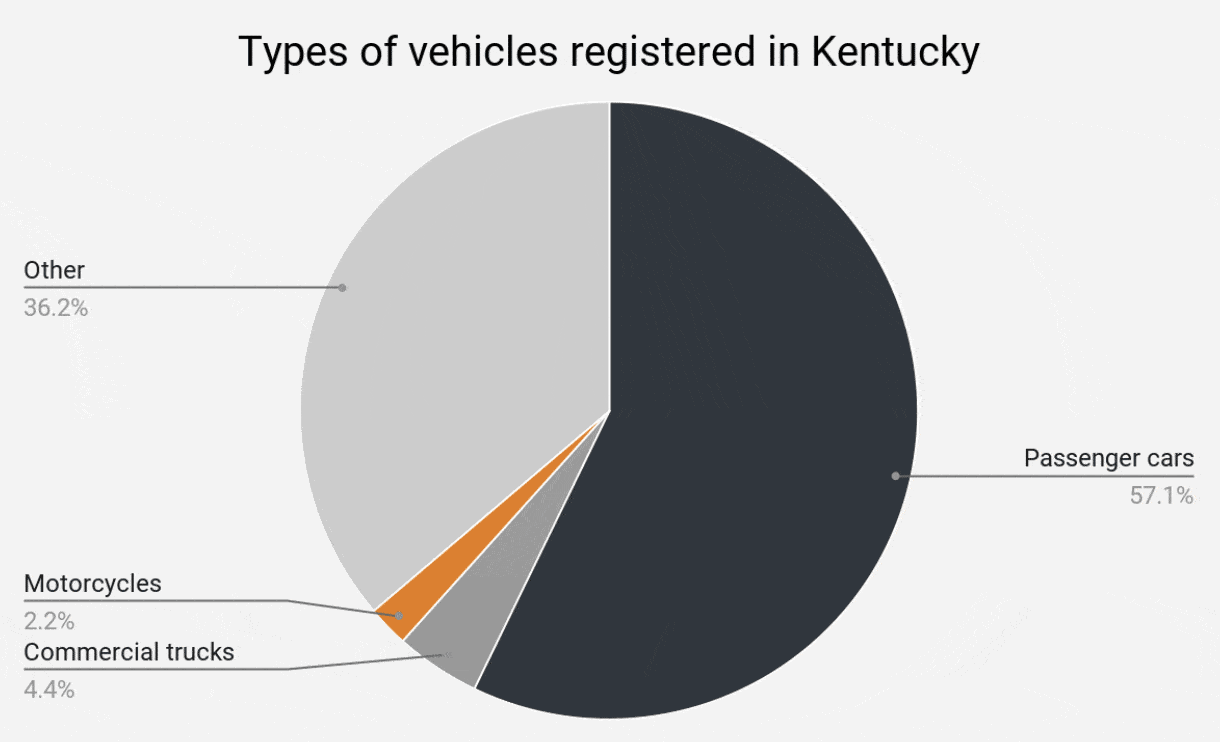
The Kentucky Traffic Safety Data Services (KTSDS) reported that motorcycles represented 7% of vehicles in fatal collisions in 2019. As you can see in the chart below, motorcycles comprise only 2.2% of all registered vehicles in Kentucky, meaning the motorcycle fatality rate is above average.
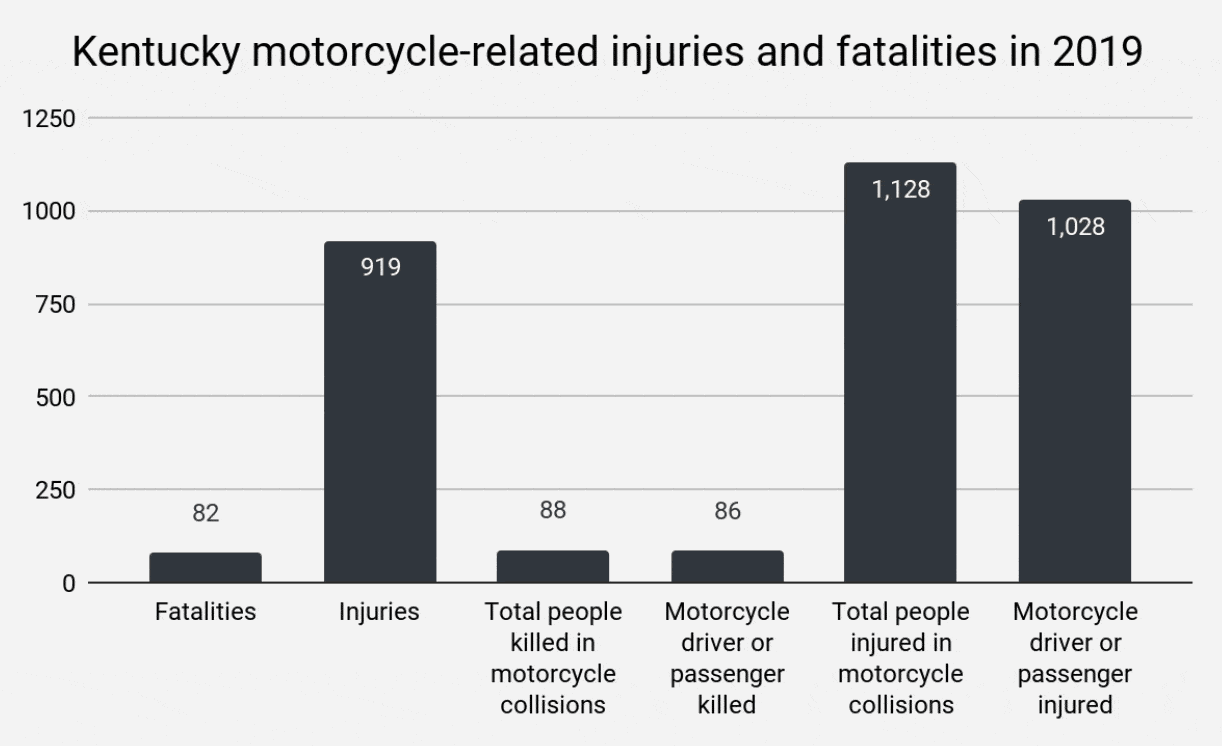
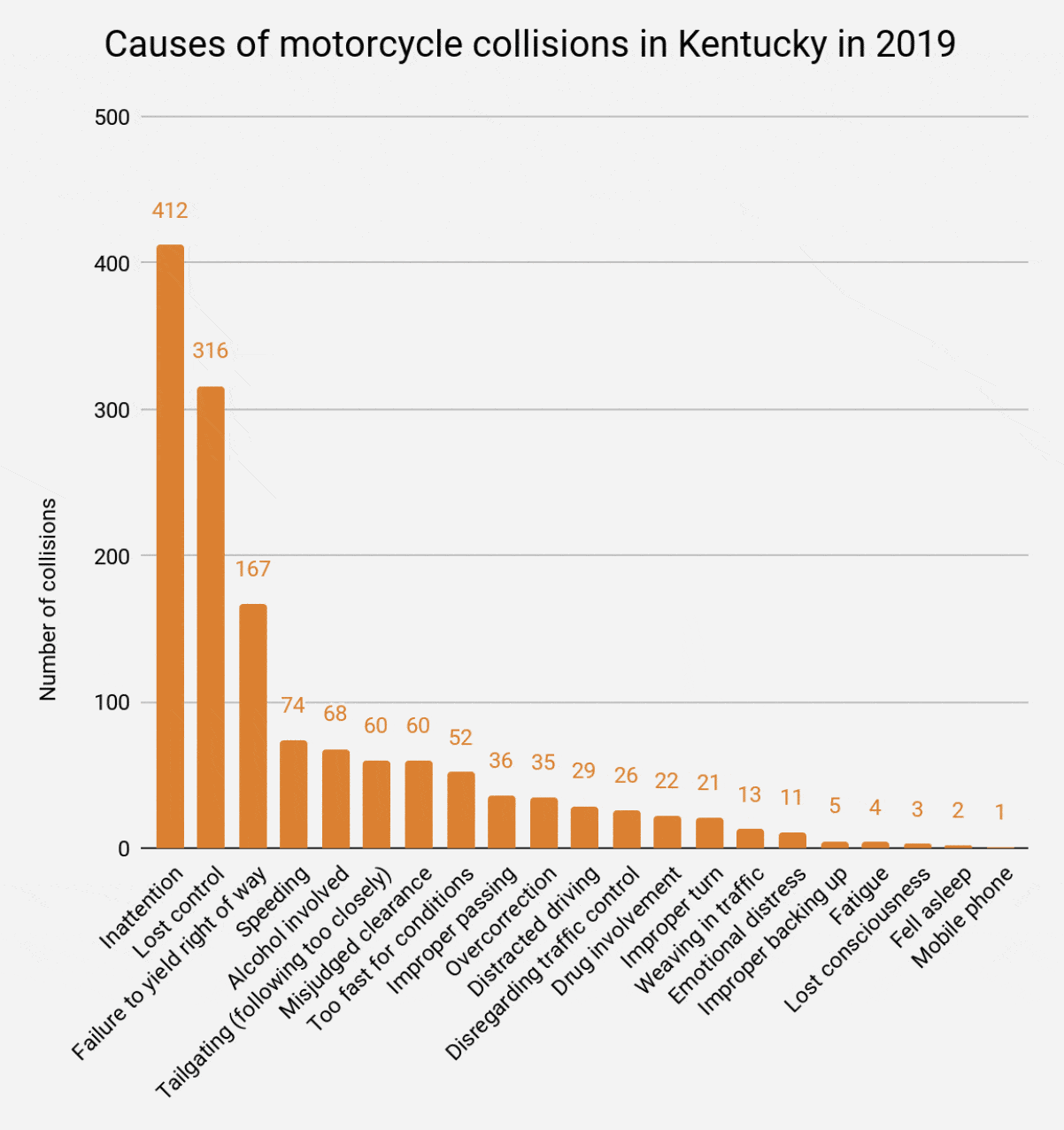
Here’s a look at Kentucky motorcycle-related injuries and fatalities and their causes.
Damages for a Kentucky motorcycle accident
There are a lot of reasons why motorcycle accidents happen. If you’re injured and seek to recover damages (financial costs) for your accident, the cause of the crash will be one of the most important aspects to making recovery possible.
In order to recover financially from a motorcycle accident, your lawyer will need to determine who (or what) caused the accident in order to establish liability or fault.
Kentucky law allows for a plaintiff (the victim of an accident or injured person) to be made whole. That means if you’re injured because of someone’s negligence, you can be restored to the financial situation you’d be in if the accident had never happened.
If a Kentucky motorcycle accident was caused by your own fault, you can make a claim on your own Personal Injury Protection (PIP), but you’d be limited to coverage under your own policy.
But if the accident was caused by another driver, a road condition, or something else, you might be able to make a claim against their insurance or file a lawsuit.
Kentucky motorcycle insurance requirements
The Commonwealth of Kentucky is a no-fault jurisdiction. That means if you’re in an accident, you turn first to your own insurance to cover your injuries.
If you’re severely injured and your policy doesn’t cover the full extent of your costs, you would then make a claim on the at-fault driver’s insurance.
Finally, you can file a lawsuit if you’ve exhausted all insurance coverage.
A Kentucky motorcyclist is required to have at least the following insurance:
- $25,000 death or bodily injury for 1 person
- $50,000 death or bodily injury for all people involved in an accident
- $10,000 for damage or destruction of property
You can always opt for additional insurance or higher policy amounts, but these are the minimum requirements.
These minimums are for personal injury or liability for other types of property damage, but they don’t include damage to your motorcycle. You would need to purchase comprehensive or collision insurance to cover those expenses.
Common causes of motorcycle accidents
Certainly, a motorcycle accident can happen in a variety of ways. However, there are some factors that are the most common. If you’re a motorcyclist, these are the things you ought to pay attention to:
Unsafe lane changes
If a car driver fails to check their blind spot when changing lanes, an unseen motorcyclist can get hit.
Speeding
Speeding can be either on the part of the motorcyclist or a car driver. Regardless, it’s a major cause of motor vehicle accidents because speeding decreases the chance that a driver will see and react to other vehicles or obstacles in the amount of time required to prevent a collision.
Driving under the influence (DUI)
Driving under the influence of alcohol or drugs impairs the driver’s ability to operate a vehicle safely.
Lane-splitting
Lane-splitting is the practice of riding a motorcycle in between 2 lanes of traffic facing the same direction when the vehicle traffic is traveling more slowly than the motorcycle. This can lead to accidents because a car driver might not expect or see a biker alongside them and merge, turn, or swerve into the path of a motorcyclist.
Sudden stopping
Any sudden stop can be dangerous to a motorcyclist, whether the motorcycle stops suddenly and they’re rear-ended by a car or the motorcyclist is behind a car that stops abruptly.
Dangerous road conditions
Poor signs or signals, pavement cracks or potholes, debris, and other conditions can contribute to a motorcycle accident.
Inexperience
Often, new or inexperienced motorcyclists have accidents because they’re not yet adept at maneuvering their bikes. Practice operating your motorcycle on a closed course or in a safe spot like an empty parking lot or sparsely traveled road until you feel comfortable enough to expertly navigate in traffic.
Left-turn accidents
Many motorcycle accidents happen because the motorcyclist misjudged the distance or speed of an oncoming car, or made a right-of-way error. A car making a left-hand turn is the single most dangerous situation for a motorcyclist.
Often, left-hand turn accidents happen because the motorcyclist:
- Proceeds straight through the intersection, or
- Attempts to pass or overtake the car.
Motorcycle defects
A defect in a motorcycle’s manufacturing or maintenance can have catastrophic effects, in which case the defective part manufacturer may be liable.
Common motorcycle accident injuries
There’s no limit on the types of injuries a person can suffer from a crash. However, motorcycle accident injuries are a little different (and often more severe) than the types of injuries suffered by a person inside a car.
When you’re driving a car, the frame of the car (and airbags, along with other safety features) can protect you from becoming more seriously injured in an accident. Certainly, a car can’t always protect you if you’re in an accident at high speed or head-on collision, but a motorcycle rider has no protection at all in an accident.
Some of the most common motorcycle injuries include:
- Road rash. Road rash injuries are scrapes or abrasions that happen as parts of the body are dragged along the road surface. Often, this affects a motorcyclist’s arms, legs, hips and shoulders.
- Head trauma. A blow to the head can cause a fractured skull, concussion, or traumatic brain injury (TBI).
- Burns. Motorcycle engine parts can be very hot, and contact can cause 2nd- or 3rd-degree burns.
- Neck and spine injuries. Herniated discs, paralysis, cracked vertebrae, or death can be the result of a motorcycle-related neck or spine injury.
- Soft tissue injuries. Sprains, strains, or other injuries to muscles, tendons or ligaments can cause serious and ongoing pain.
- Fractures. A fracture is one of the most common injuries, as bones can break from impact with another vehicle or the road.
- Internal injuries. Any injury to the organs (like lungs, spleen, kidneys, intestines, etc.) can result in bleeding or other complications.
These items can protect you from road rash and other injuries:
- Safety goggles or other eye protection can help avoid traumatic scrapes to the eyes. They could also prevent an accident from happening by protecting you from temporarily becoming blinded by dust or debris.
- Leather or ballistic nylon clothes that are durable and resistant act as an additional layer of skin (that’s tougher than your own skin).
- Protective gloves can prevent your hands from being scraped or cut.
- Boots or durable footwear provide traction as you ride, but they also protect your feet from abrasion if you need to suddenly brake and put your foot down.
Kentucky motorcycle laws
A Kentucky motorcyclist must follow all the traffic laws and regulations that also apply to passenger car drivers.
However, there are some laws specific to motorcyclists. These laws include:
- Licensing and registration. A motorcycle must have a registration plate and the operator must have a license in order to operate the vehicle on a street or highway. You may legally operate a motorcycle on private property if you don’t have a license or registration. Proof of liability insurance is also required.
- Age limit. You must have a valid driver’s license or be at least 18 years old in order to apply for a motorcycle instruction permit. If you’re under 18, a parent must sign for the permit.
- Motorcycle endorsement. You must obtain a valid vehicle operator’s license with a motorcycle endorsement, a motorcycle license, or an instruction permit to operate a motorcycle.
- Eye safety. You must wear an eye protection device while operating a motorcycle.
- Helmet law. You are required to wear an approved motorcycle helmet if you’re under 21. If you are over 21 and have had a motorcycle license for more than 1 year, you’re permitted to ride without a helmet.
Motorcycle equipment requirements
You may only ride a motorcycle that has a seat and permanent footrest. A motorcycle must also be equipped with a rearview mirror, 1 headlight high and low beam, taillight, horn, muffler, tailpipe, brake light, front and rear brakes, good tires, and working turn signals.
Lane splitting
Kentucky law doesn’t provide clear rules for whether lane-splitting is legal and whether it can increase your liability in an accident.
In other words, if you’re riding in a state where lane-splitting is illegal and you’re involved in a collision while lane-splitting, you would likely be held liable (at fault) for the crash.
In Kentucky, it would be likely that the fact that you were lane-splitting wouldn’t automatically mean you’re liable, and the liability for the accident would be evaluated based on all the evidence, just like in any other incident.
Liability for a Kentucky motorcycle accident
The Commonwealth of Kentucky is a no-fault jurisdiction. What this means is that in any Kentucky motor vehicle or motorcycle accident, an injured person must turn first to their own insurance, regardless of who was at fault.
In other words, fault doesn’t really matter… until it does.
Here’s what we mean by that:
If your Personal Injury Protection (PIP) insurance is enough to cover all costs related to your injury, then you need not go further with your claim.
However, if your own insurance does not cover all of your expenses, then fault begins to matter. If your injuries are not covered by your insurance, or if the amount of damages totals $1,000 or more, you can file a lawsuit against the at-fault driver.
You may also file a lawsuit against the at-fault driver if the accident caused 1 or more of the following:
- Permanent disfigurement
- Fracture of weight-bearing bone
- Permanent injury or permanent loss of body function
- Compound, compressed, or displaced bone fracture
You could also file a claim against the at-fault driver for property loss or damage to your vehicle if the cost is not covered by your insurance.
Kentucky’s pure comparative negligence rule
The no-fault law aims to keep car accident claims out of Kentucky’s court system by discouraging lawsuits and making it easier for a potential plaintiff to receive compensation without the judicial system getting involved.
But there are times when a lawsuit is the only way to recover funds.
For instance, if you’re a motorcyclist who’s been in an accident with a car driver and the driver was at fault, you would first turn to your own insurance to cover your costs. But if the injuries are severe, your policy might not cover your expenses to the fullest extent. If that happens, you could then turn to the driver’s insurance policy for the remaining costs.
However, if you’ve exhausted both your insurance and the other party’s insurance and you still have ongoing or not-yet-covered expenses for your accident injuries, you could file a lawsuit for the remaining amount.
Kentucky follows a pure comparative negligence standard. Under this rule, damages recovered by a plaintiff will be reduced according to the plaintiff’s percentage of fault.
What to do after a Kentucky motorcycle accident
Even if you’re a very careful and cautious motorcyclist, you could get into an accident.
If you’re in a motorcycle accident, you should handle it much the same as you would a car crash:
- Seek medical attention. Even if you feel like you’re not injured, or if your injuries seem minor, go to a doctor or hospital immediately. An accident can leave you in a state of shock that could make you numb to what your body is actually experiencing. There are also conditions (like whiplash or a concussion) that might not have immediate symptoms. It’s essential that you have an immediate medical evaluation because it can be much more difficult to get an insurance settlement or win a personal injury claim if you wait too long.
- Call the police. Even if you believe there’s no damage or injury, a police report can help you if the other driver later claims that you were at fault.
- Document the scene. Whether or not the police respond to the scene (if the accident is very minor, they might not), you should still get some necessary information. It’s important to have any involved drivers’ names, addresses, phone numbers, insurance information, and vehicle information (including license plates and Vehicle Identification Numbers, or VIN, along with the vehicle’s make, model, and year).
- Notify your insurance company. Some insurers won’t settle a claim if it’s not reported within a specific time period. A “report” is different from a “claim” — you might not be planning on filing a claim, but you still need to let the insurance company know that the accident happened.
- Consult a Kentucky motorcycle accident lawyer. In a “regular” car crash, an accident can often be resolved by the drivers’ insurance adjusters negotiating a settlement. But a motorcycle accident is often more complicated. Both drivers and insurance companies can have “motorcycle bias.” This bias means they might assume that just because you were on a motorcycle, you must have been driving irresponsibly or at fault for the accident. A lawyer can help fight bias and ensure that you receive what you deserve. Motorcyclists have the same rights as car drivers and you deserve to recover damages, too.
Did you know that motorcycle accident law varies by state?











Need a lawyer?

What does an injury lawyer do?
A personal injury lawyer helps individuals who have sustained injuries in accidents to recover financial compensation. These funds are often needed to pay for medical treatment, make up for lost wages and provide compensation for injuries suffered. Sometimes a case that seems simple at first may become more complicated. In these cases, consider hiring an experienced personal injury lawyer. Read more