


Understand your legal options when your vet acts unreasonably
In Florida, understanding veterinary malpractice is crucial for pet owners facing the heartache of a pet’s suffering. This article guides you through the process of recognizing malpractice, proving it in court, and understanding the damages and defenses involved.
As anyone who has had a pet can tell you, pets are not just animals but family members. When a beloved pet falls ill or gets injured, we trust veterinarians to provide the best possible care.
But what happens when that trust breaks and a veterinary professional’s negligence harms your pet?
While nothing can fully heal the heartache of a pet’s suffering, understanding your rights and taking appropriate action can pave the way toward justice and healing.
Veterinary malpractice statistics in Florida
Approximately 56 percent of Florida households own a pet. According to the latest report from the North American Pet Health Insurance Association, Florida is one of the top three states when it comes to insured pets.
Although statistics regarding veterinary malpractice in Florida aren’t maintained, one source estimates that more than 2,000 cases of veterinary malpractice are filed in U.S. courts every year. The same source found that veterinary malpractice claims have increased yearly since 1983, at least partly because owners have higher expectations of veterinary treatments and procedures than in previous decades.
Proving veterinary malpractice
To hold a veterinarian accountable for malpractice in Florida, certain elements must be established, similar to medical malpractice cases involving humans.
First, you must prove that your veterinarian failed to exercise the degree of care and skill expected of a reasonable veterinarian.
For example, if your veterinarian reviews your cat’s blood work and fails to detect cancer, the question for the jury becomes: would a reasonable veterinarian with a similar background have detected the cancer?
Jurors are not expected to have a medical background. As a result, both parties are required to retain medical experts to provide expert testimony about whether the veterinarian acted reasonably.
Second, you must prove that your veterinarian’s failure was the cause of your pet’s injury or death. This isn’t always as simple as it sounds.
Take, for instance, a scenario where a dog, already in a frail state due to his age, undergoes surgery. Post-surgery, the dog develops complications and passes away. The pet owner believes the veterinarian’s negligent post-operative care is to blame. However, the veterinarian argues that the dog’s age and pre-existing conditions were the primary contributors to its death.
In such cases, proving causation becomes challenging. The pet owner must demonstrate, typically with expert testimony, that it was indeed the veterinarian’s specific actions, rather than the dog’s age or pre-existing conditions, that directly led to the dog’s death.
Damages available in Florida veterinary malpractice cases
Typically, there are three types of damages available in civil lawsuits:
- Economic damages represent the monetary losses caused by the defendant’s actions or inactions (medical expenses, property damage, etc.).
- Non-economic damages represent the non-monetary losses caused by the defendant’s actions or inactions (pain and suffering, emotional distress, loss of companionship, etc.).
- Punitive damages are intended to punish the defendant and deter similar behavior.
The unfortunate reality is that pets are considered property in Florida. As a consequence, owners of injured or deceased pets are typically limited to recovering the following damages:
- The fair market value of the pet if the pet dies (i.e., what it would cost to buy a similar pet on the open market), and
- Medical expenses (the cost of treating the injuries caused by the veterinarian’s malpractice).
In other words, while the loss of a pet can be emotionally devastating, the legal system in Florida does not recognize this emotional turmoil in the same way it does for human companions.
Defenses to veterinary malpractice claims in Florida
In addition to arguing the merits of the case (i.e., that the veterinarian wasn’t unreasonable or their actions didn’t cause the injury to your pet), there are two technical defenses that the veterinarian or their malpractice insurance company might employ:
- Statute of limitations: A statute of limitations is a state law that limits the amount of time a plaintiff has to file a lawsuit. In Florida, the statute of limitations for veterinary malpractice claims, like other types of professional malpractice claims, is typically two years. This means a pet owner has two years from the date the injury was discovered, or should have been discovered with due diligence, to file a lawsuit against the veterinarian.
- Good Samaritan law. If a veterinarian renders emergency treatment to an injured animal at the scene of an accident, the veterinarian will generally be shielded from liability unless they commit gross negligence. This is known as the good Samaritan law.
Other legal options
Filing a veterinary malpractice lawsuit is often expensive. But this doesn’t mean your veterinarian should get away with harming your pet and potentially harming other pets in the future.
You can file a complaint against a veterinarian with Florida’s veterinary licensing board. This process may result in disciplinary action against the veterinarian’s license or other remedies authorized by the license law.
Steps to take if you suspect veterinary malpractice
If you suspect that your veterinarian committed malpractice, there are some steps you should take:
- Secure your pet’s safety: First and foremost, ensure your pet’s well-being. If continued care is needed, transfer your pet to a trusted veterinary facility.
- Document your pet’s condition: Take clear photographs of any visible injuries or conditions. Additionally, write down everything you can remember about your pet’s conditions and the steps taken by the veterinarian. Be sure to save any correspondence with the veterinarian.
- Seek a professional evaluation: If possible, have your pet examined by an independent veterinarian as soon as possible. Be sure to keep records from the examination.
- Gather comprehensive records: Request a complete copy of your pet’s medical records from the original veterinary clinic. This includes all treatment notes, diagnostic tests, and billing statements.
- Consult a veterinary malpractice attorney: Schedule an initial consultation with a veterinary malpractice attorney. Most initial consultations are free, and the attorney will be able to provide insights into your legal options and the feasibility of your case.
Veterinary malpractice cases can be overwhelming, but there are steps you can take. So, take a deep breath and do what you can to protect and honor your fur baby.
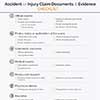 Documents & Evidence Checklist
Checklist of 30 items to help you prepare for making a personal injury or accident claim
Download in PDF format
 Post-Accident Journal Form
Sample accident journal/diary to help you document the effect on your daily life
Download in PDF format
See our guide Choosing a personal injury attorney.