
How to find the expert witness you need to make a case
Why do you need an expert witness? Sometimes an expert witness is called to testify about evidence that requires specialized experience, education, or understanding.
We hear the most about medical or forensic experts, though a specialist can be called for just about any topic. In many cases, what the lawyers will look at most closely with respect to expert testimony is whether the person is qualified as an expert.
Often, each side will call its own expert and each might have a different opinion about the evidence at hand. When that happens, the lawyers often try to discredit the opposing counsel’s expert. It can get messy!
Who can be an expert witness?
Within the Federal Rules of Evidence (FRE), there are specifics about who can be an expert witness. These laws apply in state courts, as well. In general, an expert must have the following in a specific field:
- Knowledge
- Skill
- Education
- Experience
- Training
Restrictions on expert witness testimony
A witness is only allowed to testify about what they’ve actually observed. An expert witness is usually allowed to provide their professional opinion about a piece of evidence. FRE Article VII, Rule 702 has four requirements for expert testimony:
- The expert’s scientific, technical, or other specialized knowledge will help the court to understand the evidence and determine a fact at issue.
- Expert testimony is based on sufficient facts or data.
- Testimony is the product of reliable principles and methods.
- Expert has reliably applied those principles and methods to the facts of the case.
Federal law also includes the Daubert standard (Daubert v. Merrell Dow Pharmaceuticals, Inc.) for admissibility of expert witness testimony. This is used when one party seeks to exclude testimony of an expert witness on the grounds that the witness or evidence is not properly qualified. This is called a “Daubert challenge.”
The five questions to ask when applying the Daubert standard are:
- Can the theory or technique in question be tested?
- Has the theory been subject to peer review and publication?
- What is the known or potential error rate for this theory or method?
- Are there existing and maintained standards for operating the method?
- Has the method attracted widespread acceptance within a relevant scientific community?
While Daubert is the rule in federal cases and most states, there are still a few states that use an older standard. Your state court might use the Frye standard (Frye v. US), which asks whether expert opinions are based on generally accepted techniques in the scientific field. Daubert goes a little further in making sure that the testimony actually adheres to the concepts in Rule 702.
Different types of expert witnesses
If your case is complicated and involves technical evidence, your lawyer will find an expert witness who’s specifically trained in the subject matter. Most cases require expert witnesses who are included in the categories below.
Medical expert
Medical experts are more prevalent than any other kind of experts in court proceedings. A medical expert might be a doctor, but could also be a nurse, technician, or physician’s assistant who specializes in the specific field that’s relevant to the evidence or your case. Often, medical experts include dental experts or other scientists who can analyze data presented by one of the parties.
Forensic expert
A forensic expert is sometimes a medical expert, but not always. This person is an expert with respect to some science related to the case (often criminal, but not always). A forensic expert might be someone who analyzes ballistics, blood spatter, criminal behavior, and other material evidence. For example, if a party wants to prove that a footprint or fingerprint belongs to a specific person (or would rule out a specific person), they might call a forensic expert who knows the science behind making that determination.
Financial expert
A financial expert will testify about accounting, fraud, tax evasion, and other financial crimes. These experts are primarily used in white collar crime trials.
Mental health expert
A mental health expert will be called to testify about behavior, psychological profiles, or other mental fitness issues that might affect the case. This person is very similar to a medical expert, except that their testimony will address questions like whether the person understood their actions, is clinically or criminally insane, or is of sound mind and can make decisions that pertain to wills or other legal situations.
Vocational expert
This expert is usually reserved for Social Security disability benefit appeals hearings. A vocational expert will offer and opinion about whether the person is capable of working. For example, the Social Security Administration might use this testimony to try and prove that the person doesn’t really need disability benefits.
How to find an expert witness
Fortunately, you probably don’t need to.
One reason a good lawyer is essential is because they’ll already have a great contact list of experts — or if they don’t have one specific to your case, they can find one through professional connections or expert witness directories like JurisPro. Your job as the plaintiff in a lawsuit is to relay the facts to your lawyer as carefully and completely as you can. Your lawyer’s job is to use the helpful evidence and find experts who provide context that makes the evidence demonstrate what it needs to for successful legal proceedings.
The Enjuris personal injury attorney directory is a great resource for finding the lawyer who’s right for your case and in your state. This guide to preparing to meet with your attorney for the first time will also offer insight about what to expect, bring, and do in order to get the most out of that first meeting.
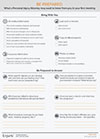 Your First Meeting with an Attorney
A worksheet to prepare for your first meeting with a personal injury attorney – what to bring, what they'll ask
Download in PDF format
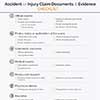 Documents & Evidence Checklist
Checklist of 30 items to help you prepare for making a personal injury or accident claim
Download in PDF format
See our guide Choosing a personal injury attorney.