
What you need to know about serious head and brain injuries and how to recover compensation in Texas
Serious injuries to the head or brain often leave behind devastating symptoms: paralysis, permanent brain damage, a drop in quality of life, or even death. What makes head and brain injuries even scarier is that these injuries often don’t show up for days or weeks after an accident.
Knowing where to turn in the face of these serious injuries is the first step on the road to recovery. Here, we’ll take a look at some of the characteristics of a head or brain injury, what you should do if you or your loved one has experienced such an injury, and how you may receive compensation to help.
Signs and symptoms of a head or brain injury
Traumatic brain injuries (TBI) and other head injuries can cause your brain to malfunction. These malfunctions can be temporary or last for the rest of your life.
Often, these sorts of injuries are called “invisible injuries.” This means that the symptoms of head and brain injuries are not only invisible to the eye (especially when compared to broken bones or lacerations), but they can take days or weeks to show any symptoms.
It’s recommended that you get checked out anytime you’ve been in an accident so that potential head and brain injuries can be diagnosed quickly. Some common symptoms of head or brain injury include:
- Dizziness
- Nausea and vomiting
- Confusion
- Depression or irritability
- Headaches
- Losing consciousness
- Feeling numbness in any body part
If you recognize any of these symptoms, they shouldn’t be ignored. Visit a doctor to be on the safe side, and make sure to request copies of all medical documentation. (This will help if you decide to file a claim later on.)
 Damages/Expenses Worksheet
Damages worksheet to track expenses for your injury claim (medical treatment, property damage, lost wages, prescriptions)
Download in PDF format
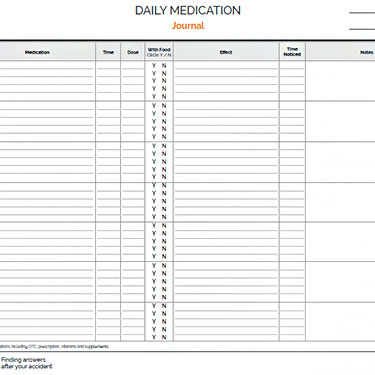 Medication Log Sheet
Printable daily medication log template helps you track your medicines and side effects
Download in PDF format
What sorts of accidents cause a head or brain injury?
Just about any type of accident could potentially cause a severe head or brain injury. However, most of the time, these injuries are caused by one of the following:
- Assault
- Military service
Anytime an accident results in a blow to the head, there’s the potential for a severe injury even if the accident seems relatively minor.
Can I sue for my head or brain injury? Who’s liable?
Head and brain injuries can result in high medical bills and the added stress of potentially life-long disabilities. Filing a personal injury claim is one way to receive compensation for these damages.
As with other personal injury lawsuits, some degree of negligence must be established in order to hold another party liable for damages.
In order to prove their responsibility, a person or entity must have been shown to have had a duty to another, ignored that duty, and caused the accident/injury by doing so.
For example, a driver has a duty to follow all the rules of the road. If driver A runs through a stop sign, then driver A is negligent. If that action causes an accident with driver B, then driver A is legally responsible for the injuries and damages sustained by driver B in that accident.
Depending on the type of accident, there are several parties that could be held liable for your head or brain injuries, including:
- Another driver
- A store owner
- A doctor who committed medical malpractice
- A colleague at work
If the injury happened while you were at work, you may be able to file a workers’ compensation claim. Workers’ compensation is a form of insurance that provides benefits to employees injured while doing their job.
The main difference between a workers’ compensation claim and a personal injury lawsuit is that you don’t have to prove fault (i.e., negligence) to receive workers’ compensation benefits.
What damages are available for a head or brain injury claim in Texas?
Since head injuries and brain injuries are often serious, life-long damages are a real possibility for victims. This means that a higher compensation amount is needed to cover the various damages. In Texas, damages are divided into two categories: special and general.
Special damages are economic losses meaning they’re associated with monetary loss or expense. Some examples of special damages include:
- Current and future medical expenses
- Lost wages and time at work
- Property damages
- Funeral costs in the case of a wrongful death
General damages refer to non-economic losses. These losses are for things that money can’t buy. Some examples of general damages include:
- Pain and suffering
- Emotional trauma
- Loss of quality of life
- Loss of companionship in the case of a wrongful death
While Texas offers compensation for both economic and non-economic damages, these damages may be subject to limitations.
Is hiring an attorney necessary?
With some personal injury claims, it can be difficult to know if you need to hire an attorney or if you can handle the legal process yourself.
If head injuries or a TBI is involved, your damages are likely to be high. This means that defendants and insurance companies will be particularly reluctant to offer a fair settlement to an unrepresented party.
To build a strong case for compensation, you will first need to establish proof of your injuries. Because head and brain injuries are “invisible,” it can be more difficult to prove that you suffered an injury than with other, more obvious personal injuries. An attorney can help build your case.
If you’ve fallen victim to a serious head injury or traumatic brain injury in Texas, take comfort in knowing you aren’t alone. Here are a few resources to help you through your injuries and the recovery process:
- The Texas Brain Injury Alliance
- Brainline – Preventing, Treating, and Living with TBI
- The Brain Injury Association of America
- More resources for brain injuries
Good luck with your recovery! Here at Enjuris, we’re wishing you the best.
See our guide Choosing a personal injury attorney.