
What can you recover after an accident in the Volunteer State?
In a personal injury case, the term “damages” refers to the money paid to an injured person by the person or entity found legally responsible for the accident.
Damages can be awarded as a result of a negotiated settlement or as a result of a trial.
The types of damages that are available in your personal injury case depend on the nature of your case and the state where your lawsuit is filed.
Let’s take a look at the damages you might be able to recover in a Tennessee personal injury case.
Compensatory damages in Tennessee
The main purpose of compensatory damages is to put the plaintiff in the same position they would have been in had the harm (the accident or injury) never occurred.
Let’s look at an example:
What would it take to return Joan to the position she was in before the car accident?
First, Joan’s car would need to be returned to its pre-accident condition (at a cost of $10,000). Second, her arm would need to be treated until it was healed (at a cost of $30,000). Third, she would need to be compensated for her missed time at work (at a cost of $600).
Accordingly, a compensatory damage award of $30,600 would cover Joan’s monetary losses.
But what about the pain and emotional distress caused by the accident? Shouldn’t Joan receive compensation for her troubles?
Tennessee allows plaintiffs to recover damages for their monetary losses (called “economic damages”) and damages for their non-monetary losses (called “non-economic damages”).
Let’s take a closer look:
Economic damages
Economic damages (sometimes called “special damages” or “specials”) are intended to compensate plaintiffs for the monetary losses caused by their accident. The amount of these losses can usually be proven by some document (such as a medical bill or an estimate from a mechanic). In other words, economic damages are relatively objective and easily proven by evidence.
Common economic damages include:
- Medical expenses. Medical expenses include everything from surgeries to physical therapy. What’s more, Tennessee allows plaintiffs to recover past medical expenses (the medical expenses incurred at the time the lawsuit was filed) as well as future medical expenses (the medical expenses related to the accident that the plaintiff reasonably expects to incur over the course of their life).
- Lost income. Lost income includes the income you missed out on because you were recovering from your accident. This may be because you were unable to work or because your injury forced you to take a lesser paying position. Just like medical expenses, lost income includes past income (the income you lost up to the date you filed the lawsuit) as well as future income (the income you expect to lose in the future because of the accident).
- Property damage. You’re entitled to recover the costs of fixing or replacing any property damaged in your accident. The most common example is the cost of repairing or replacing your car after a car accident.
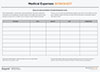 Damages/Expenses Worksheet
Damages worksheet to track expenses for your injury claim (medical treatment, property damage, lost wages, prescriptions)
Download in PDF format
Non-economic damages
Non-economic damages (sometimes called “general damages”) are intended to compensate you for the non-monetary consequences of your accident.
Non-monetary damages include:
- Pain and suffering. Physical pain is subjective and difficult to prove. As a result, insurance companies, judges, and juries have to rely on a number of factors when attempting to determine the value of your pain and suffering. These factors include the type of injury, the type of medication prescribed, the length of recovery, and the permanence of the injury.
- Emotional distress (sometimes called “mental anguish”). Accidents don’t just cause physical pain, they almost always take some sort of emotional toll. Similar to pain and suffering, emotional distress is difficult to quantify.
- Loss of consortium. If a loved one has been in an accident and, as a result, has lost the ability to provide you with the love, affection, and companionship you’re used to, you can recover damages for these losses.
Non-monetary damages are difficult to prove. In addition to testimony from people familiar with your accident and recovery, keeping good records can help.
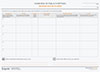 Post-Accident Journal Form
Sample accident journal/diary to help you document the effect on your daily life
Download in PDF format
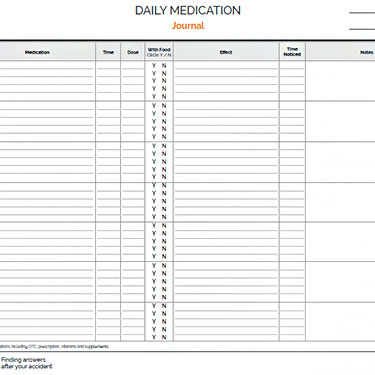 Medication Log Sheet
Printable daily medication log template helps you track your medicines and side effects
Download in PDF format
Punitive damages in Tennessee
Punitive damages (sometimes called “exemplary damages”) are different from compensatory damages. Instead of trying to compensate the plaintiff for their losses, punitive damages are intended to punish the defendant and deter similar behavior in the future.
Because punitive damages are meant to punish and deter, they’re only available in cases where the defendant’s conduct was particularly bad.
Specifically, punitive damages in Tennessee are only available if the plaintiff proves by clear and convincing evidence that the defendant acted:
- Maliciously. Conscious intentional conduct intended to harm the victim.
- Fraudulently. The intentional use of deceit to deprive the victim of property or their legal right.
- Recklessly. Conduct that’s careless to the point of being grossly negligent (such as drunk driving or shooting a gun in a public place).
Tennessee damage caps
Most states have damage caps that limit the amount of damages you can recover. In Tennessee, the damage cap for personal injuries is $750,000 for non-economic damages.
There is a higher cap of $1 million for non-economic damages for injuries that involve:
- Amputations
- Severe burns
- Wrongful death of the parent of a minor child
- Paralysis due to spinal cord injury
Additionally, Tennessee places a cap on punitive damages in the amount of $500,000, or twice the amount of the compensatory damages (economic plus non-economic damages) awarded, whichever is greater.
How shared negligence impacts your final settlement
Keep in mind that your own negligence can reduce the amount of damages you might otherwise recover in a Tennessee personal injury case. This is because Tennessee follows the “modified comparative fault rule.”
Under the “modified comparative fault rule,” the amount of damages a plaintiff can recover is reduced by their percentage of fault. What’s more, if the plaintiff is determined to be 50% or more at fault, the plaintiff is barred from recovery ANY damages.
See our guide Choosing a personal injury attorney.