


The clock is ticking
This guide provides essential information for parents facing the challenging journey of a birth injury lawsuit in Florida. Learn the difference between birth injuries and birth defects, the factors that increase the likelihood of birth injuries, and find out how to file a birth injury lawsuit in the Sunshine State.
Welcoming a new life into the world marks a moment of unparalleled joy and profound expectation. But when the unexpected happens, and your child suffers a birth injury, the joyous occasion can quickly turn into a nightmare.
This comprehensive guide is your trusted companion, offering clear direction and support as you navigate the complex world of Florida birth injury lawsuits with the help of a skilled birth injury attorney.
Understanding the difference between birth injuries and birth defects
Birth injuries occur during or shortly after delivery and are often the result of trauma during childbirth. Birth injuries are usually minor but can be severe. When birth injuries are severe, they typically give rise to litigation against a negligent healthcare provider or doctor.
Common birth injuries include:
- Cerebral Palsy: A group of disorders affecting a child’s ability to move and maintain balance and posture, often caused by brain damage due to oxygen deprivation or trauma during birth, such as in cases of asphyxia or premature delivery.
- Fractures: Bone fractures, commonly involving the collarbone or clavicle, can occur during the birthing process, particularly when excessive force is applied.
- Intracranial Hemorrhage: Bleeding under the skull or in the brain, which can occur as a result of trauma during delivery.
- Brachial Plexus: An injury to the network of nerves near the neck that affects the arm’s movement, often occurring during a difficult delivery, especially in cases of shoulder dystocia where the baby’s shoulder is impeded.
- Perinatal Asphyxia: A condition where the baby does not receive enough oxygen before, during, or immediately after birth, leading to various complications.
- Caput Succedaneum: Swelling of the scalp in a newborn caused by pressure during delivery, often seen in deliveries involving vacuum extraction.
Birth defects, on the other hand, result from a problem that occurs when the baby is developing in the womb. Birth defects are typically the result of genetics or environmental conditions.
Common birth defects include:
- Congenital heart defects: Structural problems with the heart, varying from simple conditions to complex issues that cause life-threatening symptoms.
- Down Syndrome: A genetic disorder caused by an extra chromosome 21, leading to a range of developmental and physical characteristics.
- Spina Bifida: A birth defect in which there is incomplete closing of the backbone and membranes around the spinal cord during early pregnancy.
- Cleft lip and palate: A physical defect in which the facial structures of a developing fetus fail to fully fuse together.
- Clubfoot: A birth defect where one or both feet are rotated inwards and downwards, and the affected foot may be smaller than the other.
- Tetralogy of Fallot: A complex congenital heart defect that results in poor blood oxygenation due to structural abnormalities in the heart.
What factors increase the likelihood of birth injuries?
Certain factors can increase the risk of birth injuries:
- Prolonged labor: Often referred to as labor dystocia, prolonged labor can lead to maternal and fetal stress, increasing the chances of interventions like emergency C-sections or the use of assistive delivery tools, both of which are associated with higher injury risks.
- Size and position: Larger babies are at a higher risk for birth injuries, as large babies may have a harder time passing through the birth canal. Additionally, a non-optimal position, such as breech (feet first), transverse (sideways), or posterior (face up) can complicate labor and delivery.
- Pre-existing maternal health conditions: Maternal health conditions, such as diabetes, obesity, and uterine and pelvic issues, increase the risk of a birth injury.
Establishing accountability and demonstrating fault in Florida birth injury cases
In order to establish a medical malpractice claim based on a birth injury in Florida, you need to prove the following:
- Your healthcare provider failed to exercise the degree of care and skill expected of a reasonable healthcare provider in the same profession, and
- The failure was the cause of your baby’s injury.
Evidence that may be used to support a birth injury claim includes:
- Medical records: Detailed records of the pregnancy, labor, delivery, and post-delivery care.
- Expert testimony: Specialists in the field can attest to what a competent professional would have under the circumstances.
- Witness statements: Including those from the medical staff present during the delivery or other experts in the field.
Healthcare providers that could potentially be liable for a birth injury include:
- Obstetricians/Gynecologists: For failure to anticipate birth complications or respond adequately during emergencies.
- Nurses and medical staff: For not properly monitoring the mother and baby’s vitals or failing to communicate vital information to doctors.
- Hospitals: For systemic issues like inadequate staff training or lack of necessary equipment.
Birth injury hypothetical
Sarah Smith’s labor was not only prolonged, lasting over 24 hours, but also marked by clear signs of fetal distress. Despite these warning signs, the attending obstetrician made the contentious decision to proceed with a vaginal delivery, a choice further complicated by the baby’s breech position.
The situation escalated when the medical staff resorted to the use of forceps, which led to severe brachial plexus.
The Smith family, now facing a future of medical treatments and therapy for their child, files a lawsuit against the obstetrician for not opting for a cesarean section in light of the labor complications. The Smith family also sues the medical staff for its decision to employ forceps, given the baby’s compromised position and the evident distress. Finally, if an investigation reveals that the hospital’s protocols or the staff’s training were inadequate, the Smiths will add the hospital as a party to the lawsuit.
Damages available in birth injury lawsuits
In Florida birth injury cases, three types of compensation are typically available:
- Economic Damages: These cover quantifiable losses such as medical bills, future medical care costs, lost wages, and loss of future earning capacity.
- Non-Economic Damages: These are for intangible losses, including pain and suffering, mental anguish, loss of enjoyment of life, and loss of consortium or companionship.
- Punitive Damages: Although less common, these may be awarded in cases of particularly egregious negligence or intentional misconduct to punish the wrongdoer.
Each case varies, and the specific compensation available depends on the circumstances and the extent of harm suffered.
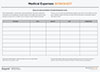 Damages/Expenses Worksheet
Damages worksheet to track expenses for your injury claim (medical treatment, property damage, lost wages, prescriptions)
Download in PDF format
Filing a birth injury lawsuit in Florida
When filing a birth injury lawsuit in Florida, it’s important to recognize that there are several state-specific rules that must be followed.
For example, birth injury lawsuits have a two-year statute of limitations, which means your lawsuit must be filed within two years of the incident giving rise to the lawsuit, or else your claim will be forever barred.
Moreover, you must notify the medical professional with a notice of intent to sue, accompanied by an affidavit from a medical expert validating the claim before you file your lawsuit. This notice begins a 90-day period for potential settlement. If no settlement is reached, you have an additional 60 days or the remainder of the statute of limitations (whichever is longer) to file the lawsuit.
In light of these and other state-specific rules, it’s important to find a Florida attorney who has experience with birth injury cases.
Other resources you may find helpful:
- Medical malpractice in Florida
- Proving medical negligence in a birth injury lawsuit
- What’s the difference between a birth defect & a birth injury?
See our guide Choosing a personal injury attorney.