
Red Jell-O powder in the showerhead.
Saran Wrap over the toilet seat.
Food coloring in… anything.
Classics, all. If you were once a kid (and we know you were), you might have been all-in for a great April Fools’ Day prank each year. But while April Fools’ Day seems like harmless fun, sometimes a joke or prank can go awry and leave someone injured.
Who started April Fools’ Day, anyway?
Some historians believe that April Fools’ Day originated in 1582 when France switched from the Julian calendar to the Gregorian calendar. The Julian calendar was proposed by Julius Caesar in 46 BC, and it was intended to reform the Roman calendar. The Gregorian calendar, which is what we use today, is based on a solar dating system.
The significance is that the Julian calendar set the new year to the spring equinox around April 1st. But there were some people who didn’t hear the news that the calendar had changed (remember—no internet, TV or newspapers in 1582!) or refused to accept the change. They continued to celebrate the new year in late March or early April even though the new year had changed to January 1st.
As often happens, the people who had already made the switch were mocked and teased and became known as “April fools.” As a result, they became the victims of hoaxes and pranks. (source: https://www.history.com/topics/holidays/april-fools-day)
There are other theories, too, like the day being tied to the 1st day of spring when nature would fool people with the weather being unpredictable.
However, regardless of why it started, April Fools’ Day is here to stay. It’s all fun and games—until someone gets hurt.
Can a person be sued for an April Fools’ Day prank?
This hinges on the concept of negligence. Negligence is when a person causes harm because of an action (or failure to act) that results in a reasonably foreseeable injury to another person.
Something is “reasonably foreseeable” if an average person could anticipate that their behavior could possibly result in harm. For instance, if a prankster intentionally floods a room with water, it’s foreseeable that an unsuspecting person walking into that room could slip and fall, which could result in their being hurt.
Elements of negligence
There are 5 elements that are necessary to find someone liable for negligently causing injury to another person:
- Duty. Everyone has a duty of care to someone else—even someone they’ve never met. You have a duty to behave in a way that does not cause injury to others. For example, someone thinks a funny prank would be to leave soapy water on the floor in the bathroom of a supermarket. The people who enter the bathroom would be strangers to the person who spilled the soap—does that person have a duty to strangers? Yes, because the intentional act of spilling the soap in a way that would affect others, known or unknown, would create a duty of care.
- Breach. When a person breaches their duty, it means they acted in a way that was reasonably foreseeable to cause an injury. If you’re driving a car, you have a duty to every other road user around you. If you fail to stop at a red light, you’ve breached your duty to the other drivers, pedestrians or bicyclists who could be injured by your action.
- Causation. If someone is injured, they will need to prove that the defendant’s action was the direct cause of their injury. If the defendant failed to stop at a red light and the plaintiff became distracted, which caused the plaintiff’s car to hit a fire hydrant on the side of the road, that’s unlikely to meet the standard for causation. The defendant may have made an error, but they didn’t cause the plaintiff’s injury. The plaintiff could have avoided being injured if they had not become so distracted by the other driver.
- Injury. The accident has to result in an actual injury. Being the victim of an April Fools’ Day prank might leave you feeling embarrassed or stupid (particularly if it was in public or at work), but embarrassment is not an injury for which you can take legal action in this instance. If you receive a physical injury—like a broken bone, bruises, a head injury, spine injury or something else—you could consider filing a lawsuit.
- Damages. At the heart of any personal injury claim is that the injury cost you money. The basis for the civil legal system is to make the plaintiff (the injured person) whole or restore them to the financial condition they would be in if the accident hadn’t happened.
Proving Fault: What is the Tort of Negligence?
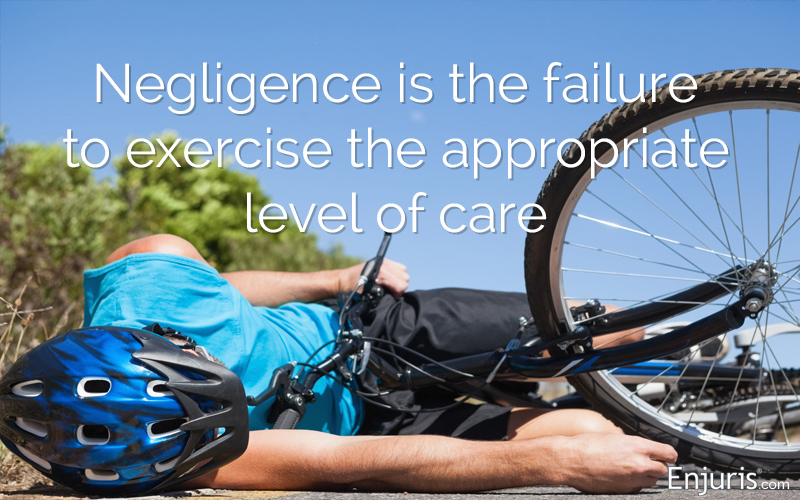
Negligence is one of the most common personal injury causes of action. The term is so common that people often throw it around without fully understanding what it means.
Let’s take a close look at negligence, gross negligence, negligence per se, and contributory and comparative negligence.
If you were injured and did not receive medical treatment or lose wages, you likely can’t recover damages because there’s no financial loss.
You can claim damages that include:
- Medical treatment, like doctor or hospital visits, prescription medication, diagnostics (like X-rays), etc.
- Lost wages, if you were unable to work during your recovery or lost earning capacity because you were left with a condition or disability that prevents you from working in the future
- Ongoing therapies related to the injury
- Pain and suffering or emotional distress
- Wrongful death, if you’re the survivor of a victim who died as the result of an accident
FCC hoax rule
The FCC established a rule against broadcast hoaxes. A news media or radio station is not permitted to broadcast information that could foreseeably cause public harm or damage.
The rule says that the broadcaster can be held liable if they:
- Know the information is false;
- Could foresee that the content would cause public harm; and
- Public harm results from the broadcast.
The section defines public harm as “direct and actual damage to property or to the health or safety of the general public.” This type of harm also includes diverting emergency personnel away from their duties.
This rule developed in the 1990s after on-air personalities claimed there were various types of emergencies, including explosions and hostage situations. Emergency responders were called by listeners and dispatched to the locations, which meant they were not available for real emergencies because they were responding to fake ones.
If a person is injured or ill and can’t receive emergency care because responders’ are unavailable because of a false alarm or April Fools’-inspired hoax, the person who created the hoax can be held liable for the injuries of the person who legitimately required emergency assistance.
How can you avoid being sued for an April Fools’ Day prank?
Look, we are all about fun. We’re not trying to dissuade some well-intended, harmless pranks 1 day a year. If you want to put clear plastic wrap over the toilet seat to give your partner a surprise on April Fools’ morning, we don’t want to rain on your parade. (You might have a mess to clean up, though.)
But there are other pranks that could involve much more risk than the simple ones.
Here are some tips for avoiding liability (and injuries) as you brainstorm your April Fools’ Day merriment:
- Don’t place a prank at the top of the stairs. Even if the person is unlikely to trip over something, the surprise of a prank could cause them to fall.
- Don’t use water in a way that could make the floor slippery.
- Never play a prank on someone who is carrying a heavy object or holding something sharp, like a knife.
- Don’t play pranks on someone who is driving a car. Even a “minor” prank could cause an accident if the driver becomes surprised in a way that takes their attention off the road.
- Don’t tamper with someone’s food unless you are certain that the added ingredients are safe and that they can be tolerated by the eater. In other words, if you’re not sure whether someone is allergic to peanuts, don’t add peanut butter to something they would eat.
- Do not play a prank that could cause harm, even if you think it might “only hurt a little.”
If you were the victim of a prank that ended badly, you can explore legal options. Don’t try to get revenge—that likely won’t end well, either. Instead, take your injuries seriously, and get medical help if you need it. And if you suffered an injury for which you believe the prankster should be held liable, you can contact a personal injury attorney for help. Stay safe out there!