

How do I file a lawsuit? Do I need a lawyer? These questions about Montana lawsuits, and more, answered once and for all
If you’ve been injured and are considering filing a lawsuit, you probably have a lot of questions that you need answered. This list of personal injury legal questions and answers will help put you at ease and guide you through the process.
Q: Do I need an attorney?
A: Whether you should retain an attorney depends, in part, on how the insurance company is handling your claim and what amount you’re requesting in damages. If there’s any issue of fact around your claim, it’s a good idea to consult an attorney. For example, if you were in a car accident and the insurance company is assigning liability to both you and the other driver, you might need a lawyer to advocate on your behalf.
If the damages you’re seeking are less than $7,000, you might consider small claims court. A small claims court action saves time and money, and is often a way to settle a dispute without involving lawyers and the more extensive civil court system.
Q: Should I rely on the advice of my insurance adjuster?
A: When you hire a lawyer, it’s their job to advocate for YOU. You’re the client, and they’re legally obligated to act in your best interests. An insurance adjuster, on the other hand, is not required to act in your best interest. Even though you pay for their coverage and services, the adjuster’s objective is to pay the least amount of money to settle your claim. If it’s a situation where your insurance company is negotiating with your opponent’s insurance company, their priority is settling the case at the least expense to themselves.
Your insurance adjuster isn’t your lawyer. They shouldn’t give you legal advice, but sometimes they do—and it’s not always the best advice for you to take. A personal injury lawyer is the better choice for legal counsel.
Q: How much can I recover in damages?
A: Your amount of recovery will depend on the nature and severity of the injury. Your lawyer can determine what an appropriate demand for damages will be. They’ll add expenses for medical treatment, lost past and future wages, ongoing therapies, medical equipment, loss of property, and any additional ongoing costs that you’re likely to accrue. You might also be able to recover damages for pain and suffering.
Q: Is there a maximum amount of damages I could recover?
A: Montana doesn’t have damage caps, except in medical malpractice cases. In a medical malpractice case, you can receive up to $250,000 in non-economic damages (i.e. pain and suffering).
Q: What if I’m partially at fault?
A: Montana is a modified comparative fault state. In a question of liability, the plaintiff must be less than 51% at fault in order to recover any damages. It will be up to the court to determine how to allocate fault among the parties.
Q: How much will I pay my attorney?
A: Most personal injury lawyers charge a contingency fee. That means if you win nothing, you pay nothing. You won’t pay an hourly rate (or “billable hours”). Instead, if you win, your lawyer will receive an agreed upon percentage of the damages you recover.
Most personal injury lawyers also offer free consultations so that they can advise you about your claim before you make a decision about whether to retain their services.
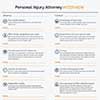 Personal Injury Attorney Interview Sheet
Worksheet with questions to ask a personal injury attorney to help determine if he or she will be a good fit for your case
Download in PDF format
Q: What if the injury is to my child?
A: If your minor child was injured, or if the injury is related to something that happened during your pregnancy, you (the parent or guardian) can sue on your child’s behalf. Often, both the baby and the parents have a right to compensation.
Q: I’d be too nervous to testify in court. Is there any other way?
A: Ask almost any personal injury lawyer and they’ll tell you that their primary objective is to settle out of court. They are motivated to negotiate with the opponent to come to a reasonable settlement that provides you with the money you deserve while keeping you out of court. Sometimes it’s necessary to go to trial, and your attorney will make sure you’re well-prepared and tell you exactly what to expect if that needs to happen.
Q: What’s the penalty for the person who caused my injury?
A: The only remedy in the civil court system is to award damages in the form of money. If you believe you’re the victim of a crime, report it to your local law enforcement agency and they will advise you on how to pursue criminal charges. However, only the government can actually charge someone with a crime that leads to a criminal trial. As a plaintiff, you’d sue someone in civil court.
Some intentional torts are criminal but you can also sue in civil court. These include assault, battery, fraud, arson, property damage, sexual abuse and assault, wrongful death by manslaughter or homicide, and others.
If the injury is the result of actions that are especially reckless or with malice, the court might award punitive damages. Punitive damages are designed to punish the defendant for their acts, and they’d be awarded as additional damages to the plaintiff.
Q: What if I was injured on public property or by a state employee?
A: In most situations, a claim against the Montana government must be filed within 20 days of injury. Rather than using the civil courts, you’d file in the Risk Management and Tort Defense Division.
Q: Are there exceptions for dog bites in Montana?
A: Some states employ a “one free bite” rule, which means that a dog owner isn’t liable for the first time their dog bites someone, as long as there was no prior reason to believe the dog was dangerous. Montana, on the other hand, has a specific statute for strict liability, which means that the owner is always liable for an injury caused by their pet.
Q: What are the time limits for filing a lawsuit in Montana?
A: The time limit for filing a lawsuit is called a statute of limitations. In Montana, you must file suit within three years from the date of the accident or injury. If you wait more than three years, the court can refuse to hear your case.
Q: What if I am awarded damages but the defendant doesn’t pay?
A: When the judge or jury reaches a verdict, or when a settlement is approved, the court enters a judgment. The judgment includes an order that the defendant must pay the plaintiff. That order automatically includes a judgment lien attached to the defendant’s real property. You’d receive a certain amount of the proceeds when the defendant sells their property. Of course, that can take a long time because there’s no requirement that the defendant sells their property immediately in order to pay off the judgment. In Montana, a judgment lien can only be attached to real estate, so it wouldn’t apply to jewelry or other valuables —only for a house, land, or other real property.
The judgment lien remains attached to property for 10 years. You can extend that time through a court order if you’ve not received your payment. There are certain exemptions to what can be recovered through a judgment lien, including bankruptcy or foreclosures that are already pending. There are other ways to collect on a judgment, including wage garnishment and collecting from bank accounts, though those methods are more complicated. Your lawyer can advise on how to collect what you’re owed.
Have more questions about your Montana accident case? We recommend meeting with a knowledgeable Montana personal injury lawyer to discuss the specific details of your claim.
See our guide Choosing a personal injury attorney.