How to file a workers’ compensation claim in the Aloha State
Hawaii passed its workers’ compensation laws in 1915 with the goal of making sure workers who suffer workplace injuries are compensated.
Workers’ compensation insurance covers the vast majority of Hawaii’s roughly 675,000 workers, but that doesn’t mean an injured worker in Hawaii automatically receives benefits.
Let’s take a look at Hawaii’s workers’ compensation laws, including the steps you need to take to file a workers’ compensation claim.
What is workers’ compensation?
Workers’ compensation is a form of insurance that provides benefits to employees who are injured while performing their job duties.
Workers’ compensation is a no-fault insurance system, which means injured workers can receive benefits regardless of who’s at fault for their injury.
Workers’ compensation is also an exclusive remedy, which means injured workers typically have to file a workers’ compensation claim in lieu of filing a personal injury lawsuit.
In rare situations, an injured worker may be able to file a personal injury lawsuit and a workers’ compensation claim. These situations typically involve a third party (someone other than an employer or colleague) who caused the injury.
Does my employer have workers’ compensation insurance?
The vast majority of employers in Hawaii are required by law to provide their employees with workers’ compensation insurance.
More specifically, all employers with at least one full or part-time employee are required to provide workers’ compensation insurance for their employees, with the following exceptions:
- Voluntary or unpaid workers at a church, school, or nonprofit organization
- Students working for a school, university, or college in exchange for room, board, or tuition
- Priests, ministers, or rabbis
- Domestic workers (nannies, house cleaners, etc.) making less than $225 per quarter
- Real estate salespersons and brokers compensated on the basis of commissions
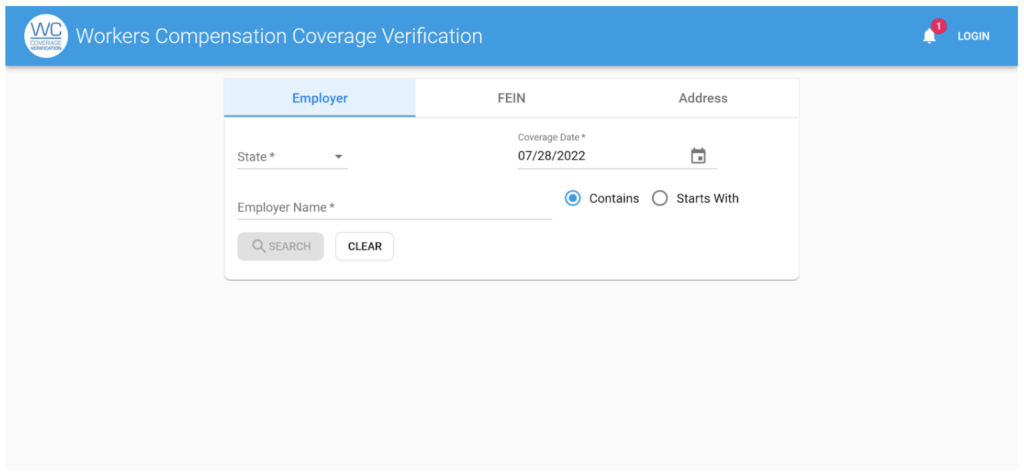
You can use the online workers’ compensation verification tool to find out whether your employer has workers’ compensation insurance. Just type in the state (Hawaii), the coverage date you’re curious about, and your employer’s name.
What is considered a workers’ compensation injury?
Your injury is compensable under Hawaii’s workers’ compensation laws if:
- Your injury arose out of your employment, and
- Your injury was sustained in the course of your employment.
An injury is NOT considered to have arisen out of your employment if it occurred at work but would have occurred anywhere.
For example, if you have a heart attack at work due to high cholesterol, you probably won’t receive workers’ compensation benefits because your heart attack didn’t arise strictly out of your employment. Your heart attack could have just as easily occurred while walking to get the mail, for example.
Under Hawaii law, there’s a presumption that your injury is covered by workers’ compensation. It’s your employer’s burden to introduce “substantial evidence” to rebut this presumption.
Workers’ compensation covers both traumatic work injuries and occupational work injuries:
- Traumatic work injuries are those that result from a one-time accident at work (e.g., suffering a back injury as a result of a fall from construction scaffolding).
- Occupational injuries occur over a period of time (e.g., repetitive movement injuries).
Unlike many other states, Hawaii allows workers to receive workers’ compensation benefits if they sustain psychogenic (mental) injuries due to their employment.
How do I file a workers’ compensation claim in Hawaii?
Your employer is responsible for filing your workers’ compensation claim in Hawaii, but you’re responsible for notifying your employer about your injury.
Notice to your employer must be provided in writing as soon as possible following your injury. If you wait too long to notify your employer, your claim may be denied. It’s a good idea to provide your employer with a written notice via certified mail with a return receipt requested so there’s no confusion about when your employer received notice.
Once you provide notice to your employer, your employer is responsible for filing WC-1 (“Employer’s Report of Industrial Injury”) with your workers’ compensation insurer. WC-1 must be filed within 7 business days after receiving notice of your injury.
If your employer fails to file WC-1, you should contact a workers’ compensation attorney or the State of Hawaii Disability Compensation Division and file WC-5 (“Employee’s Claim for Workers’ Compensation Benefits”).
In addition to providing notice to your employer, it’s important to get the medical attention you need following a workplace injury. In Hawaii, you’re allowed to choose your own treating physician (although some doctors elect not to treat workplace injuries). Failing to get medical attention may result in your claim being denied or your benefits being reduced.
What benefits does workers’ compensation provide?
In Hawaii, injured workers can receive the following workers’ compensation benefits:
• Medical expenses. Injured workers can receive “reasonable and necessary medical expenses.” These expenses include things like doctor’s visits, hospital bills, X-rays, prescriptions, and physical therapy sessions.
Be sure to tell your treating physician to send all medical reports and bills to your employer’s workers’ compensation insurer. The physician should call the employer to get the contact information of the insurance carrier.
• Wage loss benefits. You can receive wage loss benefits if you’re unable to return to work or you’re unable to return to the same type of work.
Wage loss benefits are calculated according to the nature of the injury, with injuries falling into one of the following categories:
• Temporary partial disability (TPD). If you’re able to return to part-time or light-duty work while you’re recovering but earn less than your normal wages, you may be eligible for temporary partial disability benefits. Temporary partial disability benefits are calculated as ⅔ of the difference between your pre-injury average weekly wages and your post-injury weekly wages (subject to the statutory maximum)
• Temporary total disability (TTD). If you’re temporarily unable to work, you may be eligible for temporary total disability benefits. TTD benefits are calculated as ⅔ of your average weekly wage prior to your injury (subject to the statutory maximum).
• Permanent partial disability (PPD). If you suffer a permanent injury but are still able to work in some capacity, you may be eligible for permanent partial disability benefits in addition to temporary disability benefits. Your PPD award depends on the parts of your body affected by your accident.
• Permanent total disability (PTD). If you’re totally and permanently disabled, you may be able to receive ⅔ of your average weekly wage prior to your injury for the rest of your life.
• Death benefits. In the event of a fatal work injury, the surviving spouse and dependent minor children may be entitled to weekly benefits. Funeral expenses up to 10 times the maximum weekly benefit rate and burial expenses up to 5 times the maximum weekly benefit rate are also allowed.
Can I appeal an unfavorable workers’ compensation decision?
If you’re not satisfied with the decision of the workers’ compensation insurer, you can request a hearing with the Hawaii Disability Compensation Division by filing Form 77 (“Application for Hearing”). During the hearing, both sides will have an opportunity to present evidence and testimony in front of an administrative judge. A decision will be rendered within 60 days.
If you’re not satisfied with the decision of the administrative judge, you can file an appeal with the Hawaii Labor and Industrial Relations Appeals Board. To do so, you need to file a Notice of Appeal within 20 days of receiving the decision from the administrative judge.
Finally, if you’re unhappy with the decision of the Appeals Board, you have 30 days to appeal to the Intermediate Appellate Court. This requires you to submit a written Notice of Appeal to the Appeals Court.
An experienced workers’ compensation attorney can help you navigate the complicated appeals process.
Should I hire a workers’ compensation attorney to handle my Hawaii workers’ compensation claim?
You’re allowed to hire an attorney at any point in the workers’ compensation claims process. An attorney can present your claim and handle an appeal if your claim is denied.
To find an experienced workers’ compensation attorney in Hawaii, visit our free online directory.
Did you know that workers' compensation law varies by state?












Need a lawyer?

The basis for personal injury law is fairly straightforward:
If you’re injured because of someone’s negligence, then you’re entitled to recover for your financial losses related to the injury.
The premise for the workers’ compensation system is similar:
Your employer is required to have specific insurance that provides benefits if you’re injured at work.