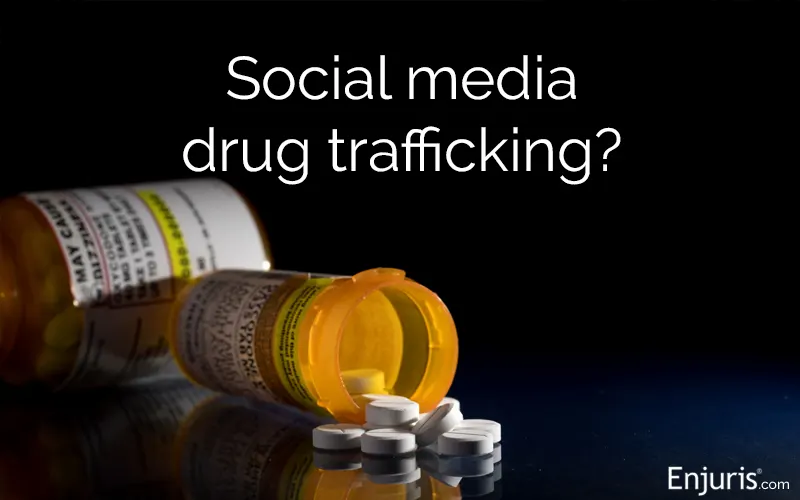
Another day, another lawsuit against a social media company.
On January 2, 2024, A California judge decided to allow a lawsuit against Snap, the parent company of Snapchat, to proceed to trial. The lawsuit, initiated by the relatives of over 60 young people who lost their lives to fentanyl overdoses, alleges that the drugs were purchased using Snapchat’s messaging platform.
Let’s take a closer look at the lawsuit and its implications.
The Snapchat fentanyl lawsuit
The core of the lawsuit revolves around Snapchat’s disappearing message feature. According to the complaint filed in April 2023, the disappearing message feature facilitates illegal activities by allowing users to obscure their actions.
“Snap and Snapchat’s role in illicit drug sales to teens was the foreseeable result of the designs, structures, and policies Snap chose to implement to increase its revenues.”
Typically, Section 230 of the Communications Decency Act shields online companies like Snap from lawsuits stemming from activities that occur on their platforms. However, Los Angeles Superior Court Judge Lawrence P. Riff’s decision to let the case proceed signifies a potential shift in how social media companies are viewed in terms of legal responsibility for user’s actions.
“We’re gratified that the court will allow parents to seek accountability for the death of their children to fentanyl overdose,” said Matthew Bergman, the plaintiffs’ attorney. “This is the first time in history that a social media company has been subjected to claims that it facilitated illegal and fatal drug sales.”
Snapchat is not the only social media platform used to distribute drugs. According to the United States Drug Enforcement Agency, criminal drug networks use platforms like Facebook, Instagram, TikTok, Twitter, and YouTube to “expand their reach, create new markets, and target new clientele.”
Shockingly, more than half of the fentanyl-laced fake prescription pills being trafficked in communities across the country now contain a potentially deadly dose of fentanyl.
More about Section 230 of the Communications Decency Act
Section 230, a key component of the Communications Decency Act, serves as a foundational law safeguarding freedom of expression in the United States.
The law makes it clear that online service providers and users cannot be legally considered as the creators or endorsers of content posted by others. This distinction is crucial in fostering a digital environment where users can freely share ideas, opinions, and information without the platforms they use being held liable for the content.
The principle behind Section 230 is that while individuals should be accountable for their own online actions and statements, they generally shouldn’t be responsible for what others say or do. This legal framework has been pivotal in promoting user-generated content on the internet, as it protects services from most civil lawsuits arising from third-party content.
While Section 230 shields these services from certain legal challenges, it doesn’t offer absolute immunity. It does not protect companies engaged in federal criminal violations, creation of illegal or harmful content, or infringement of intellectual property rights.
From fentanyl to reckless driving: Snapchat’s history of legal challenges
Snapchat’s legal challenges extend beyond the recent fentanyl lawsuit.
On September 10, 2015, 18-year-old Christal McGee rear-ended a car driven by Wentworth Maynard. Christal was driving at a reckless speed of 107 miles per hour in a zone with a 55 mph limit. Moments before the crash, McGee expressed her intent to hit 100 mph to capture it on Snapchat using the app’s speed filter, despite passengers’ pleas to slow down. Ironically, after the crash, she used Snapchat again to post a selfie captioned “lucky to be alive.”
This incident brought to light the potential dangers of Snapchat’s speed filter, a feature introduced in 2013. This filter allowed users to display their real-time speed on photos or videos shared on the platform. Maynard, who suffered a severe brain injury in the crash, subsequently filed a lawsuit against Snap, alleging negligence in the design of the speed filter, which arguably encouraged dangerous behavior like McGee’s.
The case is still pending.
Snapchat is the sixth most popular social media platform, after Facebook, YouTube, WhatsAPP, Instagram, and TikTok.
Liability of social media companies
The lawsuit against Snap brings into focus the larger issue of the liability of social media companies for activities occurring on their platforms. Historically, laws like Section 230 of the Communications Decency Act have provided broad immunity to these companies. However, this case, which has managed to bypass some aspects of Section 230, could set a new precedent for how social media companies are viewed in terms of legal responsibility.