
Here’s how Alabama courts handle products liability claims
Product liability is the area of law that handles a plaintiff who was injured by the use of a consumer item. Alabama has a rich history of manufacturing. When the Wright brothers launched their civilian flight school in Montgomery in 1910, it sparked a variety of aviation industry companies, including Boeing, Northrop Grumman, Airbus and others.
In addition, automotive companies like Hyundai, Honda, Toyota and Mercedes-Benz have assembly operations in Alabama. And, of course, we can’t forget Birmingham-based Coca-Cola Bottling Company, which has been manufacturing, bottling, and distributing beverages since 1902.
But we live in a global economy, and we use consumer products every single day—lots and lots of them. And while we rarely think about the safety of wearing our clothes, using furniture, changing light bulbs or other daily events, there are ways that we can become injured by our products.
Sometimes accidents happen, and they are just accidents and are not someone’s fault. But if a product was defective, and if the defect caused you to become injured, you might be able to receive compensation for your financial losses.
Three types of product defects
Design defects
A poorly designed or tested product could be below standards and dangerous, even when used correctly. Even if it’s constructed or built exactly to its specifications, if the design renders it dangerous, that is a defect. A product is unreasonably dangerous if it does not perform as expected when used in its intended manner.
For example:
A traditional-style stepladder could be dangerous if the user loses their balance and falls. That would not be the result of a defect as long as the ladder was in good condition and being used correctly. A ladder could be considered inherently dangerous simply because of how a ladder is normally used. That means the user assumes the risk of injury based on the risks inherent in climbing a ladder.
But what if a rung breaks, causing the person to fall and be injured? If the rung broke because it was constructed of a material that wasn’t meant to hold the weight of an average adult, then that could be a design defect. The manufacturer of the ladder should have researched the strength of the materials used and made sure they are safe to withstand the weight of the user. That would be considered a design defect.
Manufacturing defects
Sticking with the ladder example, let’s assume that the materials and design were safe and appropriate for the safe use of the item. In this example, though, the ladder is purchased and has a loose screw on one of the rungs. The screw gives way when the user climbs the ladder, the rung breaks and the person falls.
In this situation, the design was fine, but something happened in the process of manufacturing or performing quality assurance checks that resulted in a failure to ensure that the ladder was safe. The manufacturer did not ensure that screws and attachments were secure before the ladder left the factory, and it resulted in an injury.
That is a manufacturing defect.
Failure to warn
This cause of action for a defective product is also referred to as a “marketing defect,” and it can take a few different forms.
Failure to warn often is related to a product not having the correct instructions or warnings for incorrect use. A manufacturer must warn the user if the product has any hidden dangers and provide instructions on how to use the product safely and correctly.
In the ladder example, the instructions should probably include some basic safety guidelines, like not standing on the top rung or guidance for only using a ladder on level and stable ground. Even though these safety precautions are common to all ladders, they should be included in the packaging with each.
If a person falls or has an accident because they were standing on the top rung, for example, and if the ladder instructions did not specify that this is unsafe, the injured person might be able to argue that the ladder manufacturer did not adequately warn of the dangers of using the product in a foreseeable but dangerous way.
Alabama product liability laws
Alabama pure contributory negligence rule
If a plaintiff has ANY fault in their own injury, they cannot receive damages in Alabama.
In some states, you can recover damages if you contributed to the injury, but your damage award would be reduced by your percentage of liability. Alabama doesn’t award any damages if the plaintiff had any contribution to the injury.
Alabama also does not permit a plaintiff to recover damages if the defect only damaged the product, not a person or other property.
Statute of limitations
The statute of limitations for an Alabama defective product lawsuit is 2 years for personal injury, property damage or death. That means you have 2 years from the date that the injury happened in which to file a lawsuit. If the lawsuit is against the original seller of the product, it could be a 1-year statute of limitations.
Limited discovery rule
If the plaintiff (the injured person) could not have reasonably known they had a claim against the defendant, then the statute of limitations begins upon the discovery of the injury.
How would you not know you’re injured?
There are certain types of injuries with symptoms that could take weeks or months to appear—or you might suffer something like spinal misalignment and not know right away what caused it. This can definitely pose some evidentiary issues because it can be difficult to prove that a later condition was a result of a product-related injury that happened previously, but a skilled Alabama lawyer can guide you through the process.
Alabama Extended Manufacturer’s Liability Doctrine (AEMLD)
This law says that the plaintiff needs to prove that:
- They received the product without its having substantial alteration from its original form,
- Their injury or damage was a result of the product’s defective condition, and
- The defect made the product unreasonably dangerous.
The court determines whether the product met a consumer’s reasonable expectation for its safety.
Defenses to a product liability claim
No company, large or small, wants to pay out a settlement or damage award because of a defective product. For one thing, it’s expensive. For another, it can lead to bad publicity or decreased sales.
There are a few ways they might defend against your claim:
- The plaintiff has not identified the correct defendant. The defendant is not always the manufacturer. It could be someone else in the supply chain, like a distributor, shipper or retailer.
- The plaintiff altered the product after they received it.
- The plaintiff assumed the risk by using a product even though they knew it was dangerous or defective.
What to do if you’re injured by a defective product
First, try to maintain the product exactly as it was when you were injured. Don’t make any modifications or try to fix anything because that will damage your legal claim. Take photos of both the item and the damage it caused.
Note as much information as possible about the circumstances around the injury—how it happened, what you were doing at the time, how you were using the product, etc.
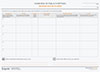 Post-Accident Journal Form
Sample accident journal/diary to help you document the effect on your daily life
Download in PDF format
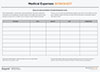 Damages/Expenses Worksheet
Damages worksheet to track expenses for your injury claim (medical treatment, property damage, lost wages, prescriptions)
Download in PDF format
At the center of any personal injury lawsuit is the actual injury. In other words, the fact that a product was defective does not give rise to a lawsuit. The lawsuit is based on restoring a plaintiff to the financial condition they would be in if the accident hadn’t happened. In other words, in order to file a lawsuit, you must have been injured, and the injury must have cost you money. Being aggravated or frustrated at a broken or defective product (though understandable) is not enough to file a lawsuit.
It’s also important to keep records of any expenses associated with your injury—from medical treatment to lost wages and other costs—because those will be the basis of your lawsuit.
You should consult with an Alabama product liability attorney if you believe you have a claim. Your lawyer will assess the damages, determine the appropriate claim amount and review your chances of success.
If you need to find an Alabama lawyer, feel free to use the Enjuris law firm directory for a skilled, qualified and experienced attorney near you.
Did you know that product liability law varies by state?












Need a lawyer?

What does an injury lawyer do?
A personal injury lawyer helps individuals who have sustained injuries in accidents to recover financial compensation. These funds are often needed to pay for medical treatment, make up for lost wages and provide compensation for injuries suffered. Sometimes a case that seems simple at first may become more complicated. In these cases, consider hiring an experienced personal injury lawyer. Read more