Find out how to file a claim and what to do if your claim is denied
The average Washingtonian will spend 90,000 hours at work over their lifetime.
Accidents can happen anywhere, but with ⅓ of our lives spent at work, the chances of being involved in a work-related accident are relatively high.
Workers injured on the job in Washington must—with few exceptions—turn to workers’ compensation if they hope to recover damages.
What is a Washington workers’ compensation claim?
Workers’ compensation is a type of insurance that provides financial benefits to employees injured on the job.
There are two important things to understand about Washington workers’ compensation claims right off the bat:
- Workers’ compensation is a sole remedy. If you accept workers’ compensation benefits, you waive your right to sue your employer for your workplace injury in almost all situations.
- Workers’ compensation is no-fault insurance. In Washington, the injured worker can receive benefits for their work-related injury regardless of who’s at fault for their injury.
Washington first enacted its workers’ compensation laws in 1911. Today, Washington’s workers’ compensation laws can be found in Title 51 of the Revised Code of Washington.
Does your Washington employer carry workers’ compensation insurance?
Washington law requires almost all employers to carry workers’ compensation insurance for their employees.
The only workers who are NOT required to be covered by workers’ compensation are as follows:
- A domestic worker in a private home (for example, a nanny)
- A person employed to do gardening, maintenance, or similar work at an employee’s private home
- A person working for aid or sustenance from a religious or charitable organization
- A child under age 18 employed by a parent to perform agricultural duties
- Musicians whose primary business is something other than entertainment
- Newspaper carriers or vendors who distribute newspapers
- Photojournalists who are paid by the piece and use their own equipment
- A driver providing commercial transportation
- For-hire vehicle operators who own or lease their for-hire vehicle
There are two ways employers in Washington can provide workers’ compensation coverage:
- Participate in the state workers’ compensation program, or
- Self-insure (only companies with at least $25 million in assets and some governmental entities qualify for this option).
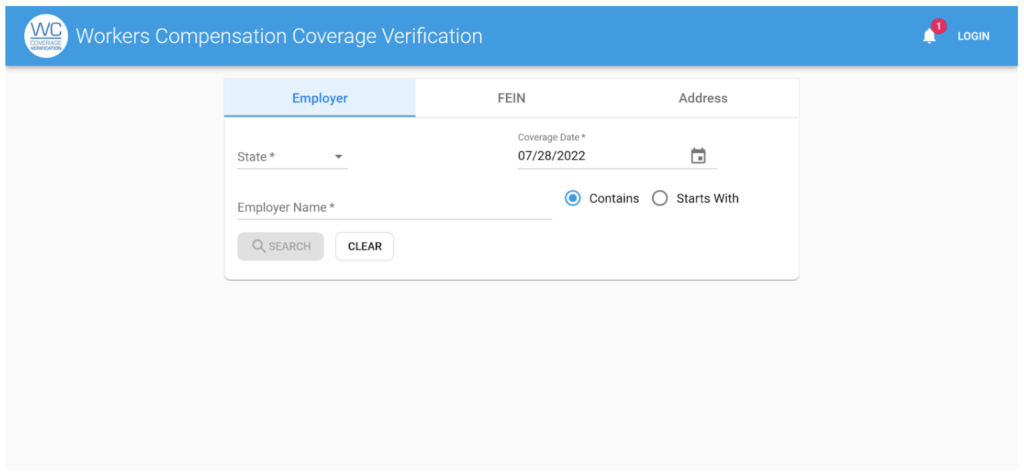
To find out if your employer carries workers’ compensation coverage, use the free workers’ compensation verification tool.
Is your injury covered by Washington workers’ compensation insurance?
The vast majority of injuries and illnesses (other than those that are self-inflicted) are covered by workers’ compensation insurance so long as the injury or illness arose out of your employment.
Your injury arose out of your employment if:
- There’s a relationship between your employment and your accident,
- Your injury occurred while you were fulfilling the duties of your employment or you were engaged in something incidental to your duties,
- Your injury occurred at a place where it was reasonable for you to be, and
- Your injury occurred within your period of employment.
An injury is NOT considered to have arisen out of your employment if it occurred at work but would have occurred anywhere. For example, if you develop cancer due to a genetic predisposition, you probably won’t receive workers’ compensation benefits because the cancer did not necessarily arise strictly out of your employment.
Some types of mental health issues are covered in Washington, but you’ll have to prove that the mental health issues resulted from a traumatic event at work.
Workers’ compensation covers both traumatic work injuries and occupational work injuries:
- Traumatic work injuries are those that result from a 1-time accident at work (for example, suffering a back injury as a result of a fall from construction scaffolding).
- Occupational injuries occur over a period of time (for example, repetitive movement injuries).
Filing a workers’ compensation claim in Washington
To file a workers’ compensation claim in Washington, you must follow these steps:
- Report the injury to your employer as soon as possible. If you fail to provide written notice of your injury to your employer soon after suffering your injury, your workers’ compensation claim may be denied.
- Seek medical attention. Unlike many other states, Washington allows injured workers to select their own doctors to treat their conditions. Be sure to seek medical attention right away and follow your doctor’s orders.
- File the necessary form. Once you report your injury, it’s your employer’s responsibility to file the necessary form to start the workers’ compensation claim process. If your employer refuses to file the form, contact a Washington workers’ compensation attorney or The Office of the Ombuds.
What is the statute of limitations for workers’ compensation claims in Washington?
Washington law only allows injured workers a certain amount of time to file a claim. This time limit is called the statute of limitations.
For most injuries, you must make a claim within one year. For other types of injuries, you have two years to make a claim. If you fail to make a claim within the appropriate time period, your claim may be forever barred.
What benefits does workers’ compensation provide to injured Washington workers?
In Washington, injured workers can receive the following workers’ compensation benefits:
- Reasonable and necessary medical expenses (doctor visits, hospital bills, prescriptions, crutches, prosthetics, etc.),
- Wage loss benefits, and
- Death benefits for certain dependents
The specific amount of wage loss benefits you can receive depends on a number of factors.
If you’re completely unable to work as a result of your injury, you’ll typically receive 60-75 percent of the gross income you were receiving before the injury. The specific amount depends on your marital status and the number of dependents you have.
If you can return to work but can’t earn as much as you could prior to your work injury, you can receive a partial wage-loss benefit equal to 80 percent of the difference between your pre-injury paycheck and your post-injury paycheck.
All wage loss benefits are subject to minimum and maximum amounts set by the Washington legislature.
What happens if my workers’ compensation claim is denied?
If your workers’ compensation claim is denied, you can appeal the decision. To appeal a workers’ compensation decision, take the following steps:
- Try to resolve the dispute by contacting your employer.
- If you’re unable to resolve your dispute with your employer, file an appeal online or in person with the Washington Board of Industrial Insurance Appeals. Generally, you must file an appeal within 60 DAYS of receiving a decision about your workers’ compensation claim.
It’s a good idea to hire an attorney to help you through the appeal process.
Third-party claims in Washington
Generally speaking, injured workers are prohibited from filing personal injury claims against their employers. Instead, injured workers must file workers’ compensation claims.
However, an injured worker may be able to file a personal injury lawsuit against a third party (anyone other than their employer or colleague) if the third party’s negligence contributed to or caused the injured worker’s accident.
For example, if you’re a delivery driver injured in an accident with a drunk driver, you can file a workers’ compensation claim and a personal injury lawsuit against the drunk driver. Practically speaking, the third-party lawsuit will cover any damages that aren’t already covered by the workers’ compensation claim.
Should I hire a Washington workers’ compensation attorney?
From filing a claim to calculating your compensation to appealing a decision, the workers’ compensation system is notoriously difficult to navigate.
Fortunately, there are Washington attorneys who have spent their careers navigating the workers’ compensation system. What’s more, workers’ compensation lawyers in Washington are not allowed to charge more than 15 percent of what you receive in a structured settlement agreement, or 30 percent of the increase in your award when you resolve your claim.
Find a Washington workers’ compensation attorney today using our free online directory.
Did you know that workers' compensation law varies by state?












Need a lawyer?

The basis for personal injury law is fairly straightforward:
If you’re injured because of someone’s negligence, then you’re entitled to recover for your financial losses related to the injury.
The premise for the workers’ compensation system is similar:
Your employer is required to have specific insurance that provides benefits if you’re injured at work.