
How to recover compensation without litigation
A “small claim” is less than $12,000 in Pennsylvania. That’s still a lot of money to most, but it means you can file and represent yourself within the small claims court rather than pursuing more extensive litigation.
“Small claims court” is exactly as it sounds—it’s a way for someone who has experienced financial loss to recover damages for a claim that’s too small (meaning the damages are a lower amount) to be worth going through a lengthy litigation process in court.
In Pennsylvania, you may file in small claims court for an amount that’s up to $12,000, not including court costs or fees. If you’re injured in Pennsylvania or need to file claims exceeding $12,000, you would need to consult a local attorney or file in a higher court.
Types of cases typically heard in Pennsylvania small claims court
A small claims court typically hears cases like breach of contract disputes, unpaid rent or security deposit claims, property damage, small personal injury claims, or claims involving goods or services.
Here’s an example:
Homeowner Holly hired Painter Paul to paint several rooms in her home. This included painting, any wall repair, removing wallpaper in a hallway, mouldings, and cleanup. They agreed that Holly would pay Paul $10,000 for the entire job. Paul gave Holly an estimated completion date of six weeks after the project began. About four weeks in, Holly grew concerned that Paul would not be finished in time.
She noted that on many days, Paul would only show up to work for about two hours. When he did come, his appearance made her suspect that he might have been drinking. The work he performed was shoddy.
Paul knew that Holly and her children were living with a relative until the painting job was complete, in part because Holly did not want her children exposed to paint fumes and dust for weeks, and in part because the job was so extensive that it would be hard to navigate around tarped furniture and in those living conditions with small kids.
Holly asked Paul throughout the job when he expected to be finished, but he kept giving her vague answers that were unsatisfactory. Finally, Holly had enough. The job was about 30% complete, several weeks past his anticipated end date, and she informed him that she did not want him to finish. She asked him to reimburse her for two thirds of the $10,000 payment so she could hire a different painter to complete the work.
Paul refused. Holly then filed a claim in small claims court for $6,000.
Essentially, it would not be worth court fees, time, effort and lawyer’s fees to litigate a case for a few thousand dollars. But it is a loss and a plaintiff should have a method by which to receive this compensation. That’s why people file in small claims court.
Pennsylvania small claims court filing process
- Location and jurisdiction.
A claim is filed in the Magisterial District Court where the defendant lives or where the relevant event happened. - Forms and fees.
The plaintiff completes a compliant form, accessible at the Magisterial District Court or online. They must also pay a filing fee; the amount varies depending on the amount of the claim. There could be additional fees for service of the complaint to the defendant. - Service of process.
Service of process is the legal way to ensure that the defendant is provided notice that they are involved in a lawsuit. For small claims court, the court completes service by sending the notice by certified mail or hand-delivery by a sheriff or constable. - Court procedures.
You’re permitted to hire a lawyer for a small claims case, but the system is designed so most parties don’t need to. On your assigned court date, the judge hears each side, reviews evidence, and makes a decision, usually the same day or shortly after. There is no jury for this proceeding; it is decided by the judge. - Appeal.
Either party may appeal the decision within 30 days to the Court of Common Pleas. - Judgment and payment.
If the plaintiff successfully wins their case and the defendant does not voluntarily pay the damages, the plaintiff may pursue methods such as wage garnishment or seizing property, but it may require additional court action. - Statute of limitations.
For most cases, the deadline by which a Pennsylvania small claims court case must be filed is two years for a personal injury or four years for a contract dispute.
Proving your case in Pennsylvania small claims court
The evidence the plaintiff will need to present in small claims court depends on the nature of the case. However, these are some typical items plaintiffs present as proof of their claim:
- Written contract or agreement.
This might include contracts, leases, agreements for goods or services, rental agreements, and so on. - Receipts, invoices and bills.
Anything that proves you paid for goods or services or that an amount is owed to you is valuable evidence. It helps establish that a transaction took place and sets forth the agreed-upon terms. This can include receipts for goods or services purchased, invoices that indicate the breakdown of amounts owed or line items, or estimates or quotes for work that was not complete or completed poorly. In cases of damaged property, bring repair or replacement estimates or receipts showing the cost of fixing or replacing the item in question. - Visual evidence.
Photographs and videos can be particularly compelling. This might include photos of damaged property, video of the condition of a product or premises, before and after photos if work performed poorly or there was worsening damage over time, or other things. - Communications.
Any communication records between parties can show an attempt to resolve the dispute or promises made. This can include emails, texts, letters, notices, or written admissions of fault or promises to pay. - Witnesses.
An eyewitness who saw the incident occur, an expert witness (like a contractor who could verify that the work was shoddy), or character witnesses to support credibility could bolster your claim. - Police or incident report.
If the subject of the claim is an accident, theft or vandalism, a police report is useful evidence. - Evidence of payment.
This is significant, especially particularly in disputes about unpaid loans, deposits, or refunds. Bring bank statements, canceled checks, or Venmo/PayPal transaction records. - Professional estimates.
In property damage or repair cases, bring estimates from contractors or professional evaluations to demonstrate the cost of repairs or to show that work was incomplete or poor. - Legal documents.
This includes court orders, previous judgments or agreements related to the dispute, eviction notices, or other relevant documents. - Timeline or calendar.
The judge is busy. They don’t have time to figure out how the facts of your claim fit together; the easier you can make it for the judge, the more likely they are to rule in your favor. Create a timeline that outlines the key events in the case so the judge can follow the sequence of events more clearly. Use it as a tool as you explain it along with the other evidence you present. - Warranties or guarantees.
If a dispute involves a product or service that was guaranteed or under warranty, bring any warranty documents or agreements that prove this protection existed. - Relevant statutes or legal cites.
Yes, the judge knows the law. But no lawyer or judge is familiar with every law on the books. If you can find specific laws or regulations that support your case (for example, landlord-tenant laws or consumer protection statutes), bring copies to demonstrate your legal position. You don’t need to be a legal expert, but having relevant statutes can strengthen your argument.
By bringing clear and organized evidence, you can help make a compelling case in small claims court. It’s important to be prepared and ensure that your evidence supports each claim you make.
You can try to tackle small claims court on your own, but if you feel that you need a lawyer’s assistance, you can contact a Pennsylvania personal injury attorney in your local area for guidance.
 Documents & Evidence Checklist
Checklist of 30 items to help you prepare for making a personal injury or accident claim
Download in PDF format
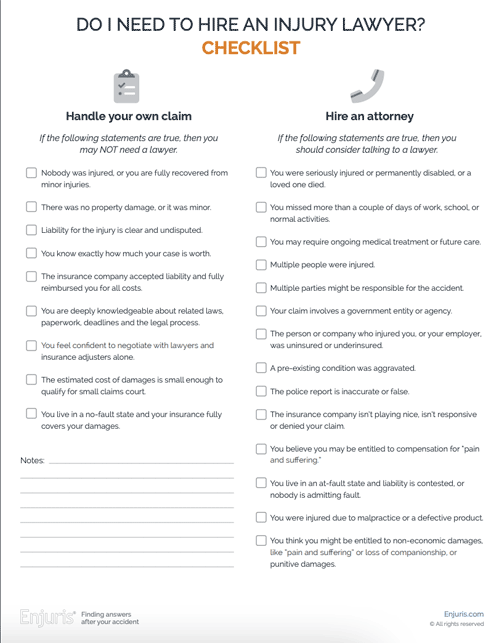 When To Hire a Lawyer Checklist
Can you handle your own claim, or should you hire an attorney? Use this worksheet to determine when you should consider hiring a personal injury or workers' comp lawyer.
Download in PDF format
See our guide Choosing a personal injury attorney.