Can passengers and railroad employees recover damages after a train wreck?
Minnesota has more than 4,400 active railroad tracks serviced by 21 railroad companies.
Class I railroads (BNSF Railway, Union Pacific) make up 3,510 miles, followed by class II railroads (RCPE, Rapid City, Pierre & Eastern), which make up 45 miles, and class III railroads (Minnesota Prairie Line, Progressive Rail), which make up 841 miles.
Minnesotans use trains for everything from sightseeing to commuting to work.
Although train travel is relatively safe, there have been some high-profile crashes in the United States over the last few years that have drawn attention to the industry.
Are trains safer than cars?
Traveling by train seems like it would be safer than traveling by car. After all, there’s no traffic, and trains are confined to a well-traveled track.
But just how safe are trains compared to cars?
Let’s take a look.
On a per-mile basis, train travel is 1 of the safest ways to travel. Consider the following statistics:
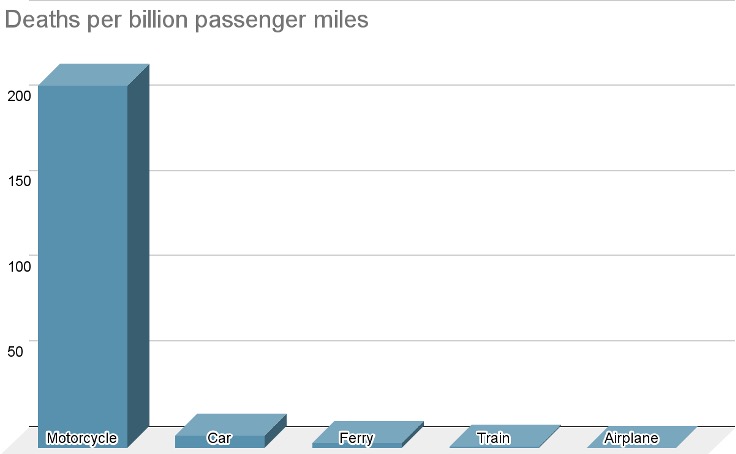
To put it simply, you are 17 times more likely to die traveling the same distance in a car than on a train. The only safer way to travel is by commercial airplane.
| Minnesota train accidents (2016-2020) | |||||
|---|---|---|---|---|---|
| 2016 | 2017 | 2018 | 2019 | 2020 | |
| Fatalities | 11 | 6 | 12 | 9 | 4 |
| Injuries | 114 | 139 | 126 | 89 | 85 |
| Total | 125 | 145 | 138 | 98 | 89 |
| Source: Federal Railroad Administration Office of Safety Analysis | |||||
Why do train accidents happen?
The Federal Railroad Administration (FRA), the government agency that investigates train accidents in the United States, identified the most common causes of train accidents as follows:
- Track, roadbed, and structure problems
- Signal and communication errors
- Train operation errors (human factors)
- Mechanical and electrical failures
When a train accident happens, it generally takes 1 of the following forms:
- A pedestrian hit by a train. Most train-related fatalities are the result of a pedestrian being killed while crossing a train track (intentionally or unintentionally).
- A collision with a motor vehicle. Some train accidents happen when motor vehicle drivers ignore crossing arms and warning lights.
- A train-on-train collision. Collisions between trains are rare but generally catastrophic.
- A derailment. A derailment happens when a train comes off the tracks. One study found that broken rails or welds were the leading cause of derailments, followed by human factors such as the improper use of switches.
Train derailments are actually pretty common throughout the United States, but most don’t result in any injuries. As University of North Dakota mechanical engineering professor George Bibel explains:
“Most derailments are relatively benign and can be compared to a person walking down the street, tripping, getting back up, and continuing on her or his way. Unless derailed cars crash into houses, strike passenger trains or release hazardous material into a neighborhood, derailments do not normally affect civilians.”
How does an injured train passenger recover damages in Minnesota?
Whether or not a passenger can recover damages following a train accident in Minnesota depends on whether someone other than the injured passenger was at fault for the accident.
Parties who may be at fault for a train accident include:
- The railroad company. Train operators and others who work for a train company are responsible for keeping passengers safe. If a railroad company employee fails to do so, the railroad company may be liable under the doctrine of respondeat superior.
- Railroad employees. A railroad employee may be personally liable for a crash if the actions that caused the crash were intentional or criminal.
- The track owner. Different sections of the track could be owned by different companies or government entities. If an accident occurs because of a dangerous condition present on the track, the owner of that section might be liable.
- The manufacturer of the train or track. If the accident occurred because of a defective train or track component, the manufacturer may be liable.
- Motor vehicle driver or pedestrian. If the accident was caused by a driver or pedestrian entering the path of an oncoming train, the driver or pedestrian may be liable.
The legal theory typically used to prove that someone was at fault for a train accident is negligence. To establish negligence in a Minnesota train accident case, you must prove the following 4 elements:
- Duty. You must prove that the defendant owed you a legal duty of care. In most cases, the legal duty of care owed is that of a reasonable person. In other words, a person must exercise a reasonable degree of care under the circumstances. However, train operators are considered “common carriers,” and therefore must exercise the “highest degree” of care.
- Breach. You must prove that the defendant breached their duty of care.
- Causation. You must prove that your injury was caused by the defendant’s breach.
- Damages. You must prove that you actually suffered harm.
Wrongful death lawsuits and fatal train wrecks
If a loved one is killed in a train accident, the surviving partner, children, parents, grandparents, and siblings of the deceased may be able to receive compensation by filing a wrongful death lawsuit.
The purpose of a wrongful death lawsuit is to compensate surviving family members for the emotional and financial loss caused by the deceased’s death. Available damages include:
- Medical expenses
- Funeral and burial expenses
- Lost wages and income that the person would have likely earned if death had not occurred
- Loss of care, companionship, and other intangible benefits
To receive compensation, surviving family members must prove that the defendant’s negligence or wrongful act caused the accident (just as the deceased would have to prove if they had survived the accident).
The families of the deceased teens filed a wrongful death lawsuit against BNSF. The lawsuit alleged that the crossing gates and warning devices were not functioning properly. BNSF argued that the driver of the car swerved around the safety guards.
After a lengthy trial, BNSF was found 98% liable. The jury awarded the families $24 million ($6 million for each of the crash victims’ families).
Injured railroad employees and the Federal Employers Liability Act (FELA)
Railroad employees who are injured in a train accident caused by their employer or colleague must file a FELA claim instead of a personal injury lawsuit to recover damages.
A FELA claim is similar to a workers’ compensation claim, but there are some important differences railroad employees should know about:
- FELA is fault-based, meaning injured railroad employees must prove that their employer was negligent to recover damages.
- The amount of compensation a railroad employee can recover under FELA is not capped.
- Injured railroad employees can recover non-economic damages like pain and suffering under FELA.
Statute of limitations for Minnesota train accidents
Minnesota limits the amount of time plaintiffs have to file lawsuits. In most train accidents, the time limit is 2 years from the date of the accident (the time limit for filing a FELA claim is 3 years).
If you fail to file your lawsuit within the time period set by the statute of limitations, your claim will be forever barred.
Importantly, the 2-year statute of limitations may be shortened or extended depending on the circumstances of the crash. It’s always a good idea to talk to an attorney as soon as possible after a train accident to make sure your legal rights are preserved.
See our guide Choosing a personal injury attorney.