Receiving compensation after a workplace injury in the Bluegrass State
The legal concept of compensating injured workers dates back to the Hammurabi Code, which was carved into a massive stone at the request of the Babylonian king Hammurabi sometime around 1750 B.C.
Kentucky enacted its first system of workers’ compensation (in a somewhat less dramatic fashion) in 1916. The system remains in place today, although it has undergone many changes.
Let’s take a look at Kentucky’s workers’ compensation system, including the steps you need to take to file a workers’ compensation claim.
What is workers’ compensation insurance?
Workers’ compensation insurance provides benefits to employees who are injured on the job.
There are three things you need to know about workers’ compensation insurance:
- No-fault system. Workers’ compensation is a no-fault insurance system, which means injured workers can receive benefits regardless of who’s at fault for their injury.
- Exclusive remedy. Workers’ compensation is an exclusive remedy, which means injured workers typically have to file a workers’ compensation claim in lieu of filing a personal injury lawsuit.
- No automatic compensation. Injured workers aren’t automatically compensated following a workplace injury. Rather, there are certain steps injured workers must take to receive compensation.
How do I find out if an employer has workers’ compensation in Kentucky?
In Kentucky, almost all employers with one or more employees are required to maintain workers’ compensation coverage. There are no exceptions for family-member employees, temporary, or part-time employees.
The only employees who do NOT need to be covered are the following:
- Certain agricultural employees
- Domestic workers (nannies, etc.) in private homes if they work fewer than 40 hours per week
- Employees covered by a federal workers’ compensation program
- Employees who voluntarily reject workers’ compensation coverage
- Certain religions employees
The Kentucky Workers’ Compensation Act applies to employees, not independent contractors. According to the Kentucky Department of Workers’ Claims, the major factors in determining whether someone is an employee or independent contractor are as follows:
- The nature of the work performed. An independent contractor’s work is not a regular and recurring part of the employer’s business. It’s usually for a specific project with a beginning and end date.
- The extent of control. An independent contractor does not receive instructions or training from the employer, has the right to hire or fire helpers without permission from the employer, and has final control of the job.
- Professional skill of the worker. Independent contractors have a specialized skill, trade, or license. They usually maintain a separate place of business, advertise, and have a business telephone.
- Intentions of the parties. A written contract should describe the obligations and responsibilities of each party, a specific project, dates of the project, and prices agreed upon.
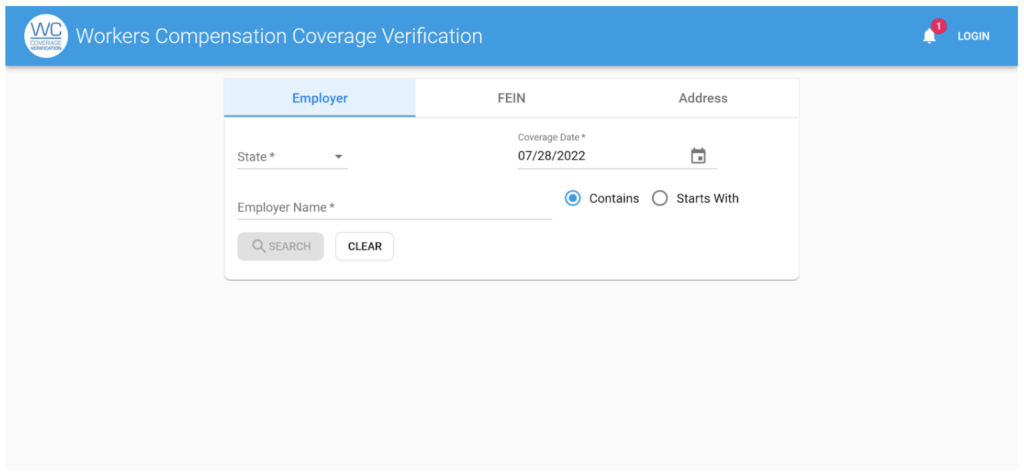
You can use the online verification tool to find out whether your Kentucky employer has workers’ compensation insurance. Just type in the state, the coverage date you’re curious about, and your employer’s name.
What injuries and illnesses are covered by workers’ compensation insurance?
Your injury is compensable under Kentucky’s workers’ compensation laws if:
- Your injury arose out of your employment, and
- Your injury was sustained in the course of your employment.
An injury is NOT considered to have arisen out of your employment if it occurred at work but would have occurred anywhere.
For example, if you have a heart attack due to high cholesterol while working as a data entry specialist, you probably won’t receive workers’ compensation benefits because your heart attack didn’t arise strictly out of your employment. In other words, your heart attack could have just as easily occurred while walking to get the mail or attending a sporting event.
Workers’ compensation covers both traumatic work injuries and occupational work injuries:
- Traumatic work injuries are those that result from a one-time accident at work (for example, suffering a neck injury as a result of a fall from construction scaffolding).
- Occupational injuries occur over a period of time (for example, repetitive movement injuries).
How do I file a workers’ compensation claim in Kentucky?
If you suffer a workplace injury in Kentucky, it’s important to notify your employer as soon as possible. Your employer will provide you with an Application for Resolution of Claim.
You’ll need to mail the completed Application for Resolution of Claim to the following address:
Department of Workers’ Claims
500 Mero Street, 3rd Floor
Frankfort, KY 40601
The application will then be routed to the Division of Claims Processing for review.
In addition to notifying your employer and filing an application, it’s important to get the medical attention you need following a workplace injury. In Kentucky, your treating physician must be in-network, but this doesn’t apply when emergency treatment is required.
What benefits does workers’ compensation provide?
In Kentucky, injured workers can receive the following workers’ compensation benefits:
• Medical expenses. Injured workers can receive “reasonable and necessary medical expenses.” These expenses include doctor’s visits, hospital bills, X-rays, prescriptions, physical therapy sessions, and other healthcare.
Be sure to tell your treating physician to send all medical reports and bills to your employer’s workers’ compensation insurer. The physician should call the employer to get the contact information of the insurance carrier.
• Wage loss benefits. You can receive wage loss benefits if you suffer a temporary or permanent disability.
Wage loss benefits are calculated according to the nature of the injury, with injuries falling into one of the following categories:
• Temporary total disability (TPD). If you’re unable to return to work for at least seven days, you may be able to receive ⅔ of your average weekly wage prior to your injury (subject to a statutory maximum).
• Permanent total disability (PTD). If you’re totally and permanently disabled (i.e., you can never return to any type of work), you may be able to receive ⅔ of your average weekly wage prior to your injury (subject to a statutory maximum) for the rest of your life.
• Permanent partial disability (PPD). If you suffer a permanent injury, but you’re still able to work in some capacity, you may be eligible for permanent partial disability benefits. Your PPD award depends on a number of factors, including the parts of your body affected by your accident.
• Death benefits. In the event of a fatal work injury, the surviving spouse and dependent minor children may be entitled to weekly benefits up to 75 percent of the deceased worker’s average weekly wages. Funeral expenses will also be paid (subject to a cap).
Can I appeal an unfavorable workers’ compensation decision?
The good news is that you have several opportunities to appeal a workers’ compensation claim denial. Here’s what the process looks like:
1. Benefit Review Conference. Once your claim is filed, a Benefit Review Conference will be scheduled. The Benefit Review Conference is an informal meeting for the parties to discuss settlement options and otherwise attempt to resolve the claim. If you’re unable to resolve your claim at the Benefit Review Conference, your case will be assigned a hearing date and an administrative law judge.
2. Administrative law hearing. At the administrative law hearing, you’ll have an opportunity to present evidence to support your workers’ compensation claim. This evidence may include testimony from your doctor and any witnesses. The hearing is a formal process and it’s important to have an attorney present if possible. You can expect to receive a decision from the administrative law judge within 60 days of the hearing.
3. Reconsideration. If you’re not satisfied with the administrative law judge’s decision, you can file a Petition for Reconsideration. The Petition must be filed within 14 days of receiving the administrative law judge’s decision.
Your Petition for Reconsideration should list the reasons you believe the administrative law judge’s decision is incorrect and the evidence to support those reasons. The judge will then issue a new decision, affirming or reversing the prior decision.
4. Workers’ Compensation Board. You can appeal the administrative law judge’s decision to the Workers’ Compensation Board. This appeal must be filed within 30 days of receiving the judge’s decision.
The Workers’ Compensation Board won’t review any new evidence. They’ll simply review the information that is already in the record.
5. Kentucky Court of Appeals. As a last resort, you can appeal the Workers’ Compensation Board’s decision to the Kentucky Court of Appeals.
Should I hire a Kentucky workers’ compensation attorney to handle my workers’ compensation claim?
You’re allowed to hire an attorney at any point in the workers’ compensation claims process. An attorney can gather evidence, file your application, and handle an appeal if your claim is denied.
To find an experienced workers’ compensation attorney in Kentucky, visit our free online directory.
Did you know that workers' compensation law varies by state?












Need a lawyer?

The basis for personal injury law is fairly straightforward:
If you’re injured because of someone’s negligence, then you’re entitled to recover for your financial losses related to the injury.
The premise for the workers’ compensation system is similar:
Your employer is required to have specific insurance that provides benefits if you’re injured at work.