
• Skip to main content
  • Skip to primary sidebar

New Hdr Right

Enjuris
Finding answers after your accident
Contributor loginSearch
Get help Call Now

Nav Menu

  • Find a Lawyer
  • Accident Resources
        • Personal Injury Law
          • You've been hurt. Now what?
          • Do I have a claim?
          • Finding the best attorney to represent you
          • Dealing with insurance
          • Laws by state
          • View all
        • Accident Types
          • Car accident
          • Truck accident
          • Workplace injury
          • Wrongful death
          • View all
        • Workers' Comp
          • Common work injuries
          • Finding the best workers’ comp lawyers
          • How workers’ comp benefits work
          • Personal injury vs. workers’ compensation
          • View all
        • Injury Guides
          • Spinal cord / column
          • Brain Injury
          • Occupational injuries
          • Whiplash
          • View all
        • More
          • Blog
          • Questions & answers
          • Tell your story
          • Forms and worksheets
          • Videos
          • For students
          • Our Safety Allies
          • About us
          • Legal dictionary
  • Attorney Marketing
    • Social Media Management
    • Become a Partner
    • Join lawyer directory
    • HERO program
    • Compare plans and features
    • Guest blogging for attorneys
    • Enjuris Excellence badge
    • Legal marketing help
Accident Help (Home) » Injury Blog » What Do I Do If I Was Hurt at Work but Failed to Report the Injury?

Do you have a question?
Call a Lawyer

It’s free, anonymous and confidential. We know that you may be stressed or worried. We’re available 24/7.

Call our Partner Attorneys

Need Immediate
Legal Help?

If the matter is urgent, get directly in touch with an attorney in your area, most offer free consultations.

Find an attorney in your area

Browse other questions submitted by our readers:

• COVID-19 and Injury  • Car Accident  • Defective Drug  • Landlord/Tenant Disputes  • Medical Malpractice  • Motorcycle Accident  • Personal Injury Claims  • Premises Liability  • Truck Accident  • Wrongful Death 

What Do I Do If I Was Hurt at Work but Failed to Report the Injury?

How can I contribute?

About Enjuris Attorney Editor

Contributor: Enjuris Attorney Editor

Add as preferred source on Google

Steps to take if you fail to report a workplace injury

Imagine this: a buzzing construction site where workers labor with heavy machinery, steel beams, and large wooden boards. Amidst the bustle, a worker loses their footing on a platform and falls to the ground. The worker brushes off the incident and continues on. A week later, pain and complications arise, leaving the worker unsure of what to do.

In this blog post, we’ll explore the potential consequences of unreported workplace injuries and provide guidance on how to rectify the situation, safeguarding your rights and entitlements.

What is workers’ compensation?

Workers’ compensation is a type of insurance that provides financial benefits to employees injured on the job.

There are two important things to understand about workers’ compensation claims:

  • Workers’ compensation is no-fault insurance. You can receive benefits for your work-related injury regardless of who’s at fault for your injury.
  • Workers’ compensation is a sole remedy. If you accept workers’ compensation benefits, you waive your right to sue your employer for your workplace injury in almost all situations.

Because workers’ compensation is—in most cases—your sole remedy for a workplace injury, it’s imperative that you follow the steps necessary to qualify for workers’ compensation benefits.

Enjuris tip:Learn the difference between a workers’ compensation claim and a third-party workplace injury lawsuit.

Do I need to notify my employer of my workplace injury?

Most states have laws in place requiring injured workers to notify their employers promptly after suffering a workplace injury to be eligible for workers’ compensation benefits. The specific requirements, including the notification time frame and the format of reporting, vary from state to state.

For example, under Tennessee law, an injured worker must report their work-related injury to their employer in writing within 15 days of the date of the injury.

Failing to notify your employer within the specified time frame may prohibit you from receiving any benefits.

Are there exceptions to the worker’s compensation notification requirement?

Most states have exceptions to the workers’ compensation notice requirements, meaning that you may be able to receive workers’ compensation benefits even if you fail to notify your employer within the timeline. Here are some common exceptions:

  1. Employer knowledge: If the employer already knows about the worker’s injury, either through direct observation or other means, many states waive the notice requirement.
  2. Medical emergency: In some cases, if the injured worker is unable to provide notice due to a medical emergency or incapacitation (such as a coma), the notice requirement may be waived or extended.
  3. Gradual injuries or occupational diseases: For injuries or conditions that develop over time, such as repetitive stress injuries or occupational diseases, the notice requirement may be more flexible. For example, workers may be allowed to provide notice once they become aware of the injury and its connection to their employment, as opposed to providing notice soon after the initial injury was sustained.
  4. Retaliation or intimidation: If an injured worker can prove that they were afraid to report the injury due to fear of retaliation or intimidation from their employer, the notice requirement may be waived.
  5. Legal incapacity: If the injured worker is legally incapacitated, such as being a minor or having a mental disability, the notice requirement may be waived or relaxed.

Additionally, some states have a catch-all exception that allows the notice requirement to be waived if the injured worker can provide a reasonable excuse for their failure to give notice.

Enjuris tip:Although there may be exceptions to the workers’ compensation notice requirement, you should do everything in your power to report your injury in writing as soon as possible. You don’t want to find yourself in a situation where you’re relying on a judge’s interpretation of a narrow exception that may or may not exist.

What should I do if I was injured at work but failed to report my injury?

If you realize that you forgot to notify your employer of your workplace injury for purposes of filing a workers’ compensation claim, it’s essential to take the following steps as soon as possible:

  1. Notify your employer: Inform your employer about the injury as soon as possible, even if you think you’ve missed the deadline. Provide the information in writing if possible and keep a copy for your records.
  2. Seek medical attention: If you haven’t already done so, see a healthcare professional to assess and treat your injury. Inform the medical provider that the injury is work-related, and make sure to obtain documentation of your diagnosis and treatment plan.
  3. Review your state’s laws: Familiarize yourself with your state’s workers’ compensation laws, including the specific deadlines for reporting injuries and filing claims. There may be an exception that applies in your case.
  4. Consult an attorney: Speak with a workers’ compensation attorney to discuss your situation and get advice on the best course of action. An experienced attorney can help you navigate the process, determine if any exceptions apply, and assist you in filing a claim if you’re still eligible.
  5. Document everything: Keep detailed records of your injury, medical treatments, communications with your employer, and any expenses incurred due to your injury. This documentation can be essential in supporting your claim.
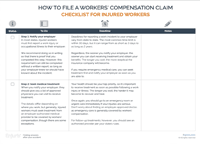
Workers' Comp Checklist PDFWorkers’ Compensation Checklist
Download this checklist for injured workers to learn how to file a workers’ comp claim and track your progress.
Download in PDF formatDownload as PDF

Still have questions about your workers’ compensation claim? These resources may help:

  • Common reasons workers’ compensation claims are denied
  • How much does a workers’ compensation lawyer cost?
  • What if my employer doesn’t have workers’ compensation insurance?

Filed Under: Questions & Answers Tagged With: workers' compensation

Primary Sidebar

Grow your personal injury law firm. Attract & convert more clients.

Tired of expensive marketing
that doesn't deliver?

Partner with Enjuris and reach millions of accident victims actively seeking legal help.
Join Enjuris Partners

Enjuris Partners

  • AL - Nomberg Law Firm
  • CO - Babcock Tucker
  • FL - Lorenzo & Lorenzo
            Palmer | Lopez
  • GA - Gerber & Elkins Law
  • MT - Murphy Law Firm
  • SC - Chappell, Chappell & Newman
  • TX - Brown Trial Firm
            Neal Davis Law Firm

Blog categories

  • News Stories
  • My Accident Story
  • Resources You'll Love
  • Questions & Answers

In your state

AL AZ CA CO FL GA IN MT NC OH SC TN TX

Attorneys, write for Enjuris. Join our Contributor Program.

Start Writing

Footer Form

Need an attorney? Our Enjuris Partners are ready to help FIND OUT IF YOU HAVE A CASE
Start here

© 2026 Enjuris. All rights reserved.

X/Twitter Facebook LinkedIn YouTube Blog feed Instagram TikTok Reddit
Learn about

Car accident attorneys
Defective product attorneys
Personal injury attorneys
Medical malpractice attorneys
Wrongful death attorneys
Workers compensation attorneys
Birth injury attorneys

Personal injury lawyers: Partner with us Lawyer online marketing

System overview
Video
Powered by

SEO Advantage

3690 West Gandy Blvd., Suite 444
Tampa, FL 33611
Attorney SEO services


Enjuris is a platform dedicated to helping people who are dealing with life-altering accidents and injuries. We support students, families, caregivers and communities with resources, personal stories and a national directory of partner attorneys.

Copyright © 2026 Enjuris.com. All rights reserved. The accuracy, completeness, or currency of information on this site is not guaranteed. The information provided is not legal advice, does not constitute a lawyer referral service, and no attorney-client relationship is or will be formed by use of this site. For state-specific information, particularly regarding attorney advertising, refer to the Terms of Use. Your use of this website constitutes acceptance of the Terms of Use and Privacy Policy.

Press Enter to Search