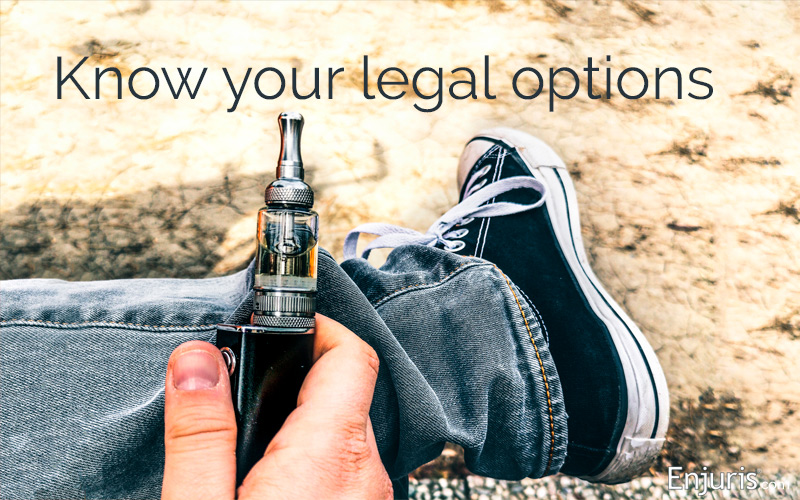
You might be hearing a lot of news about vaping deaths and illnesses, particularly among American teens.
But it’s not just teens who vape. One U.S. study suggests that approximately 10.8 million American adults vape.
What is vaping?
Vaping is inhaling and exhaling aerosol vapor produced by an e-cigarette (electronic cigarette) or similar device, like a vape pen or advanced personal vaporizer (also called MODS).
A vape device is powered by a lithium-ion battery that heats liquid into the cloud of vapor inhaled by the user. The vapor in an e-cigarette consists of fine particles of propylene glycol or vegetable glycerine-based liquid with nicotine, flavoring, and other chemicals that can be toxic and are linked to cancer, respiratory diseases, and heart disease.
An e-cigarette can also be used to deliver marijuana or other drugs.
You might also have heard of “Juuling.” JUUL is the brand name of the most popular vaping device on the market. More than 70% of vaping products are JUUL, which is why the name is sometimes used generally to refer to vaping.
Part of JUUL’s popularity is because of its appearance. To the untrained eye, a JUUL device looks like a computer’s USB flash drive. Therefore, it tends to be the device of choice for teens because it’s easy to conceal and not obvious to parents or school administrators.
Until recently, JUUL pods would come in flavors like mango, mint, and cucumber. The company announced in October 2019 that it would discontinue sales of flavors because they’re viewed as enticing to young people (teens and pre-teens) for vaping.
- 6 million middle school and high school students in the U.S. used vapes in a 30-day period in 2018. That translates to nearly 5% of middle schoolers and more than 20% of high schoolers.
- 3% of current e-cigarette users age 45 and older were not previously cigarette smokers before they began vaping.
- 40% of current e-cigarette users age 18-24 were not previously cigarette smokers before they began vaping.
- Nearly 30% of all adult e-cigarette users were previously regular smokers of cigarettes and 11.4% were not regular smokers. Almost 60% remained current cigarette smokers.
- In 2017, almost 3% of all U.S. adults were users of e-cigarettes.
Is vaping addictive?
Some e-cigarettes contain nicotine, which is addictive just like regular cigarettes. However, many vape users are combining vaping with traditional cigarette smoking.
Dr. Michael Joseph Blaha, a physician at Johns Hopkins Medicine, says that while e-cigarettes expose a user to fewer toxic chemicals than traditional cigarettes, vaping is still highly addictive and users begin to crave smoking and experience withdrawal symptoms when they stop.1 Nicotine raises blood pressure and spikes adrenaline, which raises the likelihood of a heart attack.
Research suggests that the nicotine in e-cigarettes and regular cigarettes is as addictive as heroin and cocaine. An extra-strength e-cigarette cartridge has a higher concentration of nicotine than a regular cigarette, and increasing the voltage of an e-cigarette produces a larger hit of its vapor substance.1
What are the health risks of vaping?
The Centers for Disease Control and Prevention (CDC) warns against the risks of vaping. They give these 8 reasons why:
- Nicotine is addictive.
- Nicotine is toxic for a developing fetus, so vaping is especially harmful for pregnant women.
- Nicotine can affect the brain development of adolescents and teens, even into the mid-20s.
- Even a vape without nicotine is harmful because the vapor contains cancer-causing chemicals and particles that penetrate deep into the lungs.
- There are reports of fires and explosions from e-cigarette batteries that result in burn injuries.
- Acute nicotine exposure is toxic. Both children and adults have become poisoned after breathing, swallowing, or absorbing liquid from an e-cigarette.
- E-cigarette use by teens and young adults is linked to use of other tobacco products like regular cigarettes and smokeless tobacco, along with alcohol, marijuana and other drugs.
- The aerosol in e-cigarettes’ flavoring contains diacetyl, which is linked to lung disease. It also could contain volatile organic compounds (VOCs) such as benzene (found in car exhaust) and heavy metals like nickel, tin, and lead.

The medical costs as a result of the smoking epidemic are well into the several hundred billion dollar range. Are we really shocked that inhaling a toxic substance into your lungs through a vaping device is harmful? Why we were not skeptical as a society when vaping was introduced is dumbfounding to me. We make drug manufacturers go through extensive testing. We strictly monitor our food supply. We prevent dangerous cars, toys, technology, but somehow vaping was given a pass.
My hope is that with the recent information coming out about the dangers of vaping, our society will be quick to act and eradicate this harm. I certainly know the trial lawyers will do their part as they often do in this situation to stand up for the victims.”
In the news: sudden increase in vaping-related lung disease
On August 6, 2019, a patient in his 20s was admitted to Salt Lake City hospital with vomiting, aches and pains, and breathing problems. In the next few days, several more patients were admitted with similar symptoms and no obvious cause.
By mid-October of 2019, there were nearly 1,500 reported cases of vaping-related illness across the U.S. What these patients had in common was having used e-cigarettes, many of which contained products with THC (Tetrahydrocannabinol, which is the main psychoactive ingredient in marijuana) or nicotine.2
So far, 33 patients have died from the “mystery illness.” The first was a woman in her 30s who was hospitalized in Illinois after vaping. She eventually succumbed to the illness.
The illness remains a mystery to doctors and researchers who are desperately trying to find a cause and a treatment for patients affected by vaping-related symptoms.
These patients were treated for vaping-related symptoms that include:
- Nausea
- Vomiting
- Diarrhea
- Fatigue
- Abdominal pain
- Fever
- Weight loss
- Breathing problems
Symptoms can appear from a few days to many weeks after using e-cigarettes.
A report by the Mayo Clinic suggests that the lung damage associated with the recent vaping cases resembles a chemical burn.
Burn injuries from vape devices
Vaping burns aren’t common, but they can be serious.
E-cigarettes contain a portable, rechargeable lithium-ion battery. The user presses a button that activates the heating component. Some devices activate when the user initiates an inhalation.
Lithium-ion batteries are everywhere — in mobile phones, laptop computers, tablets, and hundreds of other electronic devices. However, lithium-ion batteries in vapes aren’t regulated as strictly as those in other devices. These batteries could overheat or catch fire from a brief exposure to another metal. That means carrying your vape in your pocket or handbag where it might touch (or come close to) your keys, loose coins, your phone, or other metals, could actually cause it to catch on fire. There’s also a risk of fire while charging. If your vape catches fire while charging in your home or car, those flames can spread fast.
The U.S. Fire Administration has said that the shape and construction of e-cigarettes is part of the reason they’re more likely to explode than other items that have lithium-ion batteries.3
There have been 2 reported deaths from e-cigarette explosions. In one case, a metal part of a vape pen punctured a man’s neck when it exploded. The other instance involved a house fire that was ignited by an exploding e-cigarette.
Burn injuries from vape explosions have included people losing teeth, suffering damage to eyes, losing parts of their faces, or damage to the roof of their mouth. There have also been many reports of third-degree burns.
And, remember… these examples only include patients injured severely enough to visit an emergency room. There may well be plenty of cases that go unreported because the burns are not severe enough to warrant emergency medical treatment.
State laws regarding e-cigarette sales
Each state has its own laws about how and to whom e-cigarettes can be sold.
As of September 2019, only Pennsylvania does not have laws regarding youth access to e-cigarettes. All other states have laws that prohibit sales of e-cigarettes to people younger than 18, 19, or 21, depending on the state.4
The FDA mandates that e-cigarettes are regulated as tobacco products, which means they cannot be legally sold to minors.
Some states require a retailer to have a license in order to sell e-cigarettes. Again, these laws vary by state so you’ll need to check your specific state law.
The recent outbreak of vaping illnesses has led to increased calls for bans, both on sales of e-cigarettes, and also where they can be used. Many schools and other public places across the nation are revisiting their rules about vaping and continue to set stronger limitations.
Vaping injury lawsuits
What if you’ve been injured as a result of vaping? Or perhaps you or your child suffered a severe lung illness or a burn injury caused by e-cigarettes.
What do you do now?
Vaping isn’t new, but its increased popularity in recent years — and the rise of illnesses — has raised new potential for lawsuits against vape manufacturers and possibly other defendants.
You might have a basis for a personal injury or wrongful death claim if you can establish that negligence, a wrongful act, or a product defect caused the injury.
Personal injury lawsuit for vaping injury
Most personal injury lawsuits involve one or more of the following:
- Actual bodily harm
- Financial loss
- Emotional distress (pain and suffering)
As in any personal injury lawsuit, if you file a claim for a vaping-related injury, you could recover compensatory and punitive damages.
Compensatory damages are those that restore a plaintiff to the financial condition they were in prior to the injury. This can include damages to cover costs for:
- Medical treatments
- Past and current lost wages, future loss of earning capability
- Pain and suffering or emotional distress
- Loss of consortium
- Assistive devices or therapies
- Funeral and burial costs
Punitive damages are awarded in cases where the defendant’s action was so egregious or malicious that the court determines that it warrants punishment. A punitive damage award is made in addition to compensatory damages if the court deems it necessary.
Who is liable in a vaping injury lawsuit?
It’s possible that the manufacturer could be responsible for a vaping injury, especially if it’s a burn or the result of another type of device malfunction.
But the problem arising from many of the vaping-related lung illnesses is that many people who vape purchase the cartridges or pods (the flavoring or chemicals) from online sources or street-level sellers.
If you became ill as a result of vaping, it could be challenging to identify a defendant if the pod was purchased through an unlicensed seller or not directly through the manufacturer. Like street drugs, sometimes the most hazardous liquids for e-cigarette devices are the result of contamination by other substances.
Once the vape device or pod has left the retail supply chain, the manufacturer would likely not be responsible for its performance or effects because of the likelihood that someone else tampered with or modified it before the end user received it.
However, one mother recently filed a lawsuit against JUUL, claiming that its nicotine cartridges caused her 18-year-old son’s death. It’s the first wrongful death lawsuit against an e-cigarette company.
In another ongoing lawsuit, a teen in Chicago has named both the e-cigarette manufacturer and the retailer where he purchased it as defendants. The gas station where he purchased the device was named in the lawsuit because the teen alleges that the store illegally sold the device to him as a minor.5
This litigation is all still very recent and there’s new territory ahead.
What to do if you’ve experienced a vaping-related injury
Think you might have the basis for a legal claim? The only way to know for sure is to contact a personal injury lawyer. Most personal injury lawyers offer a free consultation, so you can have an initial meeting to discuss with a lawyer why you think you have a claim. The lawyer will advise you of your options and help guide the process.
Get started by using the Enjuris Personal Injury Law Firm Directory to find an attorney near you who’s ready to explore your claim.

Kratom Wrongful Death Lawsuits: Seeking Justice for Families
Families are suing over kratom-related deaths. Here’s a look at some of the victims and their families’ lawsuits. Are you concerned about someone using kratom?
Sources:
1Johns Hopkins Medicine, 5 Vaping Facts You Need to Know
2Reuters Health News, Almost 1 in 20 U.S. Adults Now Use E-cigarettes
3NPR, JUUL To Stop Selling Most Vape Flavors
4Centers for Disease Control and Prevention, Electronic Cigarettes: What’s the Bottom Line?
5Vox, Vaping appears to be making hundreds of people sick. Doctors have no idea why.
6New England Journal of Medicine
7Public Health Law Center at Mitchell Hamline School of Law, Youth Access to E-cigarettes