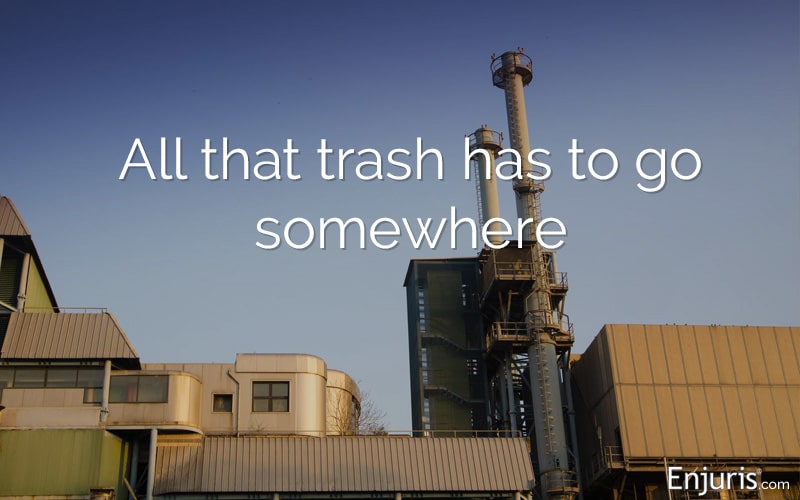
Waste-to-energy incinerators could be causing health concerns in Florida communities
The trash has to go somewhere. But where? In Florida, where the population is booming, some residents in typically Black and Hispanic neighborhoods are complaining that waste-to-energy incinerators are too close to their homes and present health hazards.
Most of us know that where you live matters to your health. No single factor affects how your environment impacts your health—we’ve heard about water causing health concerns in Flint, Michigan; other pollution-related lawsuits; and even some property contamination toxic tort lawsuits.
But now, there’s a toxic problem in Florida.
Usually, a booming population means a better economy and other benefits to most cities. It also means that there’s more waste that the municipality needs to handle. While your garbage might just “disappear” from your curb or dumpster—out of sight, out of mind—the city must figure out where it will all go.
Florida says it has capacity to burn more municipal solid waste than any other state. Its landfills, which are in densely populated coastal areas, emit methane, which is a greenhouse gas.
There were nearly 51 million tons of trash picked up in Florida by haulers in 2022, which was a significant increase from 47 million in 2020. That four million ton increase equals about 90,000 fully loaded semitrailers.
Now, environmental activists are suing the state of Florida because they believe trash-burning is causing illness to nearby residents.
Waste-to-energy plant emissions in Florida
There are four Tampa Bay area waste-to-energy (WTE) plants; two in Hillsborough County, one in Pinellas, and one in Pasco. These plants burn food, textiles and trash in order to produce electricity. This accounts for about 20% of the municipal waste.
While this type of waste management reduces carbon emissions from fossil fuels and eliminates methane from landfills, an attorney at Earthjustice says, “It’s the dirtiest form of energy possible and it’s poisoning communities.”
The Earthjustice representative continues to say that pollutants from this type of waste-to-energy plant causes respiratory and reproductive health risks, cancers, and other illnesses.
An incinerator can emit up to 18 times more lead, 14 times more mercury, 2.5 times more greenhouse gasses, and other elevated levels of emissions than a coal-fired plant.
Florida waste-to-energy plant lawsuit
The lawsuit is related to a Covanta Energy waste-to-energy plant in Doral, which is 15 miles west of Miami. It cites 3,000 calls made since 2016 where residents complained about sickening smells around the plant. One of the issues in the complaint is the proximity of the plant to predominately Black and Hispanic neighborhoods. Therefore, the complaint is not just a toxic tort, but also a civil rights issue.
The U.S. Environmental Protection Agency (EPA) claims that WTE plants are becoming cleaner and safer over time because of improved research and technology. And, officials in the affected counties have said that there’s rigorous air pollution control in place, including activated carbon injections that filter harmful gases. However, these plants process very hazardous materials, and even the cleanest have certain levels of chemicals that form during combustion.
Ana Vale, a Doral resident, lives just blocks from the Miami-Dade incinerator. Shortly after moving to the area from Atlanta, Vale’s teen daughter was diagnosed with eczema after complaining that her skin was itchy and burning. Eczema is not uncommon, but recent research links environmental toxins like air pollution to rising numbers of people with the skin condition.
While Vale doesn’t intend to sue Covanta, she does believe that the plant is the cause of her daughter’s condition.
However, other residents are suing the company. A group of residents sued Covanta in early 2023 because they believe it already made them sick or exposed them to health hazards.
A report published by PBS in 2019 cited an Italian study that found that increased particulate emissions from incerators was associated with an increased risk of miscarriage in women ages 15-49. (Is burning trash a good way to dispose of it? Waste incineration in charts; June 23, 2019)
Who is responsible for a toxic tort?
These Florida cases will likely spend many months or years in the legal system.
But they might be important for determining future toxic tort lawsuits and best practices for waste management companies.
The EPA defines incineration as “the process of burning hazardous materials at temperatures high enough to destroy contaminants.” The incinerator is a furnace that burns these materials in a combustion chamber.
As the waste heats, the contaminants are destroyed and changed into gases. Those gases that aren’t destroyed pass through a secondary combustion chamber and air pollution control equipment. This removes particulate matter.
The EPA maintains that a properly operated incinerator is safe for nearby residents.
But accidents happen, and the technology continues to evolve—which mean it’s still possible for hazards to occur. So, who’s at fault if you become ill from exposure to toxic emanations from an incinerator or other waste disposal facility?
There could be several defendants in a toxic tort waste burning lawsuit:
- The company that maintains and owns the incinerator;
- The municipal agency that monitors emissions and safety; or
- The federal agency that sets forth emissions regulations.
Essentially, this kind of legal action is taken when folks believe they’ve been harmed by pollutants released from these plants. Waste-to-energy plants are all about converting garbage into electricity, but sometimes, the process can release harmful substances into the air or water.
So, if people living nearby start experiencing health problems they think are caused by the plant’s emissions, they might file a toxic tort lawsuit. They’ll argue that the plant didn’t handle the waste properly or didn’t take enough precautions to prevent the release of dangerous chemicals. It’s all about proving that the emissions directly caused their health issues, which can be quite a scientific and legal challenge.
The plaintiffs—the area residents—need to show that the emissions contain harmful substances, that these substances can cause the health problems they’re experiencing, and that they’ve been exposed to levels high enough to make them sick. This often involves a lot of expert testimony, environmental testing, and medical records.
On the flip side, the waste-to-energy plant will defend itself by questioning the plaintiffs’ evidence, maybe arguing that the health issues are from other sources or that the emissions are within legal limits and managed responsibly.
It’s a complex battle that combines environmental science with personal health and legal standards. Both sides will be digging deep into the data, trying to prove their point, and a court or jury will eventually decide who’s liable and what damages, if any, should be paid out.
Sources:
Is It Time to Stop Burning Our Garbage?
Burning trash ‘poisoning communities’ in Florida, complaint says
Florida is booming and burning more trash. Residents say it’s making them sick.