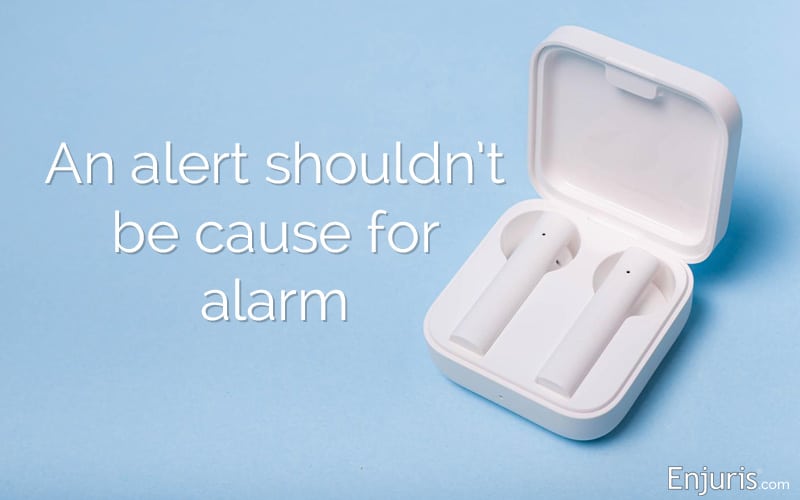
If you’ve walked down the street in any large city (or small town), you’ve undoubtedly seen the ubiquitous white Apple AirPods nestled into ears as their owners walk, ride a bicycle, work, or do nearly anything else as they listen to their music or podcast of choice or talk on the phone.
AirPods, which function like old-fashioned headphones, are wireless buds that the user places in their ears to listen to sound from their iPhone, iPad, Apple Watch or another device.
Apple sold 27 million pairs of AirPods during the holiday quarter of 2021, which means sales of the product are increasing about 20 percent each year. (source) Though these are a pricey accessory, they are also coveted by teens and tweens.
However, Apple hit a speed bump recently when it was sued by a Texas couple who claimed their 12-year-old son suffered permanent hearing loss because of an alert through his AirPods.
Plaintiffs Carlos Gordoa and Ariani Reyes present these facts:
Their son (referred to as “B.G.” in the lawsuit) was watching Netflix and using his AirPods on a “low volume.” While he was watching, an Amber Alert was issued. The alert sounded suddenly and loudly, exceeding the maximum volume at which he was watching the show.
It allegedly was so loud that it tore their son’s eardrum, damaged his cochlea and caused significant hearing loss. (source)
Although AirPods allow you to set a maximum number of decibels for your device content, they don’t automatically reduce or limit notification volumes like Amber Alerts, and there is no way to adjust the alert sound manually.
The lawsuit claims a design defect because Apple knew or should have known that the alerts would be loud enough to cause hearing damage but chose not to fix it.
This case is still pending in the court system, so we don’t know yet what the outcome will be, but we’ll take a look at some of the possibilities and legal considerations.
What is a defective product claim?
Defective products fall under the category of product liability law, which is included within general personal injury cases.
There are 5 elements to any personal injury lawsuit: duty, breach, causation, injury and damages. With respect to a product liability case, these elements are evaluated as related to the product, the manufacturer, or some other party as relevant in its chain of custody between the manufacturing process and the end-user.
| Elements of a product liability lawsuit | How they relate to the AirPods case |
|---|---|
| Duty: A manufacturer, shipper, retailer or anyone else who handles a product before it gets to the consumer has a duty to avoid foreseeable harm to any person who uses the product in the way it’s intended to be used. | Apple has a duty to design a product that does not harm the user. While the company can’t anticipate every harm that could possibly happen, it would seem that AirPods should have a maximum volume, even for alerts, and Apple should have researched what maximum volume would be safe in a user’s ears. |
| Breach: This happens when the plaintiff does not meet the requirements of their duty. For example, if a manufacturer sells a 4-legged chair, and 1 leg is broken (which causes the chair to fail), then they have breached their duty of providing a product that would not cause harm to the user. | The court could find that if Apple didn’t research volume considerations for alerts, or if it did perform research and testing and was aware that AirPods could provide dangerously loud alerts, it could be liable for the child’s injury. |
| Causation: A product can be defective, but you don’t have a lawsuit unless it actually causes an injury. | The plaintiffs need to prove that the alert from the AirPods caused their son’s hearing problems, and there is no other reasonable explanation for how he became injured. |
| Injury: There needs to be an actual injury; it’s not enough that one could have happened—it needs to have actually happened. | If the child had been startled or felt momentary pain from the alert, he might have been uncomfortable or temporarily frightened. And while that would be a good reason to discontinue using AirPods, it’s not enough for a lawsuit. The plaintiffs are able to file a lawsuit because their son suffered a ruptured eardrum and hearing loss, which are actual injuries. |
| Damages: Damages are the amount of money that you can recover from a personal injury lawsuit. Generally, you can recover any costs that arise from the injury (including medical treatment, property loss, lost wages resulting from your injury, wrongful death, pain and suffering, and other expenses). | The injury needs to have cost money. The family of the child injured by the AirPods could make a claim for any medical treatment and testing he endured, as well as costs related to special schooling or other disability-related expenses (if necessary) and future losses, if applicable. |
Types of product defects
A product defect could happen in 3 ways:
- A design defect occurs when the product is inherently flawed based on its design and would be dangerous even if manufactured perfectly according to its specifications.
- A manufacturing defect means that if built correctly according to the specifications, the item would be safe, but something went wrong in the manufacturing process that left it with damage that could cause an injury.
- A failure to warn means that the packaging or instructions did not properly convey to the user how to safely use the product or what to do in order to avoid an injury. We’ve all seen tags on appliances that warn not to use them in water, what to do if the cord is frayed or broken, and other precautions. Even non-electrical items have warnings (and it’s up to the consumer to read them). If the manufacturer fails to warn how to use the product, and the consumer is injured when using it in a way that would be reasonable or foreseeable, the company could be liable for a failure to warn.
Can a retailer be held liable for defective products?
Sometimes, but only if the retailer played a role in causing the injury. Apple is a unique case because it’s both a retailer and a manufacturer, but in this case, the claim would be based on its role as a manufacturer.
In the case against Apple, the plaintiffs could potentially argue either a design defect or a failure to warn. The manufacturer should have anticipated that alerts would also sound through the AirPods and considered what that would sound like to the user. Since iPhones and other devices are designed to alert the user to certain emergencies in a way that’s obvious (and arguably impossible to ignore), that had to be taken into consideration when the company was also actively taking steps to prevent hearing injuries from the volume of AirPods.
AirPods offer features for the purpose of protecting users from hearing loss. For instance, you can set your own maximum volume so that you only hear sound at a decibel level at which you’re comfortable.
Even a warning about the volume of alerts isn’t really sufficient because there’s no way to know when an alert is going to happen—even if the user is aware that an alert could sound very loudly in their ear, unless they have the ability to turn off alerts when using AirPods or reduce the sound of alerts, a warning doesn’t really help.
Lawsuits related to hearing loss
Hearing loss-related lawsuits aren’t new. A large lawsuit against 3M for its Combat Arms earplugs resulted in damages for army veterans whose hearing was damaged because of defective earplugs.
Hearing loss in the workplace can be a significant problem, too. This isn’t necessarily a product liability claim, but there are a variety of ways a person can suffer hearing loss, and it’s often irreversible.
What’s next for Gordoa vs. Apple lawsuit
The Gordoa family is seeking $75,000 in damages, alleging that their son has permanent hearing loss and will require a hearing aid and treatment for the rest of his life.
The lawsuit alleges both design and manufacturing defects based on the claims that there are no instructions on how to reduce the sound of alerts from the AirPods.
The lawsuit claims that AirPods create an “unreasonably dangerous environment” because of “[s]udden increases in sound volumes associated with notifications or alerts [that] are not properly equalized, limited, controlled, incremented, or reduced, thereby posing an unreasonable or serious risk to the wearer’s hearing and health.”
Part of the complaint includes online reviews and posts from other AirPods users that mention the same problem of hearing alerts much too loudly. The plaintiffs say that this is part of their evidence that Apple was aware of the defect but did nothing to correct it.
This case is going to wind its way through the court system—which could take years—before it reaches resolution. Whether it settles or goes to trial remains to be seen, but the family’s lawyers will surely work hard to get compensation for medical expenses and related costs for the child and family.
If you or a family member has suffered an injury caused by a defective product, there is help. Most personal injury lawyers work on a contingency fee basis, which means you don’t pay for legal services upfront. Instead, your lawyer earns a percentage of the compensation you receive.
That makes it affordable and reasonable for you to file a lawsuit, and most lawyers will be honest with you about whether they think you’re likely to win—because if you don’t get paid, they don’t get paid.
If you need a personal injury lawyer, you can use the Enjuris law firm directory to find an attorney in your state.

Did Siri Record You? You Might Be Owed Compensation
Apple settles $95M class action over Siri privacy violations. Learn who’s eligible, what’s alleged, and how to file a claim if Siri recorded you by mistake.