

Imagine this: You were injured at work in Georgia. You file a workers’ compensation claim, knowing your case is ‘cut-and-dried,’ so to speak, but there are no benefits. Why? Because it turns out that your employer didn’t actually have workers’ compensation insurance, even though you—and it—thought it did.
This sounds like an unlikely scenario, but it really happened. In August 2025, authorities arrested Fernando Jose Cuellar Membreno for impersonating an insurance agent and selling fraudulent workers’ compensation policies, issuing fake certificates of insurance, and pocketing premium payments from unsuspecting clients. Membreno was operating under multiple business names at the time, and he’d been arrested on similar charges in 2021. The scheme that caused a general contractor to incur more than $700,000 in fake premium payments, along with other businesses, was that Membreno would allegedly accept payments from contractors and subcontractors and claim to provide legitimate workers’ compensation coverage, when he was actually giving falsified certificates.
Membreno faces felony charges for insurance fraud, including deception, false representation, and issuing fake certificates.
Civil issues related to workers’ compensation insurance fraud
A contractor who unknowingly relied on these fake certificates could be directly liable for injuries or damages that would otherwise be covered under workers’ compensation insurance. They can file a lawsuit against Membreno or his shell companies to recover lost premiums, fines paid, and damages from uncovered claims—but he might not have the assets to ever pay a judgment.
How are you affected as an injured Georgia worker?
This type of insurance fraud isn’t just a problem for your employer—it affects you, too.
An injured employee working for a company that relied on fake coverage might find themself without actual compensation, which forces them into out-of-pocket medical costs or lawsuits against the employer.
In some jurisdictions, a worker might still be able to recover under state guaranty funds or other safety nets, but the path is more complicated.
How can a Georgia employee protect themself against this type of fraud?
1. Ask for proof of insurance
Don’t hesitate to ask your employer or contractor for a certificate of insurance (COI) that demonstrates workers’ compensation coverage. A legitimate employer should provide this without hesitation.
2. Verify the coverage
Check the certificate against the Georgia State Board of Workers’ Compensation coverage database or call the listed insurance carrier directly to confirm.
Look for red flags, such as a certificate without policy numbers, missing insurer contact info, or mismatched names.
3. Check your employer’s posting requirements
Georgia law requires employers with three or more employees to post proof of workers’ comp coverage in a visible workplace location. If you don’t see this information posted, ask why.
4. Know your employer’s legal obligations
Most Georgia businesses with three or more employees are required to carry workers’ compensation insurance. If your employer says it is exempt, be cautious—sometimes an employer will use that as a cover for not purchasing insurance. You can call the Board of Workers’ Compensation to verify.
5. Keep your own documentation
It’s always good practice to save pay stubs, contracts, and any written communication related to your job. If you’re injured, this will help prove the employment relationship if it turns out your employer was uninsured or covered by fake insurance.
6. Report a suspicious situation quickly
If you think your employer doesn’t have valid insurance, you can contact the Georgia State Board of Workers’ Compensation Enforcement Division or the Georgia Office of Insurance and Safety Fire Commissioner. Reporting as soon as you suspect a problem can protect you and your coworkers from being left without coverage after an injury.
7. Consult a Georgia workers’ compensation lawyer
If you are hurt and find out your employer doesn’t have valid coverage, a Georgia workers’ comp lawyer can help you pursue benefits directly from the employer or through other available remedies.
In short, workers can’t control whether an employer commits fraud, but they can protect themselves by verifying coverage, documenting employment, and reporting red flags early. If an injury does occur and coverage is fake or missing, or if you fear retaliation after reporting your injury, legal remedies might still exist, but catching problems before an accident is always best.
If you do learn that your injury isn’t covered because your employer was victimized by fraud, it’s wise to consult an experienced Georgia workers’ compensation attorney to review your options. While no one wants to be left with unexpected medical bills or lost wages after a fraud situation, an attorney can help evaluate whether you have alternative avenues for financial recovery.
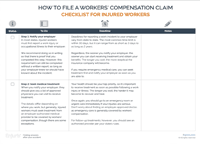 Workers’ Compensation Checklist
Download this checklist for injured workers to learn how to file a workers’ comp claim and track your progress.
Download in PDF format