
The important ways amputation and disfigurement injuries differ from other personal injuries
All accident injuries are challenging, but injuries resulting in amputation or disfigurement—which serve as constant reminders of the horrific accident—tend to be more difficult to overcome than other injuries.
What’s more, according to hospital discharge data, the number of total amputations performed in Arizona each year increased by 85.48% from 1997-2014.
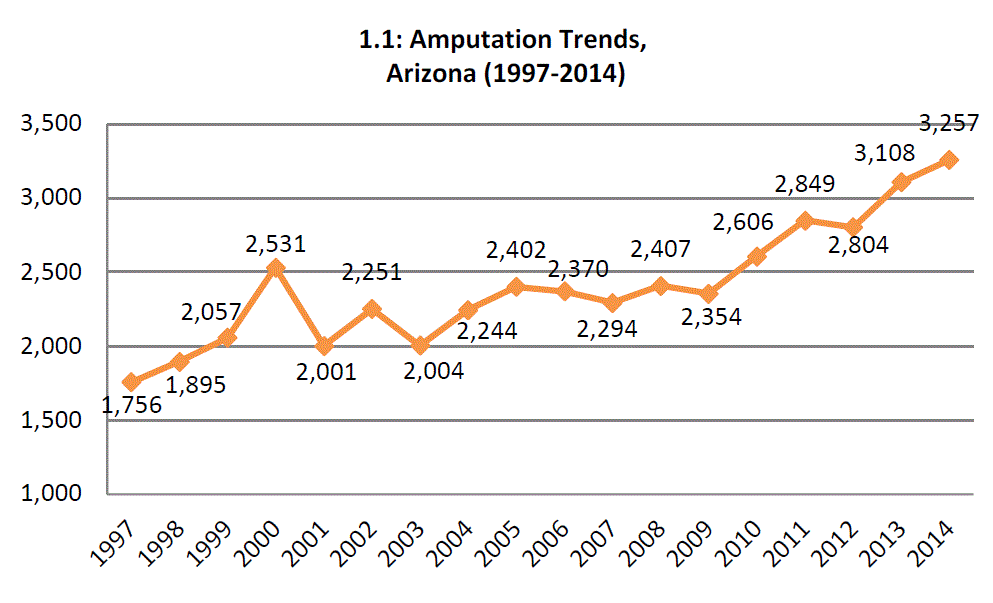
Though recent scientific advances have been encouraging, such injuries are still considered “catastrophic” and generally result in settlements and verdicts larger than other personal injury lawsuits.
Let’s take a closer look at amputations and disfigurements, the ways in which these cases differ from other personal injury claims in Arizona, and the potential damages that are available.
What’s considered an amputation or disfigurement?
The term “amputation” refers to the removal of all or part of a limb or extremity. An amputation might result from an external injury (such as a car accident or serious burn), a severe infection, or a necessary medical procedure.
The term “disfigurement” refers to an injury that impairs the appearance of a person (such as a facial scar).
Disfigurements and amputations are commonly thought of as “catastrophic” or “permanent” injuries. While the causes of these injuries vary greatly, some of the more common incidents that result in amputation or disfigurement include:
- Dog bites. In Arizona, the dog’s owner is legally responsible for injuries resulting from a dog bite.
- Burns. Burns, like the severe burns sustained by Stella Liebeck in the famous McDonald’s hot coffee case, can cause permanent disfigurement.
- Road rash. Vehicle accidents that happen on asphalt, concrete, and other hard surfaces commonly result in skin abrasions that result in permanent disfigurement.
What makes an amputation or disfigurement case different?
Amputation and disfigurement cases tend to result in higher settlements and verdicts. One of the reasons for this is that the medical costs association with an amputation or disfigurement are significant.
In Arizona, the lifetime cost for a person with a unilateral lower extremity amputation is estimated to be more than $500,000.
Amputation and disfigurement victims often require medication, repeated doctor visits, and physical therapy for much if not all of their lives.
But there are also less tangible difficulties that result from amputations and severe disfigurement. Such injuries often carry a host of psychological consequences, including anxiety, low self-esteem, depression, sexual problems, and an inability to make friends.
Further, amputation and disfigurement victims may receive higher compensation based on the simple fact that their injuries are generally more visible to judges, jurors, and insurance companies. Unlike someone who claims to experience neck pain as a result of a car accident, there’s no questioning someone who claims to have lost an arm as a result of a car accident. The evidence of the injury is clearly visible every time the victim enters into the courtroom.
Work-related catastrophic injuries in Arizona
Amputations and disfigurement victims are also treated differently under Arizona’s workers’ compensation statutes.
Arizona’s workers’ compensation laws are designed to ensure that employees who are injured at work receive compensation without having to file lawsuits against their employers.
Arizona employees who are injured on the job are entitled to compensation (sometimes called “income replacement benefits” or “wage loss benefits”). The available compensation depends on the type of injury suffered by the employee.
Certain injuries are specifically listed in the Arizona schedule of losses. These injuries include amputations and certain disfigurements. For each injury listed in the Arizona schedule of losses, the amount of compensation you can receive for that injury as well as the length of time for which you can receive the compensation is also listed.
Generally for these injuries, compensation of 55% of the average monthly wage of the injured employee, in addition to the compensation for temporary total disability, should be paid for the designated period.
| Arizona Scheduled Benefits for Amputations | |
|---|---|
| Type of injury | Maximum # of months benefits can be awarded |
| Loss of thumb | 15 |
| Loss of first (index) finger | 9 |
| Loss of second finger | 7 |
| Loss of third finger | 5 |
| Loss of fourth (little) finger | 4 |
| Loss of great (big) toe | 7 |
| Loss of a toe other than the great toe | 2.5 |
| Loss of major (dominant) hand | 50 |
| Loss of minor hand | 40 |
| Loss of major (dominant) arm | 60 |
| Loss of minor arm | 50 |
| Loss of foot | 40 |
| Loss of leg | 50 |
| Loss of eye (by enucleation) | 30 |
| Loss of sight in one eye | 25 |
| Loss of hearing in one ear | 20 |
| Loss of hearing in both ears | 60 |
| Loss of use of finger, toe, arm, hand, foot or leg (paralysis) |
Same as loss caused by separation/amputation |
| Permanent disfigurement (head, face, teeth) | 18 |
So, for example, if you lose your thumb because of a work-related accident, you can receive 55% of your average monthly wage for up to 15 months.
What laws exist in Arizona relating to amputation and disfigurement?
In Arizona, the statute of limitations for personal injury claims is generally 2 years regardless of whether the injured person suffered an amputation or disfigurement.
Arizona is a pure comparative fault state, which means that if you’re partially responsible for the accident that caused your amputation or disfigurement, your damages will be reduced by your percentage of fault.
Resources for amputation and disfigurement survivors
Speaking with or reading about other people who are going through a similar experience can be very therapeutic. Here are some resources for you to consider:
- Amputee Coalition
- Arizona Amputee Program through the Carondelet Health Network
- Heather Abbott Foundation
- The Phoenix Society for Burn Survivors
- Living with facial disfigurement
See our guide Choosing a personal injury attorney.