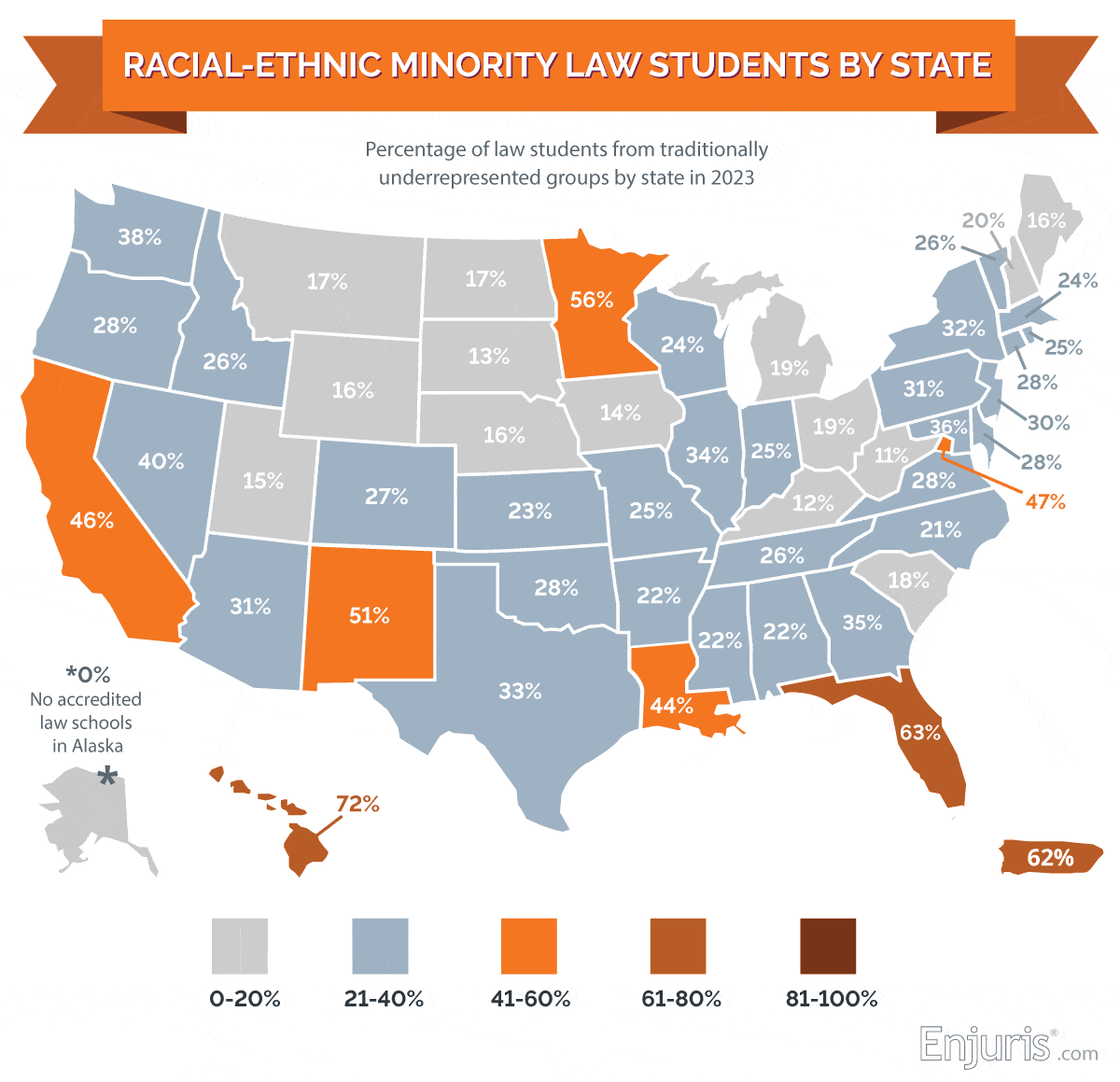
A comprehensive review of law school enrollment by race and ethnicity in 2023, with a focus on Black and Hispanic enrollment
Law school enrollment among students of color increased for the sixth year in a row in 2023, according to the most recent data collected from the American Bar Association (ABA).
This 2023 data offers a crucial opportunity to understand the racial and ethnic composition of law schools just before a major shift in the admissions landscape. In June 2023, the U.S. Supreme Court ruled that law schools can no longer consider an applicant’s racial and ethnic status during the admissions process—a decision that could significantly impact diversity figures in the coming years.
Let’s take a close look at the racial and ethnic composition of law schools in 2023, focusing on the top 10 law schools based on minority enrollment, while also addressing the ongoing underrepresentation of Black students in law school classrooms compared to their proportion in the general public.
Race and ethnicity classifications
The ABA requires each accredited law school to report enrollment data annually by completing a Standard 509 Disclosure. The Standard 509 Disclosure allows law schools to report the race and ethnicity of their students using seven distinct categories defined by the ABA:
Hispanics of any race
A person of Cuban, Mexican, Puerto Rican, South or Central American or other Spanish culture or origin, regardless of race.
American Indian or Alaska Native
A person having origins in any of the original peoples of North America and who maintains cultural identification through tribal affiliation or community recognition.
Asian
A person having origins in any of the original peoples of the Far East, Southeast Asia, or the Indian Subcontinent, including, for example, Cambodia, China, India, Japan, Korea, Malaysia, Pakistan, and Vietnam.
Black or African American
A person having origins in any of the black racial groups of Africa.
Native Hawaiian or other Pacific Islander
A person having origins in any of the original peoples of Hawaii, Guam, Samoa, or other Pacific Islands.
Two or more races
The category used to report a non-Hispanic person who selects two or more of the other racial categories.
White
A person having origins in any of the original peoples of Europe, the Middle East, or North Africa.
Minority representation in law schools
The total number of minorities enrolled in law school in the United States increased for the sixth year in a row in 2023, and the percentage of minorities enrolled in law school increased for the fourth year in a row.
| Year | 2018 | 2019 | 2020 | 2021 | 2022 | 2023 |
|---|---|---|---|---|---|---|
| Total minorities | 34,909 | 35,082 | 36,077 | 37,688 | 38,576 | 39,288 |
| Total law students | 111,581 | 112,877 | 114,549 | 117,283 | 116,724 | 117,532 |
| Percentage of minority students | 31.28% | 31.07% | 31.49% | 32.11% | 33.04% | 33.43% |
Here is a closer look at the enrollment data for each of the seven racial and ethnic groups identified by the ABA over the last six years. As you can see from the chart below, law school enrollment has seen a steady increase among Black, Hispanic, Asian students, and those identifying with two or more races. In particular, the Hispanic and Asian categories have experienced significant growth. While the rise in Black student numbers has been gradual yet consistent.
On the other hand, there has been a consistent decline in enrollment of American Indian students over the last six years and a sharp decrease for Native Hawaiian students in 2023.
| Year | 2018 | 2019 | 2020 | 2021 | 2022 | 2023 |
|---|---|---|---|---|---|---|
| Black | 9,045 | 8,819 | 8,869 | 9,036 | 9,079 | 9,132 |
| American Indian | 627 | 598 | 546 | 544 | 515 | 513 |
| Hispanic | 14,285 | 14,334 | 14,841 | 15,479 | 16,005 | 15,893 |
| Two or more | 3,891 | 4,164 | 4,345 | 4,608 | 4,631 | 4,981 |
| Asian | 6,872 | 7,019 | 7,330 | 7,825 | 8,152 | 8,656 |
| Native Hawaiian | 189 | 148 | 146 | 176 | 194 | 113 |
| White | 68,344 | 69,816 | 71,061 | 72,294 | 70,879 | 69,580 |
| Total law students | 111,581 | 112,877 | 114,549 | 117,283 | 116,724 | 117,532 |
The racial and ethnic composition of law students in ABA-accredited law schools in 2023 comes close to reflecting the racial and ethnic demographics of the United States population as a whole. The infographic below displays the total percentage breakdown of ethnicities and races in the U.S., according to the most recent United States Census Bureau data, and compares it to the total percentage breakdown of ethnicities and races in all ABA-accredited law schools.
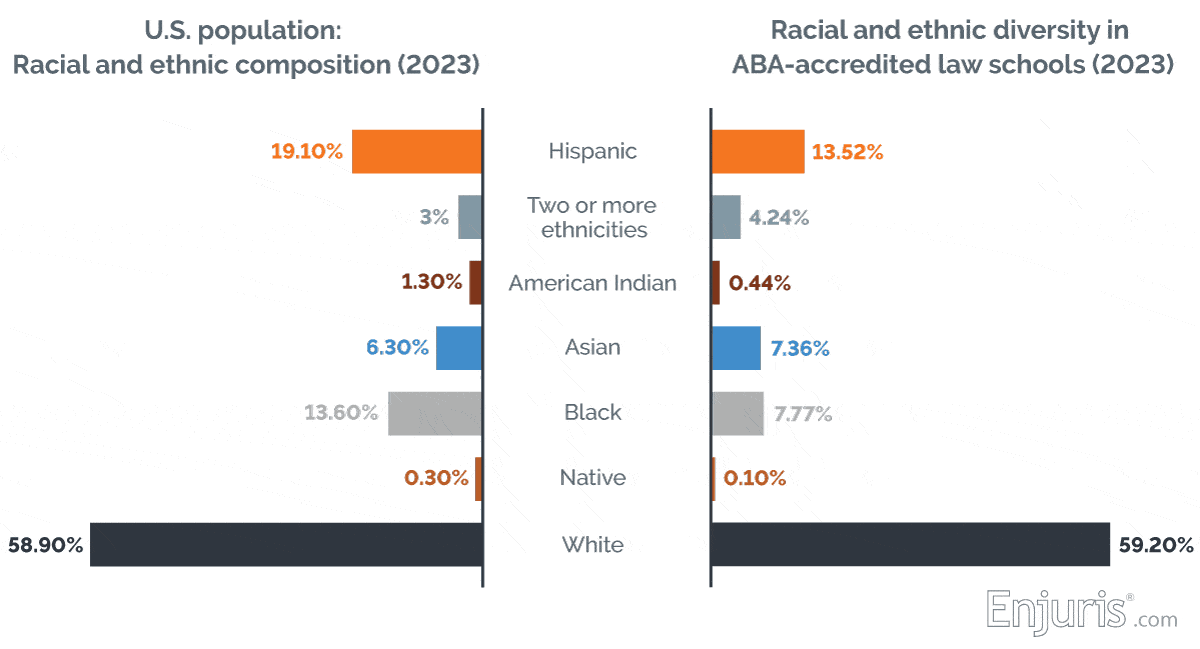
As you can see from the infographic, the most significant disparity in representation between the general population and law students is among students identifying as Black (13.6 percent compared to 7.77 percent), followed by law students who identify as Hispanic (19.10 percent compared to 13.52 percent).
Another interesting observation is the representation of Asian students in law school. The percentage of Asian students in law schools stands at 7.36 percent, which is higher than their representation in the general U.S. population, which is 6.3 percent. This overrepresentation contrasts with the trends seen in other racial and ethnic groups.
Law schools have historically struggled to attract Black students. In 2011, the first year for which data is available, Blacks made up 7.15 percent of law students while making up 13.4 percent of the population. In comparison, Hispanics, the second most underrepresented group relative to their representation in the general population, made up 9.12 percent of law students in 2011.
This means that Hispanics have increased their presence in law school classrooms by more than four percentage points over the last decade, whereas Blacks have only increased their presence by about half a percentage point.
Law school rankings based on ethnic-racial minority enrollment
The ABA Council for Diversity in the Educational Pipeline and the Law School Admissions Council (LSAC) have made efforts to increase the enrollment of traditionally underrepresented groups and people of color in colleges and law schools across the country.
In addition, many law schools have taken steps intended to increase the enrollment of minorities, particularly Black students, in competitive law programs.
For example, in 2019, Syracuse University College of Law sought to double Black student enrollment in five years by entering into “3+3 admissions” agreements with three historically Black colleges and universities (HBCUs) in Georgia. The 3+3 program allows students to finish a bachelor’s degree and a law degree in 6 years rather than 7.
Since announcing the program in 2019, the number of Black law students enrolled at Syracuse University College of Law has gone from 49 to 61.
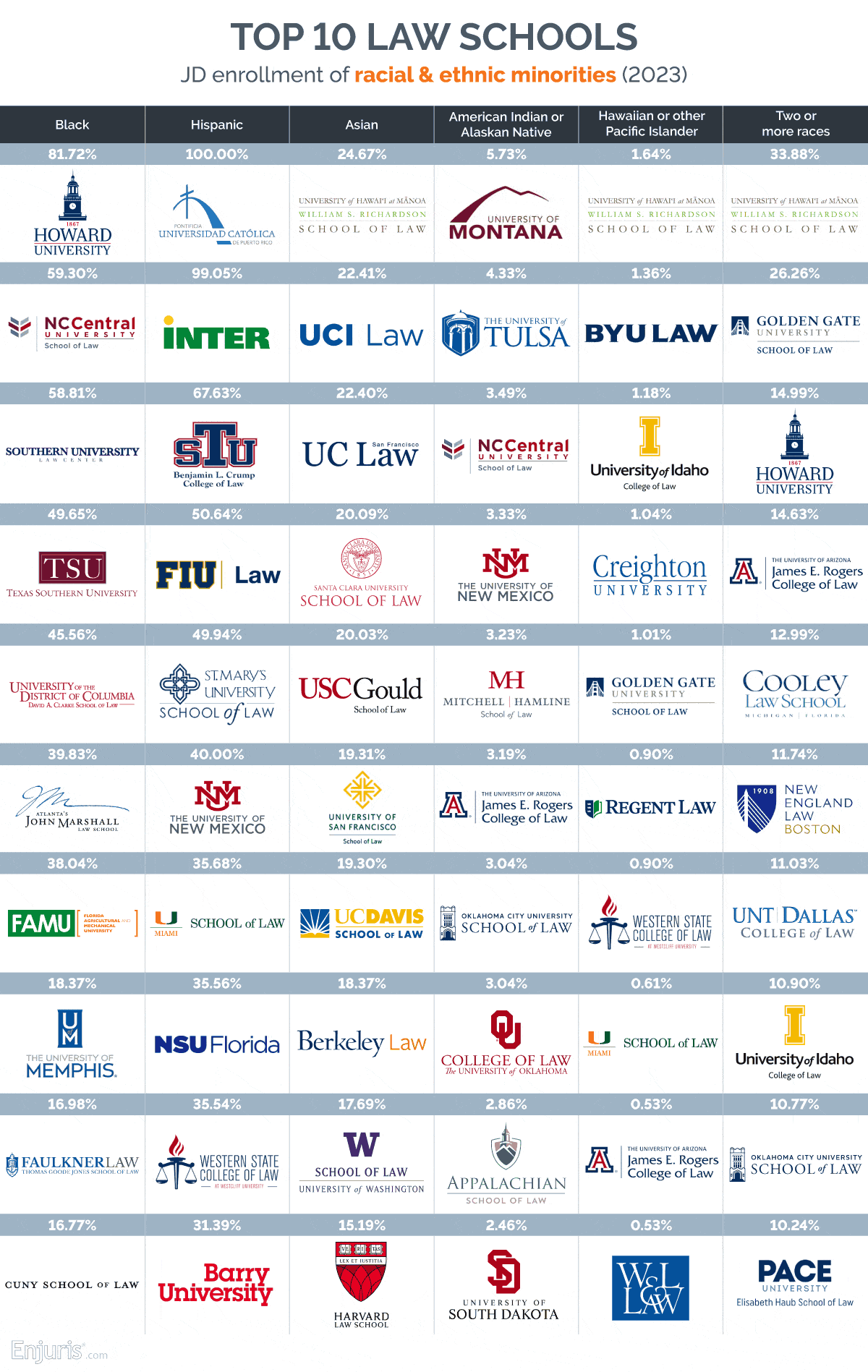
Here is a look at the top 10 law schools with the highest percentage of students identifying with each race and ethnicity recognized by the ABA.
Here’s a look at where students from historically underrepresented communities are not attending law school.
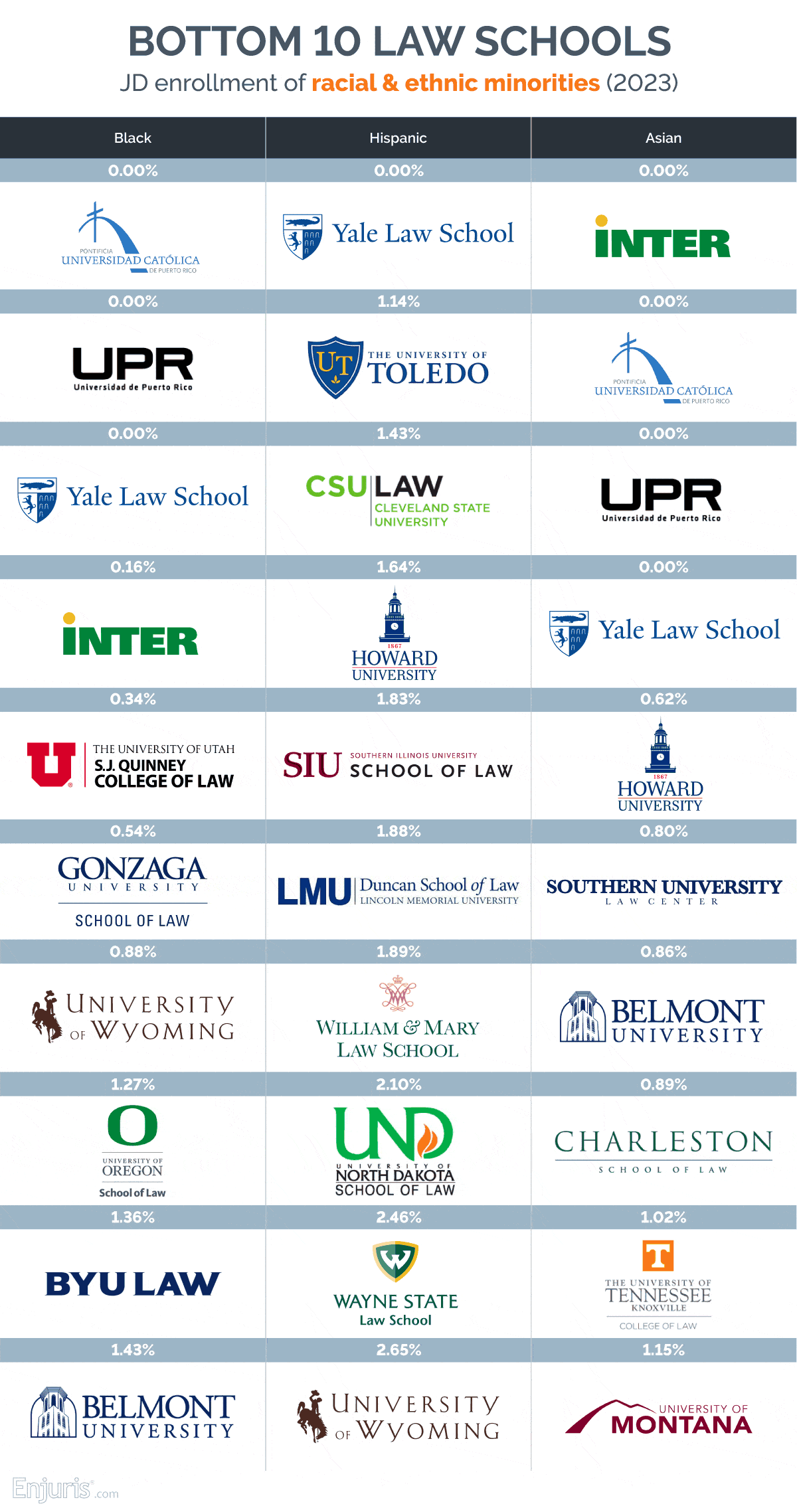
The chart above does not include data on ABA-accredited law schools with the lowest enrollment of American Indian or Alaskan Native students, as 55 such schools reported having no students from these groups. Similarly, 139 schools reported no enrollment of students identifying as Hawaiian or other Pacific Islanders.
The United States Supreme Court decision on affirmative action and its impact on minority enrollment
On June 29, 2023, the United States Supreme Court ruled that the policies of Harvard University and the University of North Carolina, which consider an applicant’s race during the admissions process, violate the Equal Protection Clause of the United States Constitution.
The ruling essentially prohibits schools from using affirmative action practices that have long been credited with increasing the presence of Black, Hispanic, and other minority students in law school classrooms.
At the University of Michigan Law School and Berkeley School of Law, the number of minority students dropped precipitously after Michigan and California banned affirmative action in public university admissions—although both schools found creative ways to boost their numbers.
We will continue to track the racial and ethnic composition of law schools to see how this landmark United States Supreme Court ruling might impact minority enrollment.
About Enjuris®
Enjuris.com is a collection of independent legal resources designed to help people with their biggest questions following an accident or injury. Through instructive articles written by experienced attorneys, printable forms, and a free legal directory, Enjuris provides injury victims with the information and tools they need to take the next step. In keeping with its mission, Enjuris.com also provides promising college and law school students with scholarships and other resources to help them one day become effective lawyers.
Data source: American Bar Association, ABA Required Disclosures (Standard 509 Reports). Any mistakes in data reported to the ABA are the responsibility of the reporting school. Enjuris assumes no responsibility for inaccuracies or for changes in such information that may occur after publication. The figures here are as reported on December 18, 2023. Schools may update their data at any time. Please see the ABA website for updated figures.
See our guide Choosing a personal injury attorney.