

Learn the reasons for and the consequences of a bike-vehicle collision in Big Sky Country
Montana was recently ranked one of the 5 least bike-friendly states in the country by the League of American Bicyclists.
While this is a problem for bike lovers in Montana, the lack of infrastructure and harsh winter weather might partly explain why there are fewer bicyclists in Big Sky Country — and why there are fewer injuries than in other states that do a better job of encouraging people to trade in their cars for bikes.
Though relatively infrequent compared to most states, bike accidents do still occur in Montana. This article takes a look at bicycle accident statistics, the laws that govern bicycling in Montana, and what to do if you’re involved in a bicycle accident.
Bicycle statistics
An estimated 47.5 million people ride bikes in the United States. According to the National Highway Traffic Safety Administration, more than 2 people are killed on a bicycle every day across the United States.
In Montana, an average of 1 person is killed on a bicycle every year. In 2017, 18 people were “severely injured” while riding bicycles in Montana.
Montana bicycle laws
Like all states in the country, Montana requires road cyclists to follow the same rules and regulations as motor vehicles. This means, for example, that bicyclists are required to stop for traffic lights and stop signs.
Montana’s bicycle-specific laws are outlined in Title 61 of the Montana Code Annotated. The laws are summarized below:
- A person operating a bicycle is prohibited from attaching themselves to any vehicle on the road (though a bike trailer may be attached to a bicycle).
- A person operating a bicycle on a road at less than the normal speed of traffic must ride in the right-hand lane when it’s safe to do so.
- A person operating a bicycle is prohibited from carrying any object that prevents them from keeping at least one hand on the handlebars.
- At dawn, dusk, and nighttime, a bicycle being operated on the road must be equipped with the following:
- A front lamp or helmet lamp that emits a white light visible from at least 500 feet,
- A red light located at the rear of the bicycle visible from at least 500 feet, and
- Reflective material sufficient to be visible from the left and right sides at a distance of at least 500 feet when illuminated by low-beam motor vehicle headlamps.
- A bicycle must be equipped with brakes sufficient to allow it to stop within 25 feet from a speed of 10 miles per hour
- A bicycle operating on a sidewalk or crosswalk (when permitted to do so) must yield the right-of-way to any pedestrian and the bicyclist must give an audible signal before overtaking and passing any pedestrian
- Bicycle racing on a highway is only lawful when the event has been approved by state or local authorities
Bicycle accidents with negligent drivers
Most personal injury claims made by bicyclists are negligence claims. For a successful negligence claim, you must prove 3 things:
- The driver owed you a duty. All drivers owe all bicyclists the duty to drive with a reasonable degree of care.
- The driver breached their duty. This will be proved by showing that the driver failed to drive with a reasonable degree of care (for example, by proving that the driver was distracted or texting when the accident occurred).
- You were injured and suffered damages as a result of the driver’s breach. This will be proved by showing that the driver’s negligent actions were the cause of the accident. In other words, if it wasn’t for the driver’s actions, the accident wouldn’t have occurred and you wouldn’t have been injured.
Accidents where the bicyclist is at fault
Not all bicycle accidents are caused by motor vehicle drivers. A bicyclist can be found negligent for causing an accident as well.
What’s more, Montana is a modified comparative fault state. This means that the amount of damages a bicyclist can recover will be reduced by the percentage that reflects the bicyclist’s degree of fault so long as the bicyclist’s percentage of fault is less than 51%.
If the bicyclists percentage of fault is 51% or more, the bicyclist is completely barred from recovering any damages from the defendant.
Let’s look at an example:
You’re riding your bike at night without a red light or reflector. At the same time, a man is driving his truck behind you and texting his wife. You slow down for a stop sign and the driver rear ends you. As a result, you’re thrown off your bike and suffer severe back and neck injuries costing an estimated $50,000. At trial, the jury finds that you were 20% at fault for the accident for failing to have proper lights on your bike, and the driver was 80% at fault for texting behind the wheel. Under Montana’s comparative fault rule, you would only be allowed to recover 80% of your total damages (or $40,000).
Safety tips on how to prevent bike accidents
The best way to avoid a serious injury and lengthy insurance claim or lawsuit is to take the necessary steps to avoid an accident in the first place. Here are some things to keep in mind when taking your bike for a spin:
- Be predictable. Drivers expect certain behaviors from other drivers. The same is true for bicyclists. Avoid changing speeds dramatically, riding against the flow of traffic, or swerving.
- Be alert. When riding a bicycle, your surroundings can change in a hurry. Avoid texting or engaging in other distracting behaviors while operating a bicycle.
- Wear a helmet. Head injuries can be traumatic. Always wear a properly-fitted bike helmet.
- Educate yourself. Learn about the most common motorist errors so you can be on the lookout.
What to do after a bicycle-vehicle crash
Whether you’re driving a car, truck, motorcycle or a bike, there are a few things you should do following a bicycle accident:
- Provide medical assistance if you’re able.
- Call the police and wait for them to arrive.
- Be sure to get your version of events into the accident report.
- Obtain driver and witness contact information.
- Preserve evidence (such as a damaged bicycle).
- Seek medical treatment and keep track of your medical expenses and other damages.
- Meet with an experienced Montana attorney.
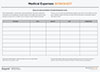 Damages/Expenses Worksheet
Damages worksheet to track expenses for your injury claim (medical treatment, property damage, lost wages, prescriptions)
Download in PDF format
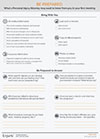 Your First Meeting with an Attorney
A worksheet to prepare for your first meeting with a personal injury attorney – what to bring, what they'll ask
Download in PDF format
A bike accident can be a physically and emotionally traumatic event. The last thing you want to do after an accident is spend your time dealing with a lengthy insurance or legal claim. Use our free online directory to locate an attorney in your area to work on your claim so that you can focus on the process of healing and recovery.
See our guide Choosing a personal injury attorney.