Everything you need to know from filing to appealing a workers’ compensation claim
Minnesota is home to almost 3 million working individuals. From farming to construction, the Gopher State is considered one of the most dangerous states to work in.
Fortunately, Minnesota passed its first workers’ compensation laws in 1913. The laws are intended to ensure that Minnesotans who are injured on the job receive compensation.
Let’s take a look at the ins and outs of the Minnesota workers’ compensation system, including how to file a workers’ compensation claim and what steps you can take if your claim is denied.
What is workers’ compensation insurance?
Workers’ compensation is a type of insurance that provides financial benefits to employees who are injured on the job.
There are three basic things you should know about workers’ compensation insurance in Minnesota:
- Workers’ compensation is the sole remedy. If you accept workers’ compensation benefits, you waive your right to sue your employer for your workplace injury in almost all situations.
- Workers’ compensation is no-fault insurance. You can receive benefits for your work-related injury regardless of who’s at fault for your injury.
- Employers are responsible for paying workers’ compensation premiums. When an employer is required to carry workers’ compensation coverage, the employer—not the employee—is responsible for paying the premiums.
Find out whether your employer carries workers’ compensation coverage
Minnesota workers’ compensation laws require ALL EMPLOYERS to purchase workers’ compensation insurance or become self-insured.
Even if your employer only has one part-time employee, the employer is still required to carry workers’ compensation insurance.
It’s important to keep in mind that employees must be covered, not independent contractors.
The degree of control and independence over a task determines whether a worker is classified as an employee or an independent contractor.
In general, a worker is an employee if the worker doesn’t have the right to control the details of how they perform services (what will be done, when it will be done, how it will be done, etc.).
A worker is an independent contractor if they have the right to control how the work is performed. Independent contractors pay self-employment tax on their earnings.
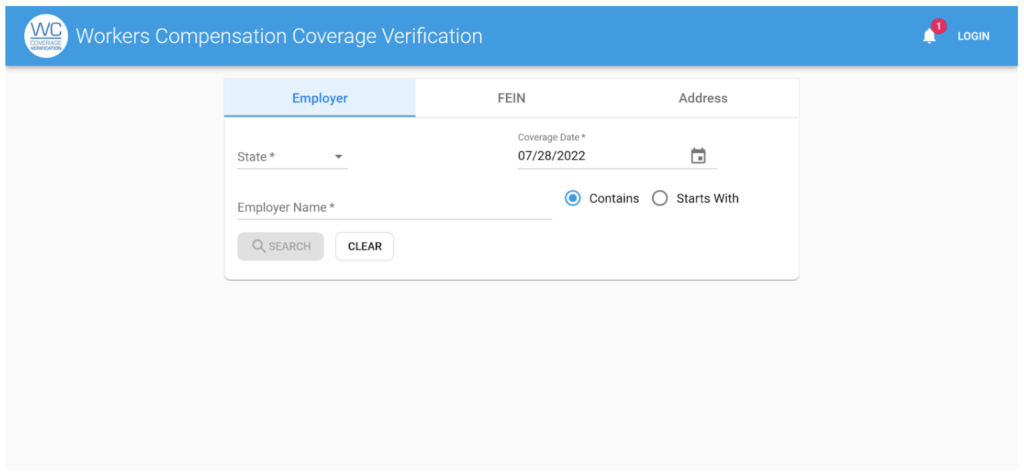
To find out if your employer carries workers’ compensation coverage, use the free workers’ compensation verification tool.
What types of injuries are covered by workers’ compensation?
The good news is that your injury or illness is almost certainly covered by workers’ compensation insurance so long as it arose out of your employment.
Your injury arose out of your employment if:
- There’s a relationship between your employment and your accident,
- Your injury occurred while you were fulfilling the duties of your employment or you were engaged in something incidental to your duties, and
- Your injury occurred at a place where it was reasonable for you to be
Injuries that could have occurred anywhere are typically not covered by workers’ compensation. Consider the following example:
Henry works as a public relations specialist for the Minnesota Vikings. While working at his desk one morning, Henry has a heart attack. The heart attack causes brain damage and Henry is unable to return to work.
After reviewing his medical records, two independent doctors determined that Henry’s heart attack was caused by high cholesterol that runs in his family.
In the above example, Henry likely wouldn’t receive workers’ compensation because there was no relationship between his heart attack and his job; the heart attack could have just as easily occurred while he was home watching television or on the bus.
Mental health injuries are treated differently than physical injuries. Mental health injuries suffered at work generally fall into one of the following three categories:
- Cases in which mental stress produces a physical injury
- Cases in which a physical injury produces a mental injury
- Cases in which mental stress produces a mental injury
Workers’ compensation insurance in Minnesota allows for benefits in the first two situations but denies compensation for claims where mental stress causes a mental injury.
How to file a workers’ compensation claim in Minnesota
It’s your employer’s responsibility to purchase workers’ compensation insurance, but that doesn’t mean you’ll automatically receive benefits following a work injury.
To file a workers’ compensation claim in Minnesota, follow these steps:
1. Get medical attention. Your health should be your top priority. If you suffer an injury at work, seek medical attention as soon as possible.
Be sure to tell your treating physician how the injury occurred and why you think it was work-related. It’s also a good idea to provide the name of your employer and their workers’ compensation insurer.
2. Notify your employer. It’s important to tell your employer about your injury as soon as possible after your injury. If you wait too long, your workers’ compensation claim may be denied. To avoid any confusion about when you provided notice, send a copy of your notification letter to your employer via certified mail with a return receipt requested.
3. Make sure your employer files the necessary form. It’s your employer’s responsibility to file a First Report of Injury form following notice of your injury. It doesn’t hurt to check in with your employer to make sure they’ve filed the form, but avoid harassing your employer or being disrespectful. If your employer refuses to file the necessary form, contact an experienced workers’ compensation attorney.
4. Wait for a decision. The workers’ compensation insurer must send you a Notice of Insurer’s Primary Liability Determination form either accepting or denying your claim.
Can I file an appeal if my workers’ compensation claim is denied?
Workers’ compensation claims are denied for all kinds of reasons, ranging from improper paperwork to discrepancies between your accident report and your medical records.
If your claim is denied, it’s not necessarily the end of your road. Here are the steps to take to file an appeal in Minnesota:
1. Talk with the insurance claims adjuster. It’s possible that the insurance company simply made a mistake. Your first step should be to talk to the claims adjuster. If the issue isn’t easily resolved, move on to the next step.
2. File an Employee’s Claim Petition. To start the appeals process, you need to file an Employee’s Claim Petition with the Minnesota Department of Labor and Industries. You must also send a copy of the Petition to your employer and your employer’s workers’ compensation insurer.
Your case will proceed based on the nature of your appeal. The appeal process might include:
a. A settlement conference,
b. A mediation, or
c. A hearing before an Office of Administrative Hearings (OAH) judge
You typically have three years from the date of your injury to file an Employee’s Claim Petition.
3. Minnesota Workers’ Compensation Court of Appeals. If you disagree with the decision of the OAH judge, you can file an appeal to the Minnesota Workers’ Compensation Court of Appeals (WCCA).
4. Minnesota Supreme Court. If you disagree with the WCCA’s decision, you can appeal the decision to the Minnesota Supreme Court. You typically have 60 days from the receipt of the WCCA decision to file an appeal with the Minnesota Supreme Court.
What types of workers’ compensation benefits are available in Minnesota?
Workers’ compensation provides three basic types of benefits:
- Reasonable and necessary medical expenses (including psychological, chiropractic, podiatric, surgical, and hospital treatment),
- Wage loss benefits, and
- Death benefits
Wage loss benefits are meant to compensate you for the work you miss as a result of your injury, or the reduction in your salary due to your injury.
Wage loss benefits are calculated according to the nature of the injury, with injuries falling into one of the following categories:
- Temporary total disability (TTD). If you’re temporarily unable to work, you may be eligible for TTD benefits. TTD benefits are paid weekly and are typically two-thirds of your gross weekly wage prior to your injury (subject to statutory minimums and maximums).
- Temporary partial disability (TPD). If you’re able to return to part-time or light-duty work while you’re recovering but earn less than your normal wages, you may be eligible for TPD benefits. TPD benefits are two-thirds of the difference between what you earned at the time of your injury and your current earnings.
- Permanent total disability (PTD). If you’re totally and permanently disabled, you may be able to receive weekly PTD benefits. PTD benefits are two-thirds of your gross weekly wage prior to your injury (subject to statutory minimums and maximums).
- Permanent partial disability (PPD). If you suffer a permanent injury but are still able to work in some capacity, you may be eligible for PPD. Your award will be based on the permanent impairment rating assigned to you by your doctor.
In the event of a fatal injury, certain dependents can receive weekly wage payments (typically 50-66 percent of the worker’s average weekly wage at the time of the fatal injury) and up to $15,000 for expenses related to the funeral and burial of the deceased worker.
Should I hire a Minnesota workers’ compensation attorney?
From filing a claim to calculating your compensation to appealing a decision, the workers’ compensation system is difficult to navigate.
Fortunately, there are Minnesota attorneys who have spent their careers navigating the workers’ compensation system.
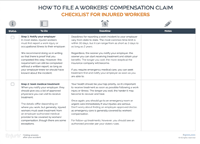 Workers’ Compensation Checklist
Download this checklist for injured workers to learn how to file a workers’ comp claim and track your progress.
Download in PDF format
Did you know that workers' compensation law varies by state?












Need a lawyer?

The basis for personal injury law is fairly straightforward:
If you’re injured because of someone’s negligence, then you’re entitled to recover for your financial losses related to the injury.
The premise for the workers’ compensation system is similar:
Your employer is required to have specific insurance that provides benefits if you’re injured at work.