
There are very few positive life events that drive you to seek an attorney’s help. You either want to avoid a problem you think will happen or you need help to address a problem currently in your life. No matter your situation, you need to find someone you trust to represent you.
You want to feel rest assured that the attorney you hire has enough expertise in the specific type of law you’re concerned about. You also need to feel that the attorney won’t put you or your issue on the back burner while other cases become their priority.
So how do you find the perfect attorney? It doesn’t have to be a guessing game.
For instance, maybe you or someone you know may have worked with an attorney in the past, but can that attorney handle this new matter? If not, can the attorney refer you to someone who can help you?
Here’s how to begin your quest for the best lawyer near you:
Phase 1: Start your search
If you haven’t used an attorney in the past, you might be able to get a referral from another professional like an accountant. If the issue isn’t too personal or embarrassing, ask family or friends whether they’ve hired an attorney in the past for similar cases. If so, would they suggest you retain them as well?
If none of these suggestions works for you, begin researching your options. Local bar associations are a good place to start looking for a lawyer as these attorneys are accredited. You can also find free online lawyer directories to aid in your search.
Depending on the area of practice, the type of attorney you’re seeking may spend a lot of money on advertising. You may see billboards with lawyers standing in legal libraries looking down at you, or lawyers may tell you to call them NOW on radio or TV ads. One of these attorneys may or may not be the right one for you. The only thing a lot of advertisements proves is that the attorney has a big advertising budget.
Try to narrow down your options to two or three attorneys who work on matters you’re interested in and who have a record of success in cases like yours. You can look at their law firm websites and online biographies to try to get a feel for the attorney.
You may look to see what college and law school they attended, but the reality is that some of the most effective lawyers in the country didn’t attend the country’s “best” colleges or law schools. Academics are all well and good, but practicing law is more about judgment, the ability to retain and analyze information, knowing when to be aggressive and when to back off, knowledge of the law and people skills. You don’t learn all that in the classroom.
Experience is important, but it may not be the most important quality. The most experienced person in your area may be so busy that you may not get the attention you deserve, or the fees may be more than you can afford. An attorney with less experience, but who’s more willing and able to help, may be the best option.
Phase 2: Interview the attorneys
The best way to decide who your attorney should be is to talk to them in person. Contact their office and schedule a consultation. This may or may not be free, depending on the attorney. If you’re seriously injured or disabled, the attorney may come to your home or hospital room to talk to you.
If you go to their office, what’s your impression? Is it quiet, clean and organized? Are piles of files on top of more piles of files, looking like they’re about to fall on the floor? Are workers there amicably chatting with one another, quietly working away or loudly complaining to one another?
You want a law firm that will get your work done in a timely and professional manner, one whose lawyers and staff treat clients with respect. Look for an office that reflects that. If the office is the most extravagant one you’ve ever seen, with pieces of furniture that look like they cost more than your car, that’s all very nice — but ask yourself who is paying for all that. Do you want to pay for that?
When you meet with the attorney, does he or she look you in the eye while shaking your hand? Are you given the opportunity to tell your story, or is the meeting rushed so the attorney can do something else? Is he or she a good listener, asking good questions, getting to the heart of the matter? Does the attorney’s body language show that he or she is confident and comfortable? Do you feel like the attorney respects you, wants to help you, is willing to go out of his or her way to get the job done?
What experience does the person have with your particular legal matter? What are the positives and negatives of your situation and how will they impact the probable outcome? How often does the attorney’s clients reach their goals? If goals aren’t met, why not? What makes the attorney different than the other attorneys in the area in the same type of legal practice? Ask why you should hire him or her.
We recommend using these free worksheets to prepare for your first meeting with a personal injury attorney:
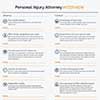 Personal Injury Attorney Interview Sheet
Worksheet with questions to ask a personal injury attorney to help determine if he or she will be a good fit for your case
Download in PDF format
 Your First Meeting with an Attorney
A worksheet to prepare for your first meeting with a personal injury attorney – what to bring, what they'll ask
Download in PDF format
Phase 3: Make the best choice you can
Lastly, once you’ve interviewed a couple attorneys, it’s time to decide who you want to hire. Make sure you feel comfortable with the person. You may have to spend a lot of time with him or her; would that be a problem? Do you feel he or she has the right knowledge and skills? Are you confident he or she will get the job done? Do you feel the attorney wants to work with you, will listen to you and treat you with respect?
The most important thing to look for in an attorney is a good fit for you and your needs. If that’s missing, keep on looking. There are plenty of options out there.

Bert Louthian has been practicing law in Columbia, South Carolina with his father, Herb, since 1985. After receiving his Juris Doctorate from the University of South Carolina, Bert launched his legal career in his father’s firm. With 80 years of legal experience between them, Louthian Law, P.A. remains family-owned and family-focused.