
You just had a minor car accident. Maybe you bumped into another car at a stop sign, or someone scraped your bumper in a parking lot. No one’s hurt, but now you’re wondering:
Should you involve your insurance company or handle it privately?
Many drivers prefer to settle without insurance to avoid premium hikes and paperwork. But is that the right move? What if the damage is worse than it looks? What if the other driver changes their mind later? Knowing when you do NOT need a car accident lawyer, such as in straightforward cases with minimal damage and mutual agreement, can help you decide if a private settlement is safe.
In this guide, we’ll walk you through:
- When it makes sense to settle a car accident privately
- The risks of handling a car accident outside of insurance
- Steps to protect yourself legally if you choose to pay out of pocket
- What to do if the other driver refuses to involve their insurance
Before you decide to handle your car accident outside of insurance, make sure you know exactly what’s at stake—and how to avoid costly mistakes.
When Does It Make Sense to Settle a Car Accident Privately?
Settling a car accident privately can be faster, easier, and cheaper—but only in the right circumstances.
If you make the wrong call, you could end up paying more than expected, dealing with hidden damages, or even facing serious legal trouble.
Here is where it might make sense to handle your motor vehicle accident without involving insurance:
1. The damage Is truly minor
Some accidents appear minor but can lead to costly surprises. A small dent in your bumper might conceal frame damage or sensor malfunctions that only a mechanic can detect.
Examples of minor damage where private settlement could work:
- Scraped paint or minor surface scratches
- A small dent in a door or fender
- A broken taillight
Always get a repair estimate (or two) before finalizing a private settlement—you don’t want a “$200 fix” turning into a $2,000 repair.
2. No one is injured (or claims to be)
Even if everyone feels fine at the scene, injuries like whiplash or back pain can take days to appear. A mild headache or trouble sleeping might seem insignificant but could be early signs of a more serious injury, such as a traumatic brain injury.
If you’re the injured party, you may not realize the full extent of your injuries right away. If you’re the at-fault driver, settling privately could leave you vulnerable if the other party later claims an injury. Without an official report or insurance involvement, you could find yourself facing a lawsuit or an unexpected claim with little protection.
If anyone reports pain, dizziness, or stiffness, it’s best to go through insurance—settling privately is too risky.
3. Both drivers agree to settle privately
A private settlement only works if both drivers agree. If the other driver wants to file an insurance claim, you have to cooperate—you can’t force them to settle privately.
What if the other driver seems unsure?
- If they’re hesitant or keep changing their mind, that’s a red flag.
- They could agree to settle, then file a claim later—leaving you unprotected.
4. You understand your insurance policy’s reporting rules
Some insurance companies require you to report an accident—even if you don’t file a claim. Others may not have this requirement, but even making an inquiry can sometimes impact your premium. Before deciding to settle privately, check your policy to avoid unexpected consequences.
Most insurers have strict deadlines for reporting accidents, sometimes as short as 24 to 48 hours. Reporting an accident is not the same as filing a claim, but failing to report it can create problems if the other driver later decides to involve their insurance.
If you agree to settle privately and negotiations fall apart, you may have already missed the window to file a claim. At that point, your only remaining option may be a costly lawsuit, putting you in a worse position than if you had involved your insurance company from the start.

How to settle a car accident without involving insurance
If you’re intent on paying for car damage outside of insurance, you need to take careful steps to protect yourself. A handshake deal at the scene isn’t enough. Without proper documentation, you could end up paying more than expected or facing legal trouble down the road.
Follow these steps to minimize risk and ensure a smooth settlement:
1. Exchange contact and vehicle Information
- Get the other driver’s full name, phone number, address, driver’s license number, and license plate number.
- Record details about the make, model, and color of their car.
- Do not exchange cash at the scene—without documentation, there’s no proof of payment.
- Even though you’re not filing a claim, get their insurance details in case the settlement falls through.
2. Document the damage thoroughly
- Take photos of both vehicles from multiple angles, including close-ups of any damage.
- Capture street signs, traffic signals, skid marks, or road conditions that may have contributed to the accident.
- If you can’t take pictures, write down detailed notes about the damage (e.g., “dent on rear bumper, passenger side”).
3. Get a police report (if possible)
- Some states require a police report for any accident with property damage.
- Even if not required, having an official report can help prevent disputes later.
- Although police reports are not typically admissible in court, the information contained within them can help support a future claim.
4. Get multiple repair estimates
- Ask for at least two or three quotes from reputable mechanics.
- What looks like a minor scratch could hide expensive structural damage.
- If the repairs cost more than expected, you may want to reconsider going through insurance.
5. Keep a paper trail of all communication and payments
- Use email or text for discussions—phone calls don’t leave a record of what was said.
- If making payments, avoid cash. Use a method that provides proof, such as:
- Check sent with return receipt requested
- Bank-to-bank transfer with transaction details
- If the other driver later demands more money, having a clear record of your agreement will help protect you.
6. Sign a legally binding settlement agreement
Before making a payment, have both parties sign a settlement and release agreement stating:
- The accident details and date
- The agreed-upon payment amount
- That both parties waive any future claims related to the accident
- That the payment fully satisfies the claim
Without a signed agreement, the other driver could demand more money later—or even file a lawsuit.
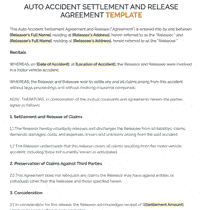 Auto Accident Settlement and Release Agreement Template
How should you protect yourself when settling a car accident without involving insurance?
Download in PDF format
A minor cannot sign a legally binding agreement. If one of the parties involved in the accident is under 18 years old, their parent or legal guardian would need to sign any legal document.
How to handle disputes after a private car accident settlement
Even after a private settlement is finalized, disputes can still arise. You may realize your injuries are worse than expected, or the other driver may suddenly demand more money for repairs. In some cases, they might even threaten legal action despite the agreement. If this happens, here’s how to protect yourself.
The first step is to review the original settlement agreement. If the document includes a waiver of future claims, you’re in a strong position to deny any further requests. However, if no such clause exists, resolving the dispute may be more complicated.
Try to communicate directly with the other driver. A simple conversation can often clear up misunderstandings, especially if the claim is based on incomplete information. Approach the discussion with a calm and professional tone, and ask for documentation supporting their request, such as updated repair estimates or medical reports.
If the other party insists on additional compensation and you disagree, gather your own evidence. Keep records of all correspondence, payments made, and any mechanic reports from the original settlement. Avoid discussing the dispute on social media, as this could be used against you.
If you’re unsure of your legal standing, consult an attorney—especially if your agreement did not include a clear waiver of future claims. Most personal injury attorneys offer free initial consultations and can advise whether the demand is enforceable. If hiring a lawyer isn’t feasible, look into alternative options like small claims court or legal aid clinics.
In some cases, the other driver may escalate the situation to legal action. If that happens, understanding the statute of limitations in your state is critical. If they waited too long to pursue a claim, you may be able to use this as a defense.
Finally, if the dispute becomes too complex, consider involving your insurance company after all. While this could impact your premium, it may offer a more structured and stress-free resolution than dealing with ongoing demands from the other party.
Even if the other driver agreed to settle privately, they can still report the accident to their insurance company later. If that happens:
- If you already reported the accident without filing a claim, your insurer will have your version of events on record, which can help protect you.
- If you didn’t report it, your insurer might deny coverage or penalize you for late reporting.
- If the claim seems false or exaggerated, provide evidence—such as your signed settlement agreement, photos, and witness statements—to dispute it.
Bottom line: Reporting the accident to your insurer without filing a claim can protect you if the other driver changes their mind later.

Should I handle my accident without insurance?
There are a lot of considerations when figuring out how you’re going to handle a car accident. But you do have some time to think it through.
If you can avoid the insurance company, you don’t have to worry about your premium rate increasing if you were at fault for the accident. That’s usually what most people who settle privately are aiming to avoid — each time you’re at fault for an accident, your insurance goes up a higher percentage. And, if it happens too often, you could become uninsurable. An accident claim could result in a rate increase of 20 to 40 percent.
If you and the other driver agree to settle without insurance and then the damages are more money than you thought, it could be too late to file an insurance claim if the accident wasn’t reported. What appears to be a small amount of damage could amount to thousands of dollars that you’d then need to pay out of pocket.
Using insurance rather than dealing with a car accident privately can save you a lot of headaches. You never know what the other driver is going to do once you leave the scene. They might go home, speak with a spouse or friend, and then decide that they want more money than you think is fair.
If it’s a single-car accident and involves only damage to your own car, get an estimate from a collision shop. If the cost to repair is less than your deductible, it makes sense to pay out of pocket.
Always follow the law when considering whether to settle an auto accident privately
Almost every state requires you to report the accident if there’s any personal injury. Although the accident might seem minor, if the occupant of any involved vehicle suddenly feels a twinge in their neck or a cramp in their back, the accident must be reported.
Remember, you don’t want to get into legal trouble because you decided to save a little money on insurance. Yes, insurance coverage can be costly, but so can the legal consequences of not following the law. If you have any doubt, go through the insurance company in order to protect yourself.
If you file a claim, your insurance company is legally obligated to provide you a defense to liability or a lawsuit. They must pay the claim, even if you’re at fault. Likewise, if the other driver files a lawsuit against you, the insurance company is expected to defend you and cover the judgment, if that’s part of your policy. But if you decide to cover the damages privately and something goes wrong, you’re on your own — you could end up paying for a legal defense and judgment.
Again, if the accident involves only your car or if it truly is minor, it might make sense to pay for damages out of pocket. But as soon as there are questions of liability, personal injuries, extensive damage, or an uncooperative other driver involved, you’re probably best working through your insurance company.
Need more help? Find an experienced car accident attorney near you.