It can happen to anyone
Your baby is precious. And you’re a great parent. But we get out of routine and sometimes we forget things—it happens to everyone. This is too big a risk to forget, so here are some tips to make sure you always remember to take that little one out of the car.
It can happen to you. To anyone, really.
Since 1998, 948 children have died from pediatric vehicular heatstroke (PVH). Nearly 1,000 children—gone.
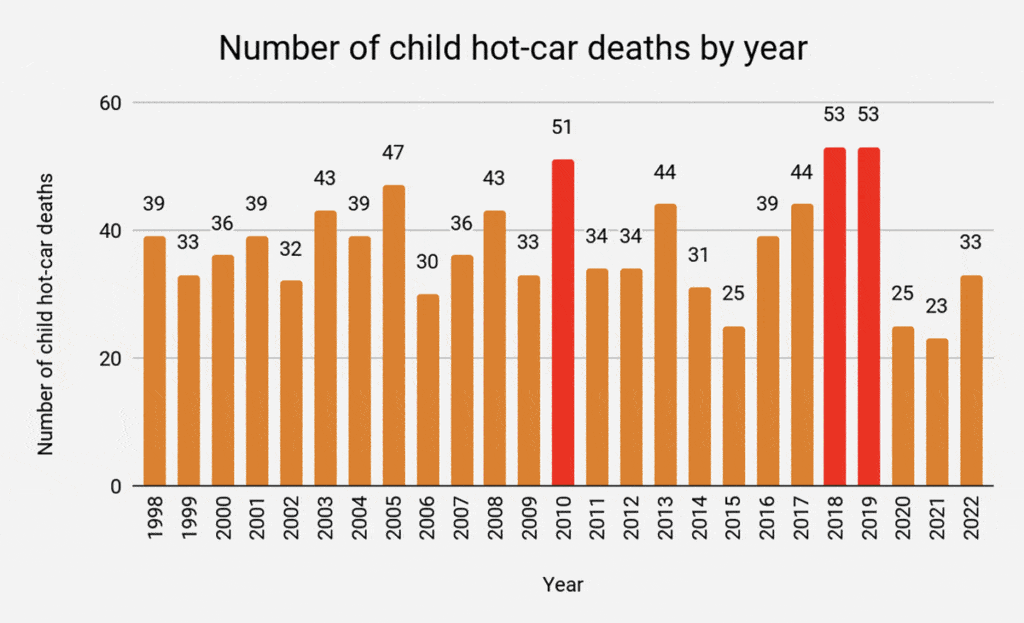
Source: NSC injury facts
Why do children die in hot cars?
A child’s body temperature rises three to five times faster than an adult’s, and when their little bodies reach 104 degrees, heatstroke can begin.
At 107 degrees, a child can die.
It doesn’t have to be 107 degrees outside for this to happen; if it’s only 75℉ outside, it’s 105℉ inside a car. After 10 minutes at this temperature, a child can begin to have seizures. After 20 minutes, they’ll likely die.
But I’m a loving parent. I would never forget my child.
Here’s the thing: The most loving, devoted, safety-conscious parent can forget things. Even their child. We’re busy, we’re stressed, we have a lot of balls in the air.
If you’re a working parent of a young child (or two… or more), we’re willing to bet that your average day kind of feels like a rollercoaster. Getting kids out the door in the morning can feel like a monumental task—just getting them fed, dressed, packed, and ready for the day—not to mention your personal needs and tasks. You might be exhausted by the time you arrive at work, even, and then you work a whole day, race to daycare to pick up your kids on time, and race home to get everyone fed, bathed, and ready for the next day.
Quoting a well-known Washington Post article widely circulated in 2009, here’s how it can happen to you:
What kind of person forgets a baby?
The wealthy do, it turns out. And the poor, and the middle class. Parents of all ages and ethnicities do it. Mothers are just as likely to do it as fathers. It happens to the chronically absent-minded and to the fanatically organized, to the college-educated and to the marginally literate. In the last 10 years, it has happened to a dentist. A postal clerk. A social worker. A police officer. An accountant. A soldier. A paralegal. An electrician. A Protestant clergyman. A rabbinical student. A nurse. A construction worker. An assistant principal. It happened to a mental health counselor, a college professor and a pizza chef. It happened to a pediatrician. It happened to a rocket scientist…
The facts in each case differ a little, but always there is the terrible moment when the parent realizes what he or she has done, often through a phone call from a spouse or caregiver. This is followed by a frantic sprint to the car. What awaits there is the worst thing in the world.
How can you make sure that a child hot car death NEVER happens to someone you love?
Whether you’re typically absentminded or not, there are a few tips from the National Highway Traffic Safety Administration that can help you prevent tragedy.
If you’re a parent or caregiver:
- Never leave a child unattended in a vehicle, even for a minute or two. Rolling down the windows or parking in the shade does not prevent a vehicle from becoming unbearably hot.
- Make it a habit to look in the back seat before you leave the vehicle.
- Ask your childcare provider to contact you if your child doesn’t show up when they are expected. Especially if you switch days with a partner for driving children to childcare or school, or if your schedule is out of the ordinary on a particular day, a regular “check-in” can be a literal lifesaver. Ask your partner to call or text you when your child has been dropped off. And you do the same for them. If you don’t get the call or text by the time you think they should be at their destination, follow up. Call daycare to ensure your child has arrived, or contact your partner and ask them to double-check their vehicle. Being out of routine or having an irregular routine is one of the key risks for forgetting a child in the car.
- Place a personal item in the back seat when you put your baby in the car. For instance, place your phone, handbag, eyeglasses—even a shoe—on the floor in front of your child’s car seat. Whatever it is, make sure it’s something you can’t leave the car without. This will force you to look in the back or open the door before you leave the car.
- Finally, don’t leave your car doors unlocked or your keys accessible to children. A curious toddler or young child could do a lot of damage unsupervised in a car, so there are lots of reasons why you need to be sure that if you’re not in the car, your kids aren’t, either.
Be a responsible person, too. If you ever see a child alone in a car, try the doors to see if they’re locked. If so, call 911 immediately. A child must be removed from a hot car immediately and requires medical treatment. Your quick thinking could save a child’s life.
Of the nearly 1,000 children who’ve died in hot cars since 1998, more than half were forgotten by a caregiver.
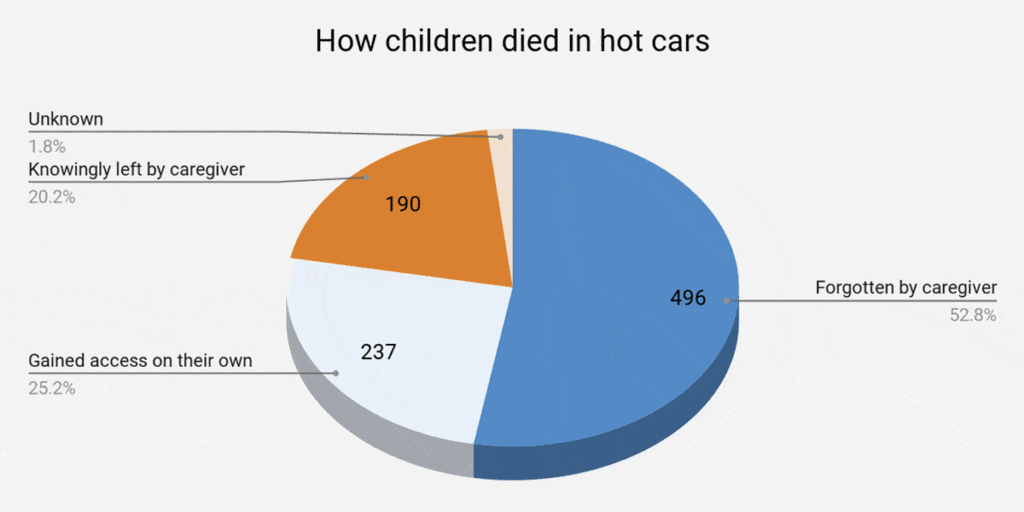
Source: noheatstroke.org
The saddest thing about each one of these deaths is that they were preventable.
There will always be accidents that are true accidents—we couldn’t have prevented them, no matter how hard we try. But we can prevent this tragedy from happening to our children. Create controls within your childcare system (with your partner, your childcare provider, etc.) to check in on each other, and make no assumptions. Create your own control, by leaving an item in the back seat with your baby so you know you’ll go looking when you leave the car. If your child is old enough, talk with them while you drive (and listen to their responses) so that you’re actively engaged with them, even when you’re ready to leave the car. Whatever works for you is the best system for your situation, but do something to prevent a tragic loss.

Who’s Liable When Heat Turns Dangerous?
As extreme heat surges across the U.S., lawsuits are rising against employers, schools, and property owners over heat-related injuries and unsafe conditions.