

What to do when a defective drug causes you harm
Pharmaceutical drugs are intended to help you feel better. But every once in a while, a drug makes its way into the marketplace that’s defective and makes you feel worse—sometimes even causing permanent damage or death. When this happens, your legal recourse takes the form of a product liability lawsuit.
Montana is no stranger to “bad drug” claims. The city of Anaconda recently joined a nationwide lawsuit alleging that nearly 20 pharmaceutical companies fraudulently marketed prescription opioids.
Pharmaceutical-based product liability claims are similar to other defective product claims, but there are some important differences. Let’s take a closer look at pharmaceutical liability in Montana.
Types of pharmaceutical liability cases
Just like product liability claims in general, there are three categories of pharmaceutical liability cases:
- Defectively manufactured pharmaceutical drugs
- Defectively designed pharmaceutical drugs
- Improperly marketed pharmaceutical drugs
Let’s take a look at each category.
Defectively manufactured pharmaceutical drugs
A defectively manufactured pharmaceutical drug is a drug that—although properly designed—left the manufacturer in a condition other than the condition intended.
The most common example is when a drug becomes contaminated during the manufacturing process in such a way that the drug is no longer safe.
Defectively designed pharmaceutical drugs
A drug is defectively designed if the drug is “unreasonably dangerous” to consumers even when used properly. For example, a blood-pressure medication that causes seizures in 50% of the people who take the drug would undoubtedly be “unreasonably dangerous.”
Claims based on defectively-designed drugs are rare because most unreasonably dangerous drugs aren’t approved by the U.S. Food & Drug Administration (FDA). Nevertheless, there are tools in place to allow certain drugs to be approved very quickly, and some side effects may not be realized until after the drugs are on the market.
Improperly marketed pharmaceutical drugs
When we think of drug “marketing,” we think of the colorful advertisements on television and in magazines. But, in the legal context, drug marketing also includes the warning labels affixed to drug packaging.
In order to establish that a drug was improperly marketed in Montana, you must prove that the manufacturer failed to warn you about a risk, and the risk made the product unreasonably dangerous.
For example, if a drug increases the risk of birth defects in pregnant women and the manufacturer failed to provide a warning indicating as much, a woman who gives birth to a child with an abnormality after taking the drug may be able to sue the manufacturer.
However, there’s one important caveat in Montana:
The manufacturer’s duty to warn consumers is limited to providing an adequate warning to “the healthcare professional responsible for making decisions related to the patient’s care” who then assumes the duty to pass the necessary information on to the consumer. This is referred to as the learned intermediary doctrine.
In other words, if the manufacturer fails to affix a label warning you about the increased risk of birth defects, but instead informs your prescribing physician about the risks—and your prescribing physician fails to pass along the information—the manufacturer is off the hook (though you may be able to sue the prescribing physician for medical malpractice).
Who can be held liable for unsafe drugs?
When it comes to bad drug cases, there are a number of potential defendants. These include:
- Manufacturers. Drug manufacturers may be liable for manufacturing defects, design defects, and improper marketing. Due, in part, to the public outrage that follows most pharmaceutical liability settlements and judgments, manufacturers generally fight these lawsuits tooth and nail.
- Testing laboratory. Drugs are subjected to several tests before reaching the marketplace. If one of these testing laboratories makes a mistake, the laboratory might be liable.
- Doctors: A doctor might be liable if, for example, the doctor provided inaccurate information about the drug’s side effects.
- Pharmacy: The pharmacy might be liable if, for example, the pharmacist misread the prescription or simply grabbed the wrong drug from the shelf.
What elements do you need to prove in a pharmaceutical liability case?
A pharmaceutical liability case can be brought under a theory of negligence or strict liability (just like any other product liability case). Typically, a plaintiff will use the theory of strict liability because it’s easier to prove.
In a pharmaceutical liability case based on negligence, the plaintiff must prove that:
- The defendant owed the plaintiff a duty of reasonable care (manufacturers owe a duty of care to all potential consumers)
- The defendant breached the duty of reasonable care owed to the plaintiff
- The defendant’s breach was the proximate cause of the plaintiff’s injuries
In a pharmaceutical liability case based on strict liability, the plaintiff doesn’t need to prove that the defendant breached any sort of duty. The plaintiff only needs to show that:
- A drug was sold in an “unreasonably dangerous” condition
- The unreasonably dangerous condition existed at the time the drug left the defendant’s control
- The dangerous condition was the proximate cause of the plaintiff’s injuries
Statute of limitations
The “statute of limitations” is the legal term for the amount of time you have to file a lawsuit. In Montana, the statute of limitations is generally 3 years for a pharmaceutical liability claim. This means you must file your lawsuit within 3 years of being injured.
Recoverable damages in a bad drug case
In Montana, a plaintiff in a pharmaceutical-based product liability lawsuit can recover both economic damages (like medical bills and lost wages) and non-economic damages (like pain and suffering).
How to choose a lawyer
Pharmaceutical-based product liability claims are unlike most other personal injury claims. When selecting an attorney, you’ll want to make sure the attorney has experience litigating pharmaceutical-based product liability claims.
Consider locating an experienced attorney using our free online directory or by looking through the “product liability” section of the Montana State Bar’s Lawyer Referral Service.
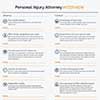 Personal Injury Attorney Interview Sheet
Worksheet with questions to ask a personal injury attorney to help determine if he or she will be a good fit for your case
Download in PDF format
See our guide Choosing a personal injury attorney.