


The basics behind premises liability and negligent or inadequate security
What is negligent security?
Negligent security cases arise in situations such as when there is a crime or violent act and you want to sue the owner of the property where it occurred.
Justia explains it well:
Negligent security is a species of premises liability dealing with civil redress for crimes and violent acts. It is the basis by which an individual injured by a third party tries to hold liable the owner or tenant of the property where a criminal injury is inflicted. The injury in a negligent security case may arise out of robbery, rape, assault, battery, or rape.
Negligent security is an extension of a normal negligence case.
This means that the victim needs to prove that
A) He or she was injured by an unrelated third party on the defendant’s property, and
B) The property-owning defendant didn’t act with reasonable care, because that injury was legally foreseeable.
Example of a negligent security case
Bob is a property owner who lets people use his parking lot. This parking lot is not very well lit, which results in many dark areas. If Bob had installed fluorescent lighting in various areas around the lot, then Harold – one of his law-abiding tenants – wouldn’t have been stabbed by a thug while walking to his car.
The essential elements for a negligent security case are:
- The defendant had a legal duty to provide adequate security to his property;
- The defendant failed to provide adequate security to his property;
- The plaintiff suffered injury as a result of the defendant’s failure.
This can extend to commercial business owners, property managers, homeowners, landlords, convenience store owners, etc. Examples could be:
- A poorly-lit parking lot where you get mugged
- A dark stairwell in which you’re robbed
- A hotel room where they double-book, so someone has access to your things – and steals them
- A concert where you get held at knife-point
In Florida, convenience stores are a frequent crime hotspot.
Tweet this
As such, state law requires that security measures be taken, which include security cameras, limited cash on site, silent alarms, lighted parking lots, and notices showing that the cash register contains less than $50. This creates a presumption against negligence for a convenience store owner who has instituted these measures.
The more security there is on a property, the less likely it is that a criminal will try to commit a crime there.
So, the more types of security that a building provides – whether it’s lighting, fencing, door locks, an alarm system, foot patrols, dogs or the like – will only help.
No property can be guaranteed as safe, but property owners and businesses are required by law to reasonably anticipate potential dangers and alert visitors, patrons and employees.
Under Florida’s premises liability laws, property owners have several obligations to those who enter their establishment for the purpose of business, such as using reasonable care in the following:
- Maintaining a safe environment for visitors;
- Warning invitees of concealed dangers of which they would not otherwise be aware;
- Taking steps to correct those dangerous conditions; and
- Attempting to discover any dangers that might be present on the premises.
An owner is negligent if he or she fails to complete any one of these duties.
A case would hinge on whether an injury was foreseeable – if a criminal assault, armed robbery, etc. was likely caused by the owner’s negligence in maintaining adequate security.
Foreseeability and proximate cause
Things can get a bit tricky with proximate cause, or the “legal” cause, and this is where the law can seem very unfair.
An injury must be foreseeable in order to recover damages. If a person is injured and no party can be held liable – for instance, an act of God, or something else that would break the direct link between a negligent act and the injury – then nobody can be held responsible, and the plaintiff is left to foot the bill for his or her damages.
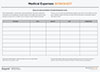 Damages/Expenses Worksheet
Damages worksheet to track expenses for your injury claim (medical treatment, property damage, lost wages, prescriptions)
Download in PDF format
A contrary example is the “Eggshell Skull” rule: If a victim is one-month pregnant and is assaulted in a mall, she might end up requiring thousands in medical bills. The store may be held liable for the total extent of her damages, despite the fact they had no idea she was pregnant and could not reasonably foresee that she was.
Negligent security claims vs. the justice system
There are two sides to the justice system: criminal and civil.
A negligent security claim will flow through the civil justice system, which is intended to bring monetary relief to the victim and his or her family.
However, the negligent act probably brought with it some type of criminal act such as assault or battery, which will likely need to be prosecuted through the criminal justice system as well. This tandem prosecution will be difficult, exhausting and at times confusing, because you might have to participate in both.
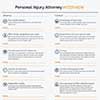 Personal Injury Attorney Interview Sheet
Worksheet with questions to ask a personal injury attorney to help determine if he or she will be a good fit for your case
Download in PDF format
Negligent security guards
In some cases, there are people who are employed specifically to keep others – people and property – safe: security guards.
Imagine a museum – we will use the Isabella Stewart Gardner Museum in this hypothetical. One of the most incredible unsolved crimes occurred there in 1990 when thieves disguised as police officers walked right by the security guards and stole 13 works of art before strolling right back out. They were never caught.
Now, the security guards were pressured because the “police officers” were allegedly responding to a call. Then the thieves handcuffed the guards, far away from the only alarm button, so they could continue their work uninterrupted.
That is probably one of the most extreme examples of negligent security guards.
Security guards are trying to protect the building and its contents, but they are also trying to protect visitors and ward off potential threats. They are just one of the many methods of keeping an area safe, though they’re the only kind that can think for themselves (and, as in the case of the Gardner Museum, sometimes not make the best decisions). This in and of itself can present a liability.
If you think you might be at risk for a premises liability suit or have been accused of negligent security, sit down with an Enjuris Florida law firm!
See our guide Choosing a personal injury attorney.