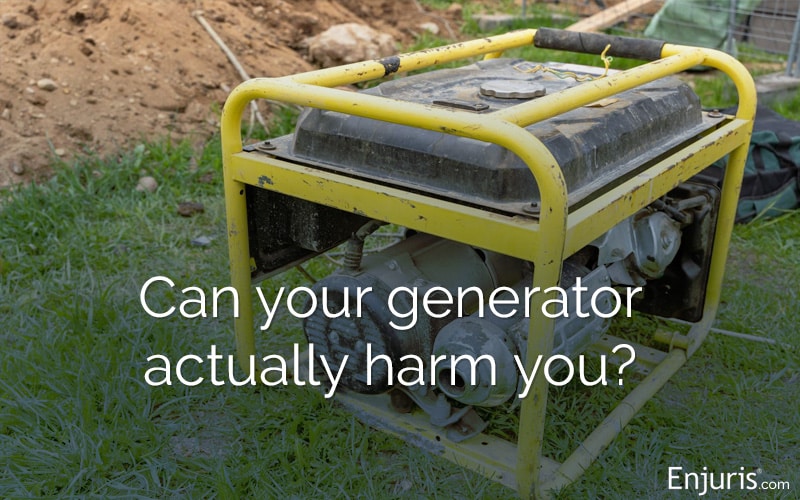
A portable generator can seem like a life-saver when the electricity is out. But be careful of the risks.
Extreme weather means more power outages in many places in the U.S., and while a portable generator might help you keep the lights on, it can also cause injuries.
Over the past decade, the U.S. has seen increasing instances of severe weather. Regardless of where you live, severe weather can cause difficulties like power outages—whether it’s because of wind, rain, tornadoes, hurricanes or snow.
The power grid is outdated in many parts of the U.S., which means power outages are a common occurrence in many homes—sometimes even when there isn’t extreme weather. Many people see power outages as inconveniences and can work around them, but for others, a power outage can be catastrophic. People who are elderly, have babies, or have certain health conditions might become ill if they can’t control the temperature in their homes; people who rely on oxygen or other electric-powered health devices could suffer; and others simply don’t have the resources to prepare food or manage their essential daily activities if the power is out. It’s more than having to navigate your home by flashlight.
However, like many home appliances, these gas-powered generators can be dangerous and cause injuries. If you or someone in your home is injured by a portable generator, who’s liable?
How does a generator work?
- Fuel source: Most portable generators run on gasoline, diesel, propane or natural gas.
- Internal combustion engine: When the generator is started, the engine burns fuel from the fuel tank by using the internal combustion engine.
- Converts to mechanical energy: The burning fuel creates a series of small explosions that move pistons inside the engine. The pistons convert the energy from the explosions into mechanical energy by turning a crankshaft.
- Electromagnetic induction: The crankshaft is connected to an alternator that consists of a rotor (rotating part) and stator (stationary part). As the rotor spins inside the stator, powered by the mechanical energy from the engine, it induces a flow of electrical current. This is electromagnetic induction.
- Conversion to electrical energy: The alternator usually produces high-voltage AC (alternating current) electricity. Most household appliances use low-voltage AC, so the generator has built-in components like voltage regulators and converters to adjust the output to a safe and usable level.
- Power output: The electricity is channeled to the generator’s outlets. You can then plug devices or appliances directly into the generator.
- Exhaust: Because a generator burns fuel, it must expel exhaust gas out of the system. That’s why generators must be used outdoors or in well-ventilated areas. The expelled gases usually contain carbon monoxide, which can be harmful or fatal.
- Cooling and lubrication: To prevent a generator from overheating, it has a cooling system that provides either air cooling or liquid cooling. Its parts are lubricated with oil to prevent wear and tear.
Types of generator-related injuries
Several types of injuries could happen because of a portable generator, and liability likely depends on how the injury happened.
- Burns from overheating or fire breakouts caused by generator malfunctions.
- Electrical shocks from a fault in the wiring or improper use.
- Carbon monoxide poisoning is one of the most silent, yet deadly, risks if a generator is used in an area with insufficient ventilation.
- Explosions are rare, but very dangerous when they happen. This can be due to gas leaks or faulty units.
- Hearing damage from prolonged exposure to a noisy generator could happen if you’re nearby.
Who is liable for a generator-related injury?
If you’ve been injured by a generator, you might be interested in filing a lawsuit. But against whom? And for what? To bring a personal injury lawsuit, there needs to be a negligent party.
The purpose of personal injury lawsuits is to allow the plaintiff (injured person) to be made financially whole. That means you can receive compensation that would restore you to the financial condition you would be in if the injury hadn’t happened.
To do this, the defendant has to meet certain criteria. They must have a duty to the plaintiff, have breached that duty, have caused the injury, and the injury must cost the plaintiff money. There are several possibilities for who could be held liable for a generator-related injury.
- Manufacturer. If the generator has a design or manufacturing defect, the company that made it could be held responsible. This is called product liability.
- Installers or sellers. Did someone recommend or sell you a generator unsuitable for your needs? Or did they botch the setup? They could be at fault for an injury.
- Homeowners. If you lent or rented your generator to someone without providing adequate instructions, or if you knew about a malfunction and did nothing, you might bear some responsibility. Likewise, if someone is injured by a generator while visiting your home, you could be liable under premises liability law.
Tips for preventing a portable generator injury
Prevention is better than cure, especially when dealing with powerful machinery. Here’s a checklist for manufacturers, installers, and homeowners:
Manufacturers
- Thorough quality assurance testing. Before rolling out any model, ensure comprehensive safety tests. Regular checks on the manufacturing line can catch defects before they reach consumers.
- Clear instructions. Every unit should come with a clear, easy-to-understand user manual that highlights potential risks and safe usage.
Installers and sellers
- Proper installation. Ensure the generator is set up in a well-ventilated area, away from windows or vents. Always suggest a unit that fits the needs and capacity of the user.
- Hands-on instruction. A brief demonstration can guide new users about safe operation.
Homeowners
- Routine maintenance. Regularly check for wear and tear or potential faults.
- Ventilation. Never use a generator indoors or in enclosed spaces.
- Gasoline safety. Store fuel away from living areas and never refill a hot generator.
Portable generators are undoubtedly useful, but like all machinery, they come with risks. Being aware and taking preventive steps can mitigate many of these risks. However, if you do find yourself injured due to a malfunctioning unit, know that there are legal avenues available. Always consult with a personal injury lawyer to understand your rights and the best way forward. Stay safe and informed.
See our guide Choosing a personal injury attorney.

If Your Warranty Doesn’t Cover an Injury, Is a Lawsuit An Option?
We often rely on a broken product’s warranty to repair or replace, but the warranty doesn’t cover the injury it causes.