

Filing workers’ compensation claims
Suffering a workplace injury is extremely stressful. You're worried about making money, covering bills, who's going to pay for what – it's hard to figure out. This is especially true for a person who is unfamiliar with the process of reporting the injury at work and seeking medical and financial compensation during recovery. Following the proper procedures will prevent any significant delays.
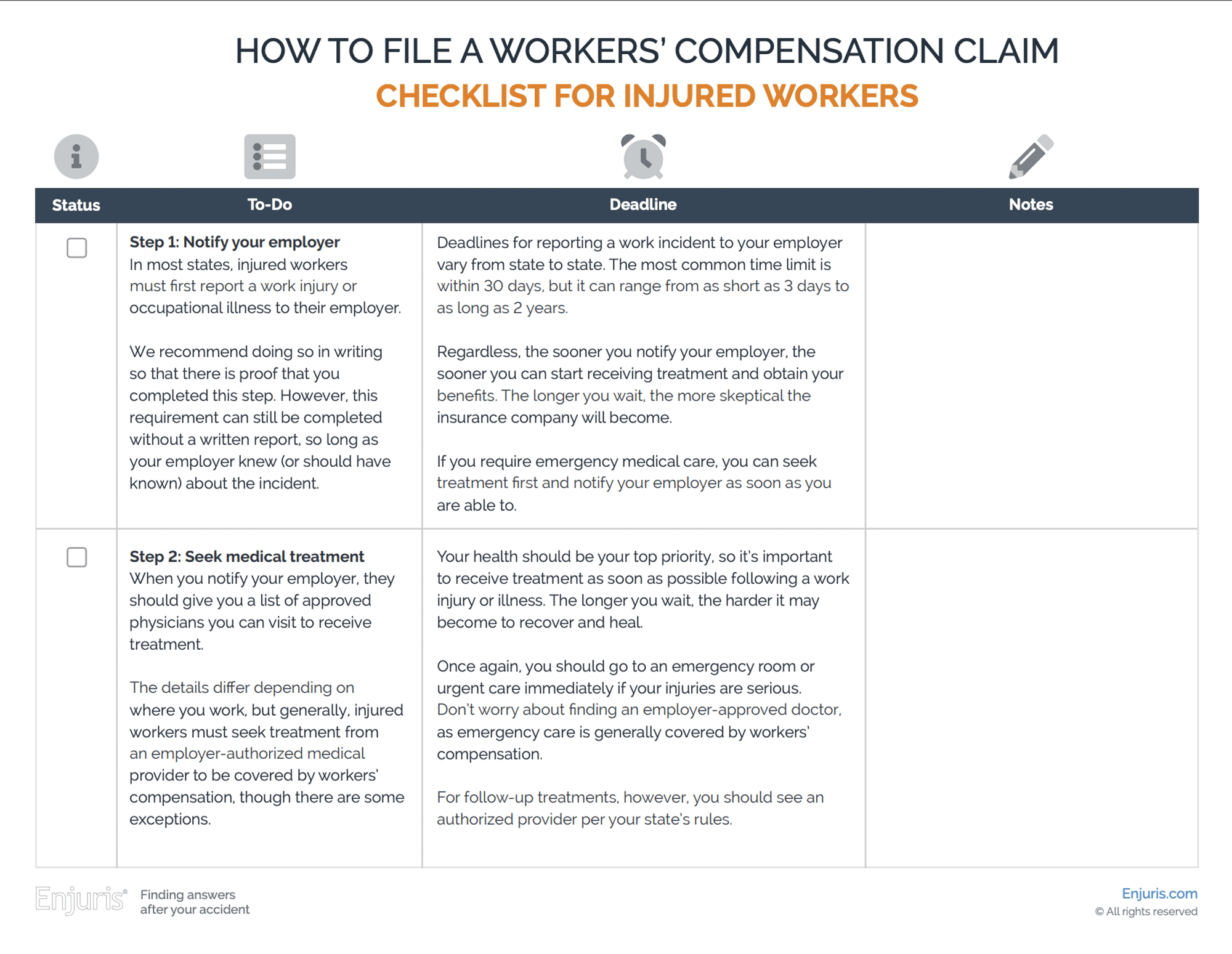
Essentially, an injured worker must do two things after a work-related injury occurs: The employer should receive a written notification as soon as possible after the injury. The number of days may vary among states, so make sure to check with your workers' compensation division. Some require reporting within 24 hours; others may require up to five days. The next step for the injured worker is to file a workers' compensation claim with the state's workers' compensation department.
What qualifies as a workplace injury?
There are occupational diseases and occupational injuries, which we talked about in this article here. We will be focusing on injuries, so it helps to know what an injury is not.
Tweet this
An occupational injury is when an employee is involved in an accident that results in actual physical harm, like an arm caught in a box-cutting machine or a slip and fall while carrying files to your desk at a law office. If a bodily hurt can occur at a place of employment, then it can fall under this category.
An occupational disease is when an employee falls ill because of prolonged exposure to something like asbestos fibers or some other toxic chemical. Oftentimes these sicknesses occur because of employer neglect; as in, the employer knew about the condition, but ignored it.
How to report an injury to your employer
Making a verbal report to the employer, while allowed in some states, is generally insufficient for workers' compensation purposes. Remember: Everything should be written down. It is important to have written documentation of the incident to avoid discrepancies or possible denial of a claim because of unreported facts.
 Documents & Evidence Checklist
Checklist of 30 items to help you prepare for making a personal injury or accident claim
Download in PDF format
Timely reporting is also imperative. Not meeting the date requirements for reporting the injury — whether 24 hours or 30 days, like California, or four days, like Colorado, depending on which state the accident took place in — may also lead to a reduction in benefits.
Additionally, not having a written report can make it harder to prove to a judge that protocol was followed. It's always better to have too much evidence rather than too little.
An injured worker should request an accident reporting form from his or her immediate supervisor. If the supervisor does not have the correct form, the injured worker should request one from the human resources department. Don't stop asking until you get one. Some employers have electronic forms that they use for this specific purpose, while others will simply ask for an email with the details.
Documentation of the injury should include the following:
- Your name;
- Contact information;
- The date and time the accident occurred;
- Exactly where the accident happened;
- How you were injured; and
- What symptoms you are experiencing.
The worker should also keep a copy for his or her own records.
Report the injury to your state's worker's compensation division
In some states, an injured worker might lose all rights to receiving workers' compensation benefits if a claim is not filed within the timeframe set by the state. The injured worker should obtain an injury reporting form from the local workers' compensation department and follow the directions for proper filing. Some states may have the form on its website for easy access. Be honest and thorough – don't include symptoms that you are not feeling, for instance, just to make it sound more compelling.
 Post-Accident Journal Form
Sample accident journal/diary to help you document the effect on your daily life
Download in PDF format
The worker will need to include more detailed information than was provided to the employer. In some cases, an injured worker might seek legal counsel before filing the claim.
The employer may provide some benefits and medical care to the injured worker, which is another reason to file as quickly as possible; your employer will dictate the doctors you can see, and you will most likely not be able to see your personal physician unless that doctor is within the employer's insurance network.
However, filing a claim with the state may protect the worker if treatment is required beyond a number of years. The worker forfeits access to these additional benefits by not filing a claim with the state.
Filing a legal claim – when you need a workers' comp lawyer
Sometimes simply filing a workers' compensation claim isn't enough, and you will need to speak with an attorney. This happens when your boss disputes your claim or your employer's insurance company denies your benefits.
In this instance, you would want to sit down with a lawyer who has worked in this area before and knows how the system works. Workers' compensation is a fickle beast, and taming it can be difficult. Talk to an Enjuris attorney to see what options are available.
Resources to help you hire the best lawyer
- Choosing a personal injury attorney – interview questions
- When do you NOT need an attorney after an accident?
- Preparing to meet with a personal injury attorney
- How damages are calculated
- Negotiating lawyers' fees - how do accident lawyers charge? Are there any hidden costs?
- Workers' Compensation
- 10 Telltale Signs of a Bad Workers’ Compensation Attorney
- Carpal Tunnel: A Leading Cause of Occupational Injury
- Common Injuries that Affect Nurses and Other Health Care Professionals
- Common Reasons Workers’ Compensation Claims Are Denied
- Directory of State Workers' Compensation Agencies
- FedEx Employee Injuries & Workers’ Compensation Claims
- Guide to Severance Pay, Unemployment, and Workers’ Comp Claims
- Guide to Social Security Disability Benefits
- H2S Exposure Illnesses & Workers’ Compensation
- Health Care Workers Are Suffering From Mental Health Issues
- Hearing and Vision Loss in the Workplace
- How Much Does A Workers’ Compensation Lawyer Cost?
- How to Prepare for a Workers’ Comp Doctor Evaluation
- How to Prevent Cold Work Injuries
- How To Prove Workplace Defamation & Sue for Damages
- How to Report a Workplace Injury
- Lump Sum vs. Lifetime Benefits For Your Workers’ Comp Settlement
- Manhole Injury Lawsuits and Workers’ Compensation
- Repetitive Strain Injuries in the Workplace
- Seeking Financial Compensation for a Firefighter or EMT Injury
- The Most Common Types of Occupational Diseases
- The Most Dangerous Professions in America
- Third-Party Workplace Injury Claims vs. Workers’ Compensation
- Tips for Finding a Skilled Workers' Compensation Lawyer Near You
- Tips to Help Prevent Heat Related Injuries
- What If My Employer Doesn’t Have Workers’ Compensation Insurance?
- What is Hazard Pay, and Who Are Essential Frontline Workers?
- White Finger Syndrome and Workers’ Compensation
- Workers’ Comp for Flight Attendants & Other Airline Employees
- Workers’ Compensation After a Poultry Plant Injury
- Workers’ Compensation For Cell Tower Technicians